

Shaping the Future of Metrology
Training Tomorrow’s TechniciansAs measurement technologies advance and quality standards tighten, manufacturers face growing pressure to develop metrology technicians with the right mix of foundational knowledge, digital skills, and real‑world experience.
Workforce shortages are already impacting inspection cycle times, product validation, and innovation across industries. How organizations approach training today will directly influence their ability to maintain quality, compliance, and competitiveness tomorrow.
The metrology industry faces a critical challenge: training skilled technicians who can operate modern measurement technologies while maintaining precision standards. Manufacturing sectors like aerospace and medical desperately need qualified professionals who understand both traditional measurement principles and digital engineering. The most effective training programs combine hands-on experience with systematic curriculum design that addresses both fundamental measurement skills and emerging technology integration.
Current data shows gaps in the metrology workforce. According to the ZEISS Manufacturing Insights Report, the shortage of skilled labor is the top challenge facing manufacturers. This shortage impacts inspection cycle times, product validation, and innovation across all industries.
Training the next generation requires more than basic measurement knowledge. Today's technicians must master geometric dimensioning and tolerancing (GD&T), coordinate measuring machine (CMM) programming, and statistical analysis software. Comprehensive training programs significantly enhance measurement accuracy, reliability, and consistency by ensuring personnel understand core principles and the functionality of equipment.
Core Principles for Training Metrology Technicians
Building effective metrology training programs requires focusing on workforce development as a strategic business investment, establishing strong technical foundations, prioritizing measurement accuracy skills, and ensuring compliance with industry standards. These principles create a framework for developing skilled technicians who can maintain quality control.The Strategic Value of Workforce Development in Quality Management
Your metrology training investment is a strategic decision that directly impacts your organization's quality outcomes and competitive position. As a result, your productivity increases by enhancing process stability and ensuring precise, standardized measurement results.
Comprehensive training programs ensure personnel grasp core metrology principles and understand equipment functionalities.
Skilled metrology technicians reduce inspection cycle times and prevent costly measurement errors. When your technicians understand proper measurement techniques, you avoid delays in product validation and accelerate time-to-market.
Your training program should align with operational KPIs and measurable performance outcomes. Track metrics like inspection throughput, measurement repeatability, and audit findings to demonstrate training effectiveness.
Consider metrology training as risk management rather than just skill development. Untrained technicians can create measurement uncertainties that cascade through your entire quality system.


Establishing a Strong Foundation in Metrology
Your technicians need a solid grounding in measurement science before operating complex equipment. The fundamentals of metrology include measurement systems, units, laboratory practices, and traceability.
Start with basic concepts like measurement uncertainty and statistical analysis. These fundamentals help technicians understand why proper procedures matter for reliable results.
Essential foundation topics:
- Measurement units and conversion systems
- Calibration principles and procedures
- Environmental factors affecting measurements
- Basic statistics and data analysis
- Traceability requirements
Leverage your training program by aligning it with operational KPIs and measurable performance outcomes. Proactively track metrics like inspection throughput, measurement repeatability, and audit findings to demonstrate training effectiveness, and act on the insights gained to improve your process continuously.
Your training should cover both theoretical knowledge and hands-on application. Technicians learn best when practicing concepts with actual measuring instruments and real parts.
Build competency gradually from simple measurements to complex dimensional inspection tasks. This progression helps technicians build confidence as they master each skill level.


Emphasizing Measurement Accuracy and Precision
Your technicians must understand the difference between accuracy and precision to make reliable measurements. Accuracy refers to how close measurements are to true values, while precision indicates the repeatability of measurements.
Teaching proper measurement techniques prevents systematic errors that compromise data quality. Focus on consistent setup procedures, proper fixturing, and environmental controls.
Critical accuracy factors for tactile metrology:
- Instrument calibration status
- Proper measurement force application
- Temperature compensation methods
- Surface preparation techniques
Your training should include measurement uncertainty analysis and Gage R&R studies. These statistical tools help technicians evaluate measurement system capability and identify opportunities for improvement.
Practice sessions with known reference standards help technicians recognize measurement drift and equipment issues. Regular proficiency testing ensures measurement skills remain sharp over time.
Importance of Metrology Quality Standards and Compliance
Your technicians must understand the relevant quality standards governing measurement activities in your industry. ISO 13485 requires personnel to be competent based on appropriate education, training, and experience.
Standards provide the framework for consistent measurement practices and documentation requirements. Your training program should thoroughly cover applicable standards.
Key compliance areas:
- Documentation and record keeping
- Calibration intervals and procedures
- Measurement traceability chains
- Equipment maintenance requirements
Include mock audit scenarios in your training where technicians defend their measurement methods and data. Encourage your team to regularly practice these drills and treat audit-readiness as a core expectation to ensure proper documentation practices become routine.
During mock audit scenarios, have technicians practice defending their measurement methods and data. This preparation builds confidence and ensures proper documentation practices become routine.
Building Fundamental Skills in Measurement
Strong measurement foundations require mastering core techniques, understanding complex measurement systems, and gaining practical experience with industry-standard equipment. These skills form the backbone of professional metrology work.Mastering Measurement Techniques
Teach new technicians the core measurement principles that drive accurate results. New technicians must learn proper calibration procedures early. Calibration ensures metrology equipment gives correct readings. Without proper calibration, even expensive equipment produces bad data.
Teach these essential measurement techniques
-
Zero-point calibration establishes a reliable baseline before any measurement begins. Participants learn how to correctly define and verify the reference point that all subsequent measurements depend on. This step is critical for eliminating offset errors that can quietly skew results, especially in high-precision applications. The session highlights when zero-point calibration should be performed, how often it should be verified, and common mistakes that lead to false confidence in measurement data.
-
Accuracy at one point does not guarantee accuracy across the full measurement range. Multi-point verification confirms that a system performs consistently at multiple locations or values, not just at a single reference. This section explains how to validate linearity and detect localized inaccuracies that can go unnoticed in simplified checks. Attendees gain insight into selecting appropriate verification points and interpreting deviations before they become production or inspection issues.
-
Temperature, humidity, and other environmental factors can significantly influence measurement results, even in controlled environments. This portion of the session explains how environmental conditions affect both parts and measuring systems, and how compensation techniques help correct for those effects. Participants learn when compensation is required, how it is applied in practice, and how to avoid overcorrecting or masking real process variation.
-
Consistent results are just as important as accurate ones. Repeatability testing evaluates whether a measurement system produces the same result under the same conditions over multiple trials. This section focuses on identifying sources of variation such as operator influence, fixturing, and system stability. Attendees learn how repeatability testing supports measurement system analysis and builds confidence that results can be trusted over time.
The fundamentals of metrology training cover measurement systems, units, and laboratory practices that technicians need to master.
Understanding Measurement Systems
Measurement systems include more than just the main measuring device. Train technicians to consider the entire system, including the workpiece, fixtures, environmental conditions, and measurement software.
Each part of the measurement system can introduce errors. The workpiece might have surface defects. Fixtures might not hold parts correctly. Temperature changes can cause materials to expand or contract.
Teach technicians to identify these common system error sources:
|
Workpiece |
Surface finish, material properties, geometry |
|---|---|
|
Fixtures |
Clamping force, alignment, wear |
|
Environment |
Temperature, vibration, humidity |
|
Operator |
Technique, experience, fatigue |
Training should cover measurement uncertainty and how each system component contributes to overall error. Laboratory metrology training provides comprehensive coverage of these system concepts.
Hands-On Training with ZEISS Metrology Solutions
Practical training with professional equipment gives technicians real-world skills they cannot get from textbooks. ZEISS offers comprehensive training programs that combine theory with hands-on practice.
Train new technicians with basic CMM operations. Teach proper part setup, probe selection, and measurement planning. These skills transfer to other metrology equipment types.
Focus training on these practical areas:
- Part fixturing and alignment
- Probe qualification procedures
- Measurement program creation
- Data analysis and reporting
ZEISS training uses actual workpieces and production scenarios. This approach helps technicians understand how measurement decisions affect manufacturing quality. Training sessions include both classroom instruction and hands-on training.
Integrating Advanced Technology and Software
Modern metrology training requires sophisticated digital tools and comprehensive software platforms to prepare technicians for today's precision measurement environments. ZEISS digital solutions and advanced data analysis tools form the foundation for developing skilled professionals who can handle complex quality control challenges.Utilizing ZEISS Digital Metrology Solutions for Smart Quality Control


ZEISS metrology software training uses hands-on approaches. Your technicians practice with actual workpieces during training sessions.
Key ZEISS training areas include:
- Software operation and programming
- Device accessories and sensor integration
- Measurement data interpretation
- Error prevention techniques
ZEISS offers in-person training at 63 locations across 25 countries. You can also arrange on-site training sessions at your facility for customized instruction.
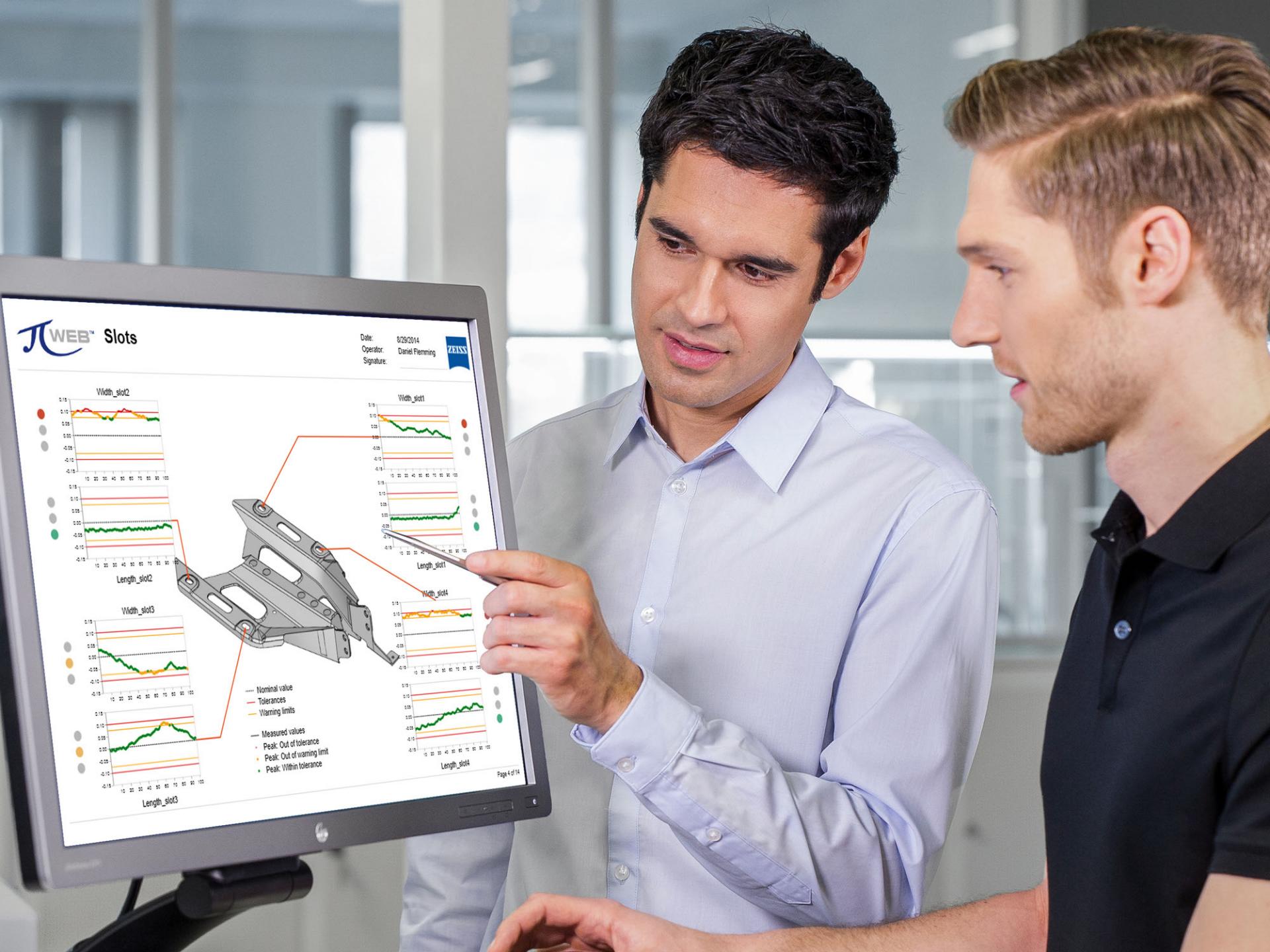

Leveraging Digital Tools and Data Analysis for Process Insights
Digital metrology tools transform raw measurement data into actionable quality insights. Statistical process control (SPC) becomes more powerful when combined with digital analysis tools, helping technicians identify process variations before quality issues occur.
To support this work, technicians develop essential digital skills, including data visualization and trending, statistical analysis techniques, process capability studies, and the use of automated reporting systems.
Digital documentation systems replace paper-based quality records. Technicians learn to navigate electronic systems and maintain digital measurement histories to meet traceability requirements.
If you want the middle section even more list-like visually but still paragraph-based, we can do that too.
Customizing Training Programs for Industry Needs
Effective metrology training requires tailored approaches that match specific industry requirements and technical demands. Different sectors need specialized measurement techniques, while individualized learning paths ensure technicians develop the right skills for their career goals.Industry-Specific Metrology Applications
Aerospace metrology training focuses on ultra-precise dimensional measurements and geometric tolerancing. Train your technicians to work with CMMs, metrology-grade 3D scanners, and industrial CT scanners that excel at inspecting critical aircraft components.
Automotive metrology programs emphasize high-volume inspection techniques. These programs teach statistical process control and automated measurement systems. Your training should cover gage repeatability studies and measurement system analysis.
Medical device metrology requires understanding FDA regulations. Your technicians need training in surface roughness measurement and materials testing protocols.


Energy sector metrology training covers turbine blade inspection and pipeline integrity testing. Your programs for this area should include non-destructive testing methods and vibration analysis techniques.
Understanding industry needs helps you identify specific skill gaps and training requirements for each sector.
Developing Specialized Learning Paths
Create modular training paths based on technician experience levels. Entry-level paths start with basic measurement principles and calibration procedures. Advanced paths cover complex statistical analysis and calculations of measurement uncertainty.
Design competency-based progressions that allow technicians to advance at their own pace. Your learning paths should include practical lab exercises and real-world problem-solving scenarios.
Implement assessment checkpoints at key points throughout each learning path. These checkpoints verify that technicians have mastered essential skills before advancing to more complex topics.
Partner with equipment manufacturers to provide hands-on training with industry-standard tools. Your technicians benefit from learning on the same instruments they will use in their jobs.
Custom training programs ensure that metrology training aligns with specific workplace requirements and career advancement opportunities.
Empowering Continuous Learning with ZEISS Academy and Global Training
ZEISS Academy Metrology supports metrology professionals through structured development programs, certification pathways, and ongoing education. With over 35 years of training experience, the Academy helps technicians stay current with evolving measurement technologies, industry standards, and best practices worldwide.

Certification & Ongoing Education
ZEISS Academy Metrology delivers established, globally recognized training programs designed to develop well‑rounded metrology competence. Basic Training builds essential knowledge in measurement techniques, physics, mathematics, and design principles, while certification tracks support continuous professional growth.


Software & Technology Training
Software training programs are tailored to your specific machine and sensor configuration. Courses cover tactile, scanning, optical, laser, and CT measurement systems, ensuring participants gain insights into device capabilities and the latest technological advances in quality control.
Technology‑based training combines theory with hands‑on exercises to improve both speed and accuracy in real measurement workflows.


Flexible Learning Options
Training is available across three main formats:
- Classroom training at ZEISS training centers
- Live online sessions with real‑time instructor interaction
- Self‑paced eLearning modules available on demand
The Academy’s Combined Learning model blends all formats for continuous accessibility. Mobile apps, eBooks, and practice workpieces reinforce learning long after courses end.
Professional Growth Pathways


Basic Metrology Education
Ideal for new technicians building fundamental measurement competencies.


Software Mastery
Develop proficiency with ZEISS software and sensor‑specific workflows.


Advanced Technology Training
Specialized learning for tactile, scanning, optical, laser, and CT measurement systems.


Standards & Compliance
Stay aligned with industry requirements including AUKOM, GD&T, and other global best practices.
Continuing Professional Development
Live online training supports standardized knowledge across the global metrology community. Courses cover essential topics such as AUKOM, GD&T, and ZEISS software applications, helping technicians maintain compliance with current measurement standards.
Community Impact
Customized onsite training options allow entire teams to develop skills simultaneously. This approach strengthens metrology departments’ overall capabilities and ensures consistent measurement practices across organizations.
Shaping the Future of Metrology Training
As measurement technologies evolve faster than ever, the demand for highly skilled metrology technicians continues to outpace the available workforce. Organizations need training programs that not only address today’s skill gaps but also prepare technicians for emerging tools, automation, and data‑driven quality systems.
ZEISS Academy supports this transition with modern learning environments, advanced simulation tools, and standardized training that blends theory with hands‑on practice. From offline programming and virtual measurement simulations to real‑time performance feedback, ZEISS helps technicians build the confidence and competence needed to adapt to new technologies and industry expectations.
By equipping teams with scalable training paths and flexible learning formats, ZEISS empowers manufacturers to strengthen their workforce, improve measurement reliability, and stay ahead of future metrology challenges.
Frequently Asked Questions
-
Metrology technicians need strong mathematical skills and attention to detail for accurate measurements. Understanding geometric dimensioning and tolerancing (GD&T) is critical for interpreting engineering drawings and specifications.
Technical skills include operating coordinate measuring machines (CMMs), calipers, and micrometers. Technicians must also understand measurement uncertainty and statistical analysis for quality control.
Software proficiency is increasingly important. Technicians need to learn CMM programming software, such as ZEISS CALYPSO, for automated inspection routines.
Communication skills help technicians document findings and work with engineering teams. Problem-solving skills are essential when measurement results do not match expectations.
-
Start with foundational concepts before moving to complex equipment. Teach basic measurement principles, units, and calibration concepts through classroom instruction.
Use hands-on practice with simple tools first. Students should master calipers and micrometers before advancing to sophisticated CMM systems.
Combine theory with practical application immediately. When students learn about measurement uncertainty, have them perform actual Gage R&R studies on real parts.
Create structured learning progressions. Begin with 2D measurements, then advance to 3D coordinate measurement and geometric tolerancing applications.Provide frequent feedback during practice sessions. Immediate correction helps students develop proper measurement techniques from the beginning.
-
Include digital measurement technologies in training curricula. Teach technicians to work with laser scanners, vision systems, and non-contact measurement devices alongside traditional tools.
Integrate Industry 4.0 concepts into metrology education. Students need to understand how measurement data connects to manufacturing execution systems and quality management software.
Add data analysis components to training programs. Future technicians must interpret statistical process control (SPC) charts and capability studies for manufacturing decisions.
Teach automation principles for inspection processes. Students should learn offline CMM programming and automated fixture setup for high-volume production environments.
Include regulatory compliance training specific to industries like medical devices and aerospace. Understanding FDA requirements and ISO standards has become increasingly important for career advancement in these fields.
-
Hands-on training through laboratory experiences builds essential skills and confidence for technicians entering the workforce. Practical experience helps students understand how theoretical concepts apply to real measurement challenges.
Laboratory work develops proper measurement techniques that cannot be learned solely from textbooks. Students learn to handle delicate instruments and develop steady hands for precise operations.
Hands-on training exposes students to variations in equipment and troubleshooting scenarios.
Real parts and measurement scenarios teach students to identify and solve common problems. Students learn to recognize when measurements seem incorrect and how to investigate potential causes.
Practice with actual production parts helps students understand tolerances and quality requirements. Working with rejected parts teaches students to identify defects and measurement discrepancies.
-
Start by updating equipment in training laboratories with modern measurement systems. Students need exposure to current CMM technology, accurate 3D scanners, and portable measurement devices used in industry.
Partner with equipment manufacturers for training resources.
Add 3D scanning and reverse engineering techniques to curricula. These technologies are becoming standard tools for inspection and product development applications.
-
ASQ Certified Quality Technician (CQT) certification demonstrates fundamental knowledge of quality and measurement. This ASQ certification covers statistical methods and measurement system analysis.
NIST metrology training certificates provide credibility for laboratory and calibration work. NIST programs cover measurement uncertainty, traceability, and laboratory practices.
Equipment-specific certifications from CMM manufacturers validate technical skills. ZEISS offers certification programs for its measurement software and equipment.
Industry-specific certifications add value in regulated sectors. ISO 13485 training for medical device manufacturing or AS9100 for aerospace applications increases employment opportunities.