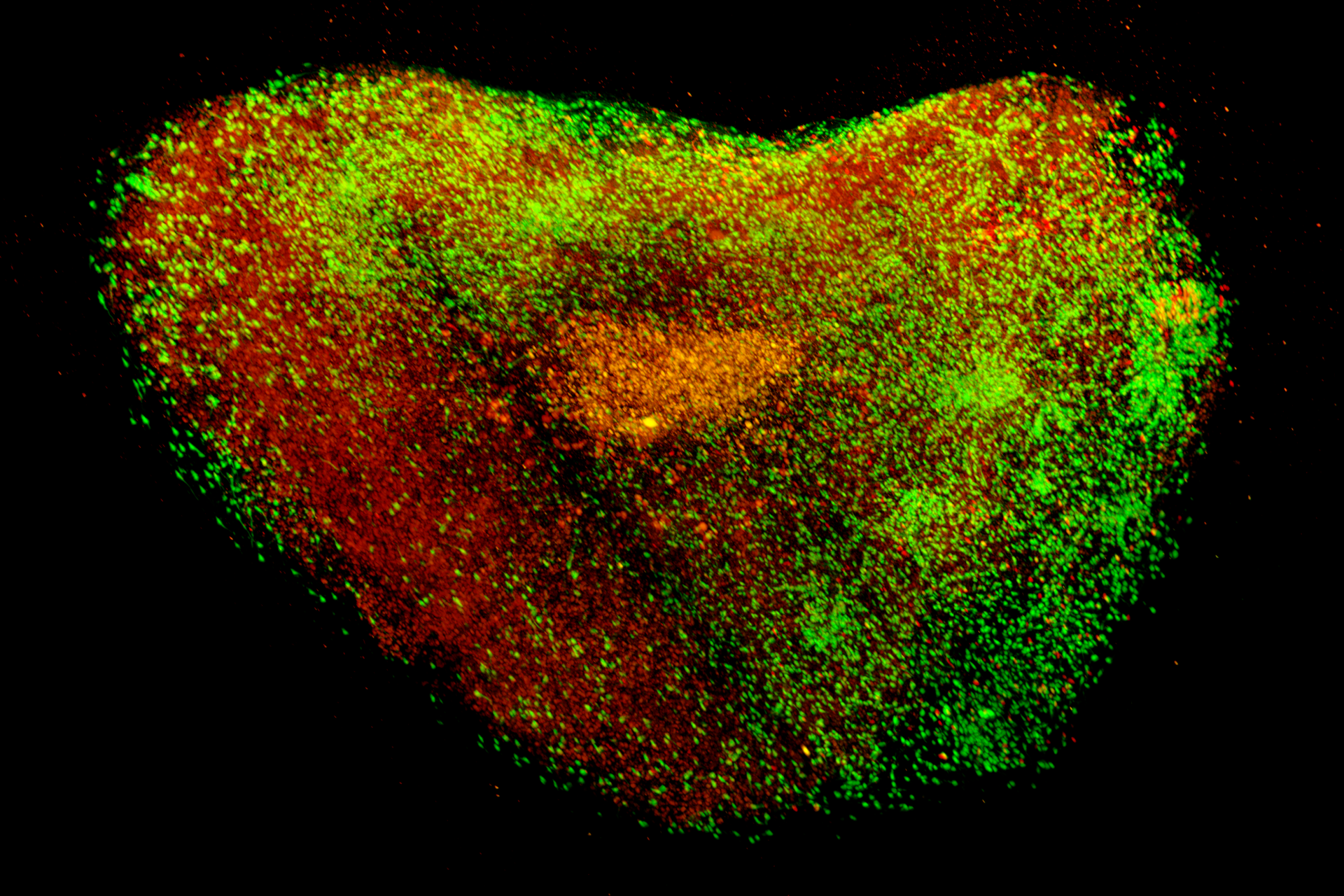
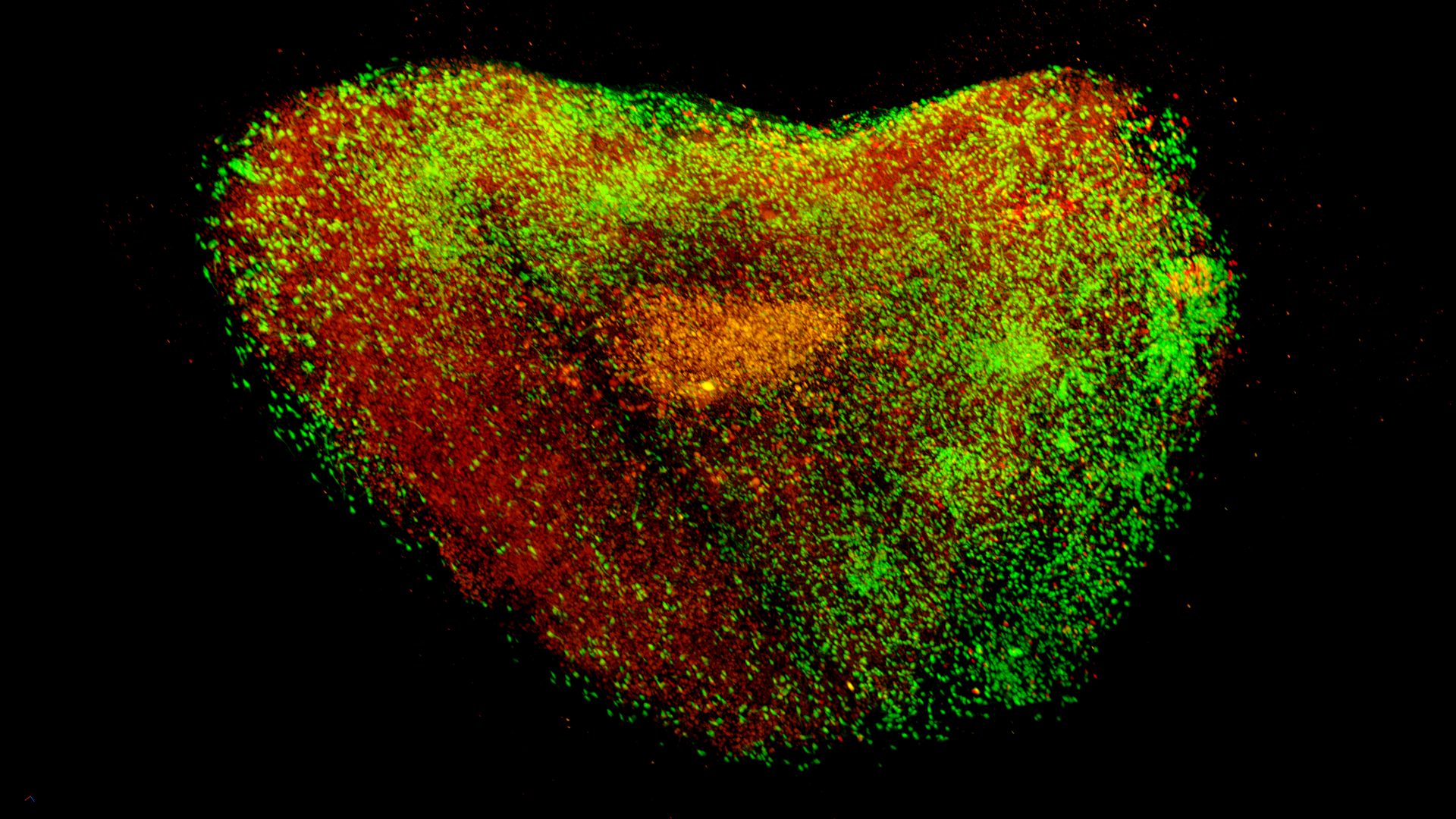
Differentiated cardiac organoid labeled with Fluo-4 Calcium indicator. Sample courtesy of Hyosin Paik, Yonsei University, Korea
ZEISS Solutions for Complex In Vitro Models

Imaging solutions for New Approach Methodologies (NAMs) High-resolution, scalable imaging and analysis workflows for 3D HCA imaging

Complex in vitro models (CIVMs), including organoids, spheroids, and organs-on-a-chip, require deep, gentle, and scalable 3D imaging. ZEISS microscopy systems combined with ZEISS arivis software connect image acquisition to quantitative 3D analysis for high-throughput screening and predictive drug discovery.

  • Unified sample-to-insight workflow
  • High-resolution, gentle imaging for live 3D systems
  • End-to-end data management and insights, powered by AI and Copilot

Why ZEISS for organoid imaging and 3D tissue models

ZEISS empowers biotech, pharmaceutical, and CRO teams to move confidently from 3D imaging to actionable data - improving efficiency, reducing variability, and driving predictive, reproducible results in drug discovery and development.

  • Unmatched optical performance for deep tissue and organoid imaging
  • Proven automation and stability for high-volume, high-throughput screening
  • AI-powered analytics for powerful and scalable quantification

The challenge of imaging complex 3D cell cultures

Because organoids and other 3D cell cultures are thick, heterogeneous, and highly light-scattering, imaging workflows must address limitations in depth, resolution, sensitivity, speed, and throughput.

Challenge

How we address it

Penetration Depth: Scattering and refractive mismatches limit light penetration

Advanced optics and confocal and lightsheet modalities optimize depth without compromising resolution

Resolution: Small subcellular details are lost in thick samples

ZEISS Airyscan delivers super-resolution with high sensitivity

Sensitivity: Gentle Imaging – Phototoxicity damages live samples

ZEISS Lattice Lightsheet 7 and ZEISS Lightfield 4D modes minimize light exposure

Speed: High-content workflows demand faster imaging

ZEISS Celldiscoverer 7 with ZEISS LSM 910 module ensures rapid volumetric acquisition

Throughput: Drug discovery requires scalability

Integrated automation and ZEISS arivis analytics enable plate-based, high-volume workflows with 3D context and a multitude of 3D parameters

  • 35 day old neuronal organoids. Sample courtesy of: Daniel Reumann and Jürgen Knoblich, Institute of Molecular Biotechnology (IMBA) of the Austrian Academy of Sciences
  • Intestinal organoid wellplate imaging, nuclei (DAPI), membrane (mem9-GFP), enterocytes (Aldolase B-Alexa 647).
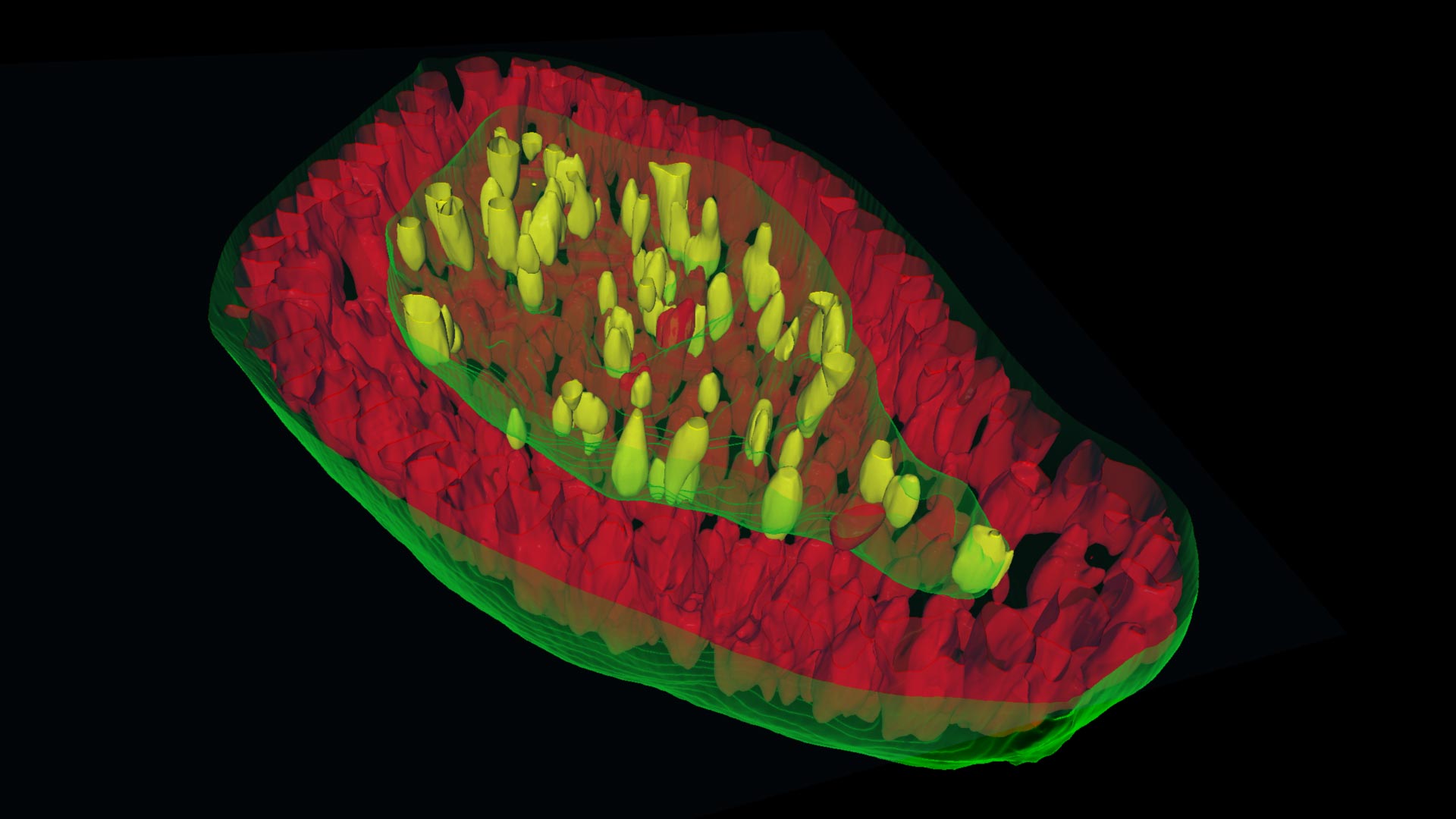
  • 3D Organoid, sub cellular structures (Epithelial Cell Layer and Inner Lumen). Study the role of Wnt signaling in organoid formation.
  • 35 day old neuronal organoids. Sample courtesy of: Daniel Reumann and Jürgen Knoblich, Institute of Molecular Biotechnology (IMBA) of the Austrian Academy of Sciences
  • 35-day old neuronal organoids. Sample courtesy of: Daniel Reumann and Jürgen Knoblich, Institute of Molecular Biotechnology (IMBA) of the Austrian Academy of Sciences
  • Intestinal organoid wellplate imaging, nuclei (DAPI), membrane (mem9-GFP), enterocytes (Aldolase B-Alexa 647).
    Intestinal organoid wellplate imaging, nuclei (DAPI), membrane (mem9-GFP), enterocytes (Aldolase B-Alexa 647).

    Intestinal organoid well plate imaging, nuclei (DAPI), membrane (mem9-GFP), enterocytes (Aldolase B-Alexa 647).

    Intestinal organoid well plate imaging, nuclei (DAPI), membrane (mem9-GFP), enterocytes (Aldolase B-Alexa 647).

  • 3D Organoid, sub cellular structures (Epithelial Cell Layer and Inner Lumen). Study the role of Wnt signaling in organoid formation.
    3D Organoid, sub cellular structures (Epithelial Cell Layer and Inner Lumen). Study the role of Wnt signaling in organoid formation.

    3D organoid, sub cellular structures (Epithelial Cell Layer and Inner Lumen). Study the role of Wnt signaling in organoid formation.

    3D organoid, sub cellular structures (Epithelial Cell Layer and Inner Lumen). Study the role of Wnt signaling in organoid formation.

  • 35 day old neuronal organoids. Sample courtesy of: Daniel Reumann and Jürgen Knoblich, Institute of Molecular Biotechnology (IMBA) of the Austrian Academy of Sciences
    35 day old neuronal organoids. Sample courtesy of: Daniel Reumann and Jürgen Knoblich, Institute of Molecular Biotechnology (IMBA) of the Austrian Academy of Sciences

    35-day old neuronal organoids. Sample courtesy of: Daniel Reumann and Jürgen Knoblich, Institute of Molecular Biotechnology (IMBA) of the Austrian Academy of Sciences.

    35-day old neuronal organoids. Sample courtesy of: Daniel Reumann and Jürgen Knoblich, Institute of Molecular Biotechnology (IMBA) of the Austrian Academy of Sciences.

Beyond imaging: End-to-end 3D analysis and data workflows

Simplifying acquisition to insight with ZEISS arivis

Modern imaging technologies reveal the intricate complexity of biological systems, but true understanding comes from turning data into knowledge. ZEISS arivis extends the power of ZEISS imaging platforms by streamlining the entire 3D data journey, transforming high-content images into reproducible, shareable, and scalable insights.

Through the integration of AI-driven analysis, efficient data management, and cloud-based collaboration, researchers can move seamlessly from image acquisition to interpretation and decision-making.

This unified ecosystem enables consistent workflows, accelerates discovery, and supports scalable infrastructure for both academic and industrial research environments.

Highlights Imaging paired with a powerful 3D analysis supports predictive, scalable workflows for biotech and pharma.

  • AI-driven 3D segmentation

    Automated, accurate object recognition even in noisy or heterogeneous samples.

  • Efficient data handling

    Work effortlessly with terabyte-scale datasets on standard hardware.

  • Scalable analysis

    Collaborate globally and scale projects without infrastructure limits.

  • Reproducible quantification

    Standardize pipelines for consistent, comparable results across studies.

  • Integrated workflow

    Combine imaging, analysis, and automation for predictive, reliable outcomes.

  • Copilot-guided, AI-powered workflows

    From acquisition to analysis, AI and Copilot accelerate setup, execution, and reproducibility.

ZEISS arivis software has allowed us to extract crucial insights from our high-content imaging experiments, leading to better-informed decisions in drug discovery and development.

Marta da Silva, PhD Senior Scientist, Charles River Laboratories

Advanced 3D imaging for new approach methodologies: organoids, spheroids, and organ-on-a-chip models

CIVMs are reshaping how the pharmaceutical and biotechnology industries study disease, evaluate drug efficacy and safety, and develop new therapies. By more closely replicating the structure and function of human tissues compared to traditional 2D cultures, these advanced 3D systems deliver greater translational relevance, reduce reliance on animal testing, and accelerate predictive drug discovery and personalized therapeutic development.

As adoption of 3D systems accelerates across pharma, biotech, and CROs, new challenges have emerged: thick, scattering, and heterogeneous samples require imaging systems that combine depth, sensitivity, resolution, and throughput, while handling the massive datasets generated in volumetric studies.

ZEISS 3D Imaging Solutions, integrated with ZEISS arivis ecosystem, deliver a unified workflow for 3D tissue imaging and analysis, enabling deep, gentle imaging, and reproducible results that scale from single organoids to plate-based screening, supported by Copilot-guided acquisition and powerful 3D segmentation algorithms powered by advanced AI-driven analysis.

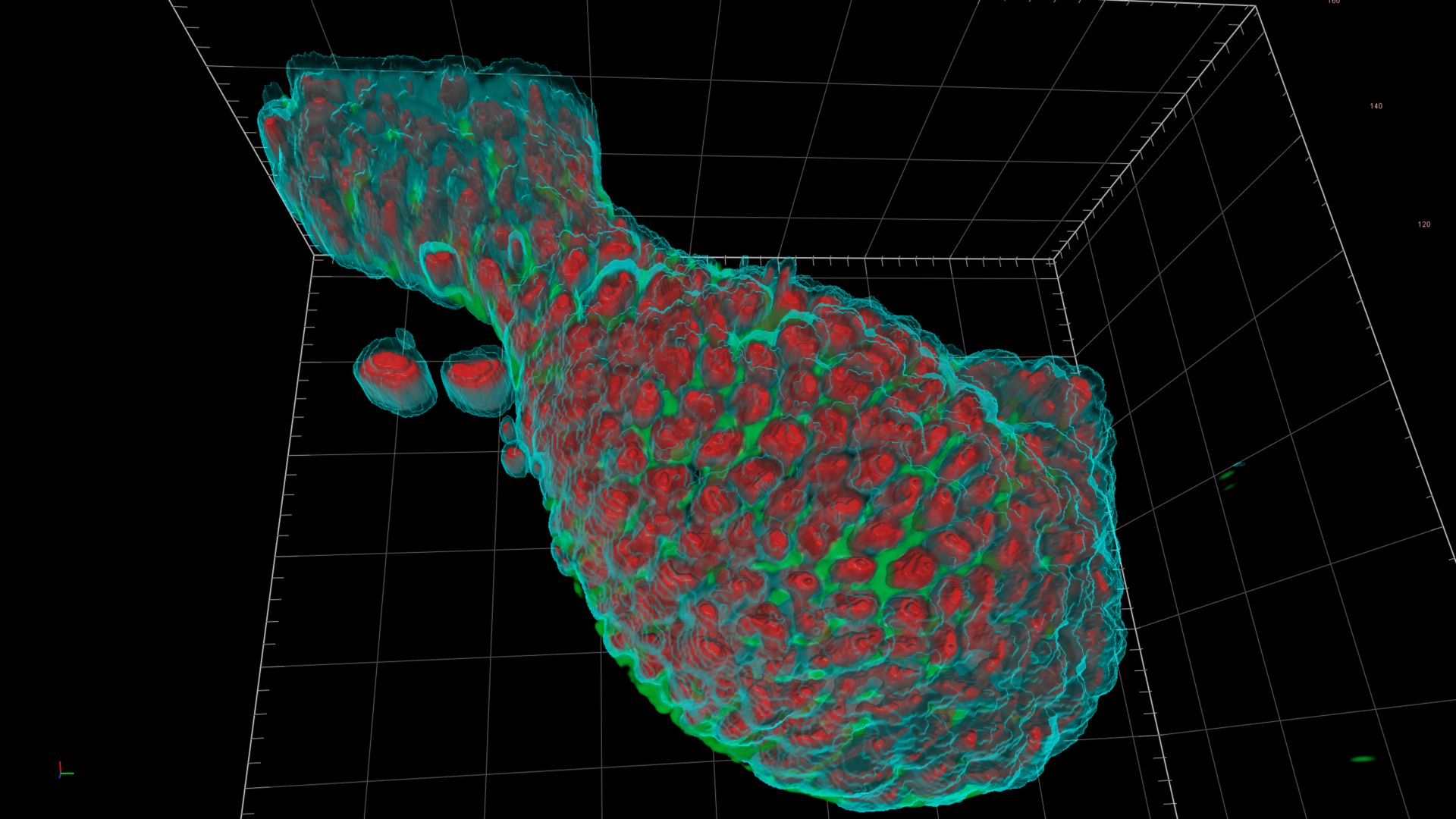
3D images of the organ chips developed by Xellar Biosystems (with gastrointestinal tumor organoids on OC-Plex 32). Acquisition: Imaging system: LSM 990 LF4D. Sample courtesy of Dr Shengping Xiao and Dr Sen Ye, Xellar Biosystems

ZEISS Microscopy solutions enable rapid, high-resolution 3D imaging of organ-on-chip models, capturing complex cellular architecture within physiologically relevant environments. With Lightfield 4D, uneven and volumetric samples can be imaged in a single acquisition—eliminating time-intensive tiling and z-stacks. Paired with ZEISS arivis, researchers can precisely visualize and quantify structures such as vascular networks, accelerating insights in disease modeling and drug response.

Application Focus

Proven workflows for complex 3D Systems

Human breast cancer organoids in matrigel

Capture deeper, clearer insights from live organoids—without compromising viability or throughput

Solution: ZEISS Celldiscoverer 7 with LSM / Airyscan + ZEISS arivis

Key outcomes: 

  • Gentle long-term acquisition of live tumor organoids
  • High-throughput image capture and analysis across multiwell plates
  • AI-poewred segmentationf ro rapida nd precise quantification

Human embryonic stem cell-derived spinal cord organoids

Track complex tissue development in real time while enabling seamless, large-scale analysis.

Solution: ZEISS Lattice Lightsheet 7 + ZEISS arivis

Key outcomes:

  • Fast, gentle, high-resolution imaging of developing organoids
  • Phototoxicity-free visualization of real-time tissue dynamics
  • Seamless cloud-based analysis and data sharing for multi-sample studies
  • Scalable handling of large datasets with ZEISS arivis

Cleared spheroid of a co-culture of HCT-116-GFP (colon cancer)

Advance spheroid research with fast, sensitive imaging and robust 4D analysis at scale.

Solution: ZEISS LSM 910/990 with Lightfield 4D + ZEISS arivis

Key outcomes:

  • Deep and fast imaging
  • High sensitivity for short exposure times
  • High-throughput acquisition of numerous Spheroids in multiwell plates
  • Scalable 4D analysis, efficient segmentation and tracking for quantitative toxicology and metabolism studies

3D rendering of an intestinal organoid

Accurate 3D segmentation, quantification, and tracking of cellular dynamics

Solution: ZEISS arivis Pro Software + Celldiscoverer 7

Key outcomes

  • Cell-level organoid growth analysis
  • Organoid volume quantification

3D image acquisition of colorectal cancer organoids

Enhanced drug response analysis and cellular interaction

Solutions: ZEISS LSM Lightfield 4D

Key outcomes:

  • Increased throughput for screening large sample sets
  • Fast, high-content 3D imaging
  • Scalable, quantitative analysis for drug response studies

Transform your organoid workflows with imaging solutions designed specifically for the unique demands of 3D cell culture research.

  • High-Resolution 3D Cell Culture Imaging

    Visualize complex organoid and spheroid structures with exceptional detail, enabling precise analysis of cell organization, lumen formation, and tissue morphology critical for disease modeling and drug discovery applications.

  • Gentle Live-Cell Monitoring for Dynamic Studies

    Track growth, differentiation, morphogenesis, and drug responses in real-time without phototoxicity, preserving organoid viability for extended time-lapse studies essential for therapeutic development.

  • Automated High-Throughput 3D Analysis

    Scale your organoid screening workflows with automated image acquisition and quantitative analysis, accelerating drug discovery timelines and reducing manual intervention for consistent, reproducible results.

Imaging systems for New Approach Methodologie, including complex in vitro models (CIVMs)

Advanced software solutions available to buy or try online

Advanced image analysis made easy with ZEISS

Explore our software solutions bundles available for trial and purchase online.


Organoids Research FAQs

  • The thickness of organoids is often challenging for traditional confocal imaging due to light scattering, tissue absorption, and phototoxicity. ZEISS Lattice Lightsheet 7 and ZEISS Lightfield 4D provide gentle, rapid volume imaging with minimal photodamage, enabling extended time-lapse studies. The lightsheet approach illuminates only the focal plane being imaged, while lightfield offers one volume for each snapshot. The result is dramatically reduced photobleaching while maintaining exceptional image quality throughout the entire organoid volume.

  • High-throughput organoid screening requires limited user input combined with high-quality imaging to adequately survey each sample. The ZEISS Celldiscoverer 7 is fully automated and ensures reproducible results at scale. With its integrated workflows intended for high content screening, the Celldiscoverer 7 enables researchers to monitor development and response to treatment in either fixed or live samples.

  • This requires balancing resolution with field of view – a common challenge in organoid research. The ZEISS LSM 990 Lightfield 4D combines fast volume acquisition with enhanced sensitivity for deep confocal imaging. For comprehensive workflows, arivis Pro offers precise 3D analysis allowing you to correlate molecular-level events with tissue-scale organization patterns.

ZEISS Microscopy as a Service

Advanced organoid analysis doesn't always requires new equipment.

ZEISS Microscopy as a Service enables advanced organoid imaging and analysis, combining high-content 3D imaging with AI-driven segmentation and quantitative workflows. From longitudinal live imaging to multiplexed fluorescence and cleared-organoid reconstruction, our experts deliver scalable, reproducible datasets that capture structural complexity and functional heterogeneity.