

3D in 3 Minutes
X-ray Microscopy in Shared-Use Research FacilitiesA microscopy series to explore the scientific opportunities and increasing adoption of high resolution 3D X-ray microscopy within multi-user shared-instrument research facilities.
Follow this series to learn:
3D in 3 Minutes: Webinar Series
Browse past episodes and topics.3D in 3 Minutes with Dr. Ria Mitchell
In this episode, Dr. Ria Mitchell talks about the recurring role of X-ray tomography in her research career, her new position at the University of Sheffield, and some exciting upcoming experiments.

Ria Mitchell is an Applications Development Engineer with ZEISS Microscopy in the UK. Following a PhD in Geoscience, Ria has 15+ years of microscopy experience in both academia and industry across diverse subjects and disciplines from geological, to biological, to human-made materials. With a specialty in 3D imaging (X-ray computed tomography and X-ray Microscopy) and correlative imaging, Ria uses a variety of microscopes to image, analyse, and characterize a wide range of materials, ranging from pharmaceuticals, to concrete, to batteries, developing and applying new workflows at the multi-scale and in multiple dimensions to solve challenging research questions.
3D in 3 Minutes with Yara Suleiman & Nicholas May
In this episode, we hear from Nick and Yara about the diverse research topics at the University of Connecticut's Innovation Partnership Building. Learn how advanced X-ray reconstruction techniques are helping UConn further push the boundaries of 3D microscopy.

Yara Suleiman is a PhD Graduate Assistant and REFINE Lab Manager at the University of Connecticut, where she leads and supports research focused on failure analysis, quality assurance, and advanced materials characterization. Her work spans both academic and industrial collaborations, with a strong emphasis on delivering actionable insights for complex materials and systems. Her technical expertise centers on 3D X-ray tomography and FIB-SEM, which she uses to investigate structure, performance, and failure mechanisms across a range of applications. Yara works closely with partners from national laboratories, government, academia, and industry to define project scope and data requirements, ensuring each study is aligned with real-world objectives.
Nick May is a PhD candidate at the University of Connecticut, working within the REFINE Lab where he supports a wide range of projects in advanced materials characterization and non-destructive analysis. His work focuses on leveraging techniques such as X-ray tomography and electron microscopy to investigate complex materials systems and uncover critical structural insights. Nick’s background spans reverse engineering, inspection, and additive manufacturing, with early research exploring applications in acoustics and materials reconstruction. He collaborates with academic and industry partners to support research initiatives that require precise imaging and analysis, contributing to both experimental design and data interpretation.
3D in 3 Minutes with Dr. Nancy Muyanja
Dr. Muyanja tells us about developing the university's X-ray microscopy user base, in situ experiments for aerospace materials, being on the cutting edge of diffraction contrast tomography, and the excitement of introducing researchers to the power of the XRM technique.

Nancy Muyanja is an application specialist in materials characterization, with expertise spanning X-ray computed tomography, Raman spectroscopy, cathodoluminescence, X-ray photoelectron spectroscopy, and scanning electron microscopy. She provides expert-level pre-imaging consultations, helping researchers define project scope, refine experimental design, and navigate the technical considerations and limitations of their proposed work. In addition to her consultative role, Nancy delivers advanced user training in both X-ray and electron microscopy. She is highly experienced in the operation and routine maintenance of laboratory-based X-ray microscopes and scanning electron microscopes, ensuring reliable performance and high-quality imaging outcomes for a wide range of research applications.
3D in 3 Minutes with Dr. Gianluca Tozzi
Hear from Dr. Gianluca Tozzi, a Professor of Industrial Engineering at the Faculty of Engineering and Science, University of Greenwich. Gianluca is a world leader in the field of in situ biomechanics experiments. In this video, he helps us understand the critical need for X-ray microscopy in bioengineering research, including applications of phase contrast imaging of low-Z materials as well as ‘4D’ studies with digital volume correlation for analyzing local tissue mechanics.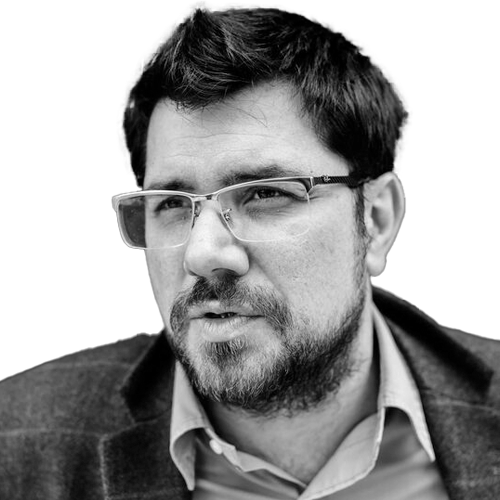

Professor Gianluca Tozzi is a Professor of Industrial Engineering at the Faculty of Engineering and Science, University of Greenwich. He joined the University in 2022 to lead on multi-disciplinary research and knowledge exchange in Bio-Inspired Engineering with Imaging-based AI and quantum data (Bio-AImagiQ) for biological tissues and biomaterials.
Previously, he was a Professor of Mechanical Engineering at the School of Engineering, London South Bank University and a Reader in Bioengineering at the School of Mechanical and Design Engineering, University of Portsmouth. Professor Tozzi received a PhD in Bioengineering in 2012 from the University of Portsmouth and a 5-year MSc in Mechanical Engineering in 2008 from the University of Bologna.
3D in 3 Minutes with Dr. Paul Choi
In this episode, Paul Choi, a student in Prof. Shawn Litster’s lab at Carnegie Mellon University, explains how personal passion led to research interests in energy materials and electric vehicles. Paul shows us how he is using nanoscale X-ray imaging, with pioneering in operando setups, to address some of the tough microstructural challenges related to capacity and durability from cutting-edge electrochemical devices.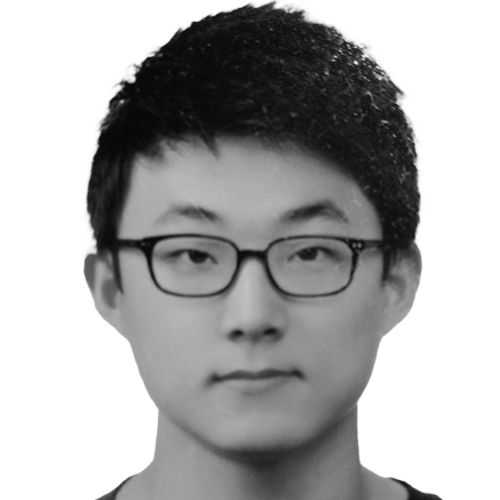

Paul Choi conducts research in energy materials in Prof. Litster’s lab at CMU. They use nanoscale X-ray imaging, with pioneering in operando setups, to address some of the tough microstructural challenges in electrochemical devices.
3D in 3 Minutes with Keith Duncan
In this episode, Keith Duncan of the Donald Danforth Plant Science Center tells us about the societal significance of plant science, better understanding floral development in critical crops, and navigating the incredible 3D complexity of the soil ecosystem interacting with plant root structures.

Keith Duncan is research scientist at the Donald Danforth Plant Science Center, and director of X-ray imaging in the Advanced Bioimaging Laboratory (ABL). His research focuses on understanding how plant root systems grow, adapt, and interact within complex soil environments. By applying advanced 3D imaging techniques, including X-ray computed tomography, his work brings otherwise invisible below-ground structures into view—capturing root architecture in its natural context without disruption.
Keith's approach bridges plant biology, soil science, and imaging technology to explore how roots respond to environmental conditions, microbial communities, and physical constraints. Through this lens, Duncan’s work provides critical insight into how root systems function as dynamic, adaptive networks—informing research in agriculture, sustainability, and plant resilience.
3D in 3 Minutes with Dr. Sridhar Niverty
In this episode of 3D in 3 Minutes, Dr. Sridhar Niverty discusses finishing his PhD, moving cross-country during COVID, helping establish a new lab, and the ongoing research work occurring in Prof. Nikhilesh Chawla’s group which is expanding from metal alloy materials to an increasing diversity of 3D systems.

Dr. Niverty is a materials engineering professional currently serving as a Materials Scientist at Pacific Northwest National Laboratory. He earned a PhD in Materials Science and Engineering from the Center for 4D Materials Science (4DMS) at Arizona State University. His research focuses on environmentally assisted damage in light metal structural alloys and alloy couples, with an emphasis on understanding degradation mechanisms under real-world conditions.
3D in 3 Minutes with ZEISS X-ray Microscopy User Meeting
In this special episode in the 3D in 3 Minutes video series, where we enjoy contributions from XRM users from across North America.Precision and Efficiency in 3D X-ray Microscopy
Capture non-destructive 3D images with submicron X-ray resolutionZEISS VersaXRM
Non-destructive 3D insight at sub-micron resolutionThe ZEISS Xradia VersaXRM enables high-resolution, non-destructive 3D imaging of internal structures across a wide range of materials. Designed to bridge the gap between micro-CT and nano-scale imaging, VersaXRM delivers consistent contrast and resolution—even in dense or heterogeneous samples—making it ideal for applications from materials research to life sciences.