ZEISS Axio Imager section

ZEISS Axio Imager section

High-resolution 3D visualization and evaluation

3D imaging at high resolution is important to understand the spatial context of your biological structures of interest. ZEISS Axio Imager section provides streamlined workflows for cost-effective 3D imaging from data collection to evaluation. Image thick tissues without out-of-focus light blur and improve your segmentation results. Create stunning 3D renderings for visualizing details you haven’t seen before with your widefield microscope.

  • Tissue sections
  • Small model organisms
  • 3D cell culture models
  • Cell monolayers

Bundle components

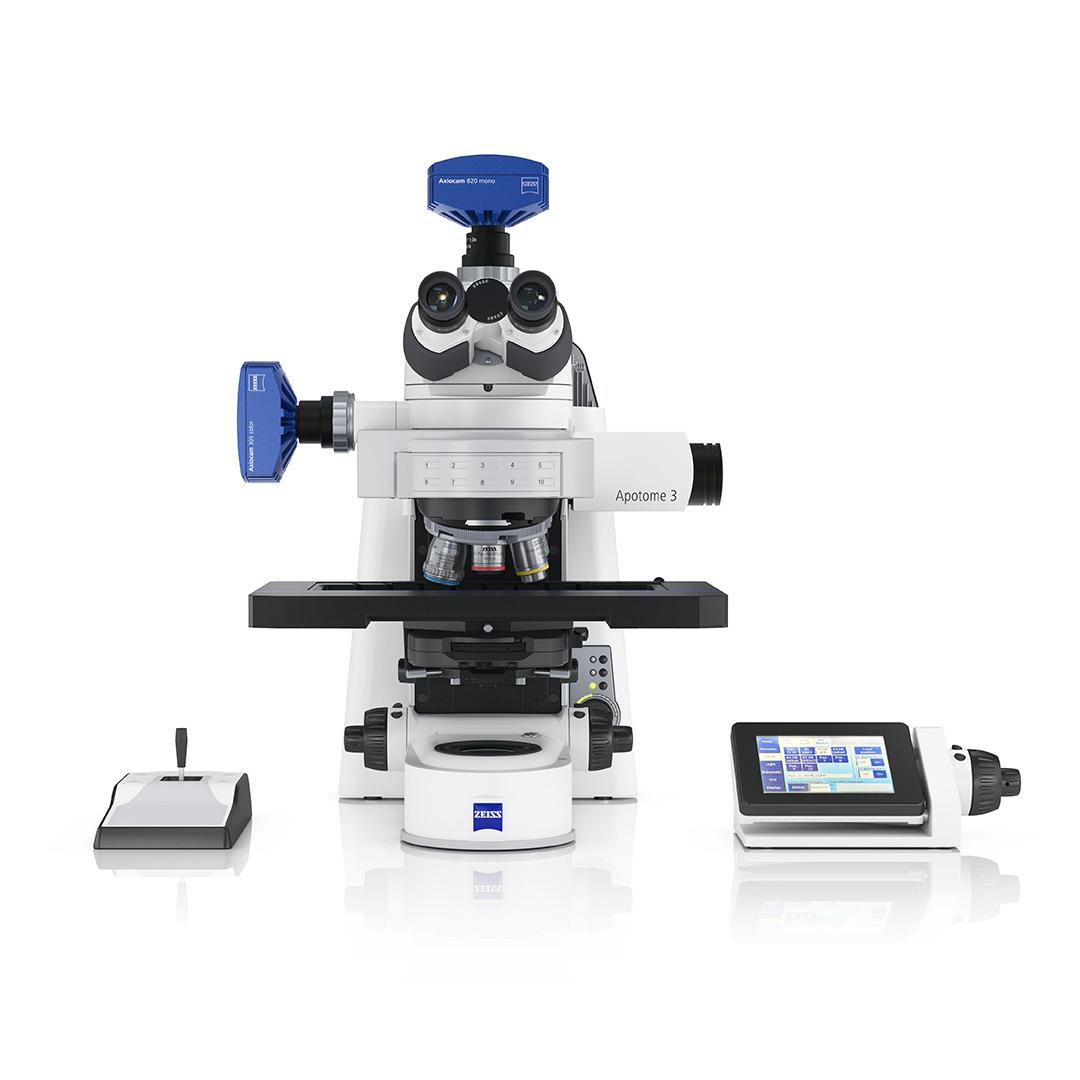
  • Microscope

    • Axio Imager 2 (upright widefield microscope stand)​
    • Scanning stage 130 × 100​
    • Motorized condenser NA 0.9
    • Apotome 3

    Light source / camera

    • Viluma 7​
    • Filter sets 38, 43, 50, 64, 70, 96, 115​
    • Axiocam 820 mono

    Objectives

    • EC Plan-Neofluar 5× / 0.16​
    • Plan-Apochromat 10× / 0.45​
    • Plan-Apochromat 20× / 0.8​
    • Plan-Apochromat 63× / 1.4 Oil

    Workstation

    • Z8 Workstation with 128 GB RAM and nVidia Quadro RTX A4000 16 GB DP
  • Motorized Acquisition​

    • Acquire images and control motorized components in multi-dimensional experiments.

    2D Toolkit

    • Create flexible automatic measurement programs for the analysis of your 2D images.
ZEISS Axio Imager scan

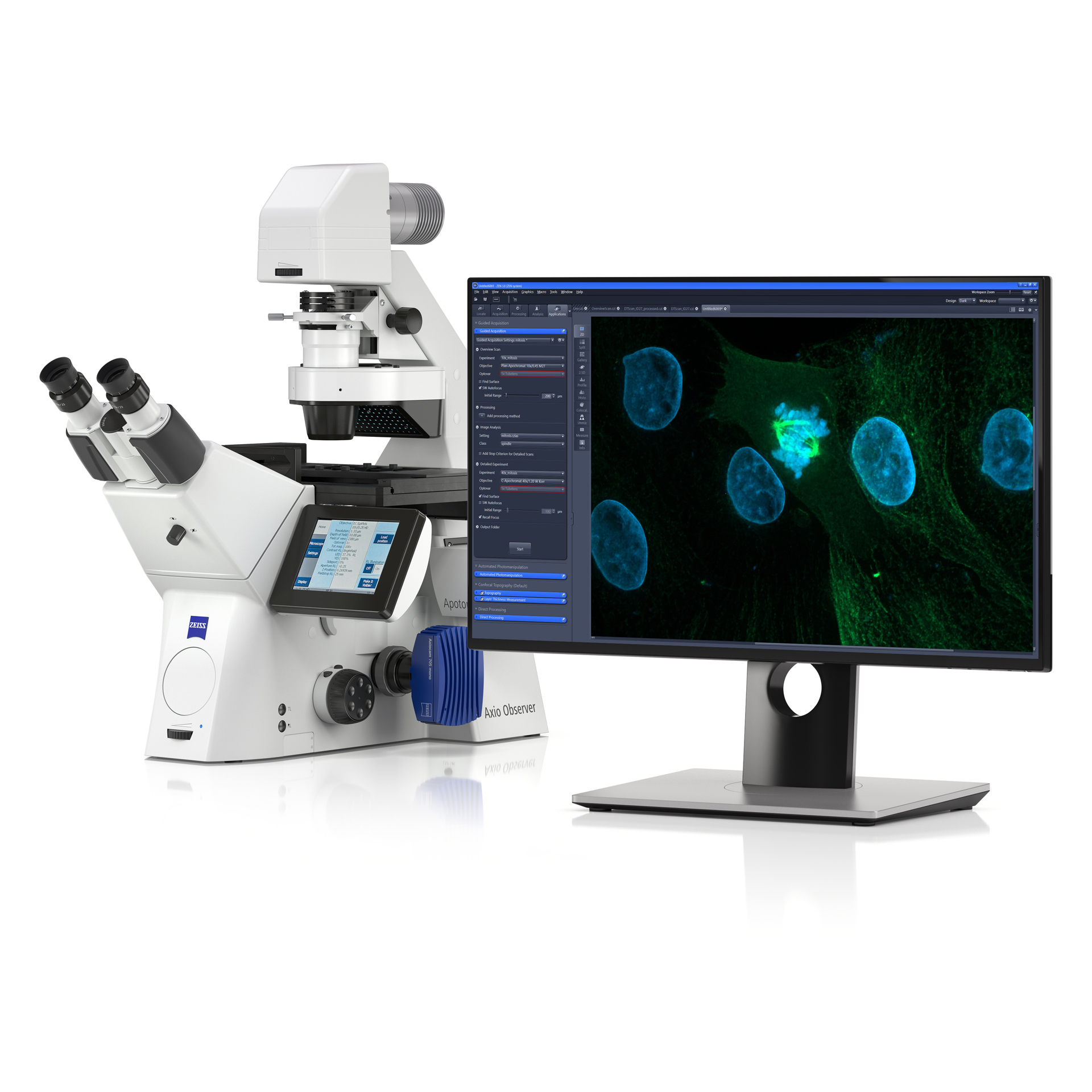
Looking for an inverted microscope configuration?​

This widefield bundle for high-resolution 3D visualization and evaluation can also be configured based on the inverted microscope ZEISS Axio Observer 7.

Example applications

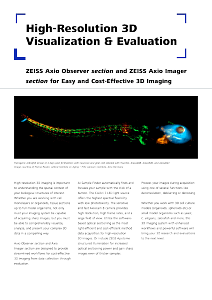
  • Chromosomes of A. Thalina stained with REC8
  • Human brain tissue stained with anti-GFAP antibody (red) to identify glia cells and DNA counterstain (blue).
  • Mouse kidney in A-ha Polymer. DNA was labeled with DAPI; blood vessels with Alexa Fluor 555 and nerves with Alexa Fluor 647.
  • Chromosomes of A. Thalina stained with REC8
    Sample Courtesy of S. Durand, MPI for Plant Breeding, Germany.

    Chromosomes of A. Thalina stained with REC8

  • Human brain tissue stained with anti-GFAP antibody (red) to identify glia cells and DNA counterstain (blue).

    Human brain tissue stained with anti-GFAP antibody (red) to identify glia cells and DNA counterstain (blue).

  • Mouse kidney in A-ha Polymer. DNA was labeled with DAPI; blood vessels with Alexa Fluor 555 and nerves with Alexa Fluor 647.
    Sample courtesy Prof. Shiue-Cheng (Tony) Tang, Institute of Biotechnology & Department of Medical Science, National Tsing Hua University, Taiwan

    Mouse kidney in A-ha Polymer. DNA was labeled with DAPI; blood vessels with Alexa Fluor 555 and nerves with Alexa Fluor 647.

Downloads

  • ZEISS Microscope Bundle for Optical Sectioning

    Creating crisp sections of thick samples with ease

    328 KB


Visit the ZEISS Download Center for available translations and further manuals.

Contact ZEISS Microscopy

Contact

Form is loading...

/ 4
Next Step:
  • Step 1
  • Step 2
  • Step 3
Contact us
Required Information
Optional Information

If you want to have more information on data processing at ZEISS please refer to our data privacy notice.