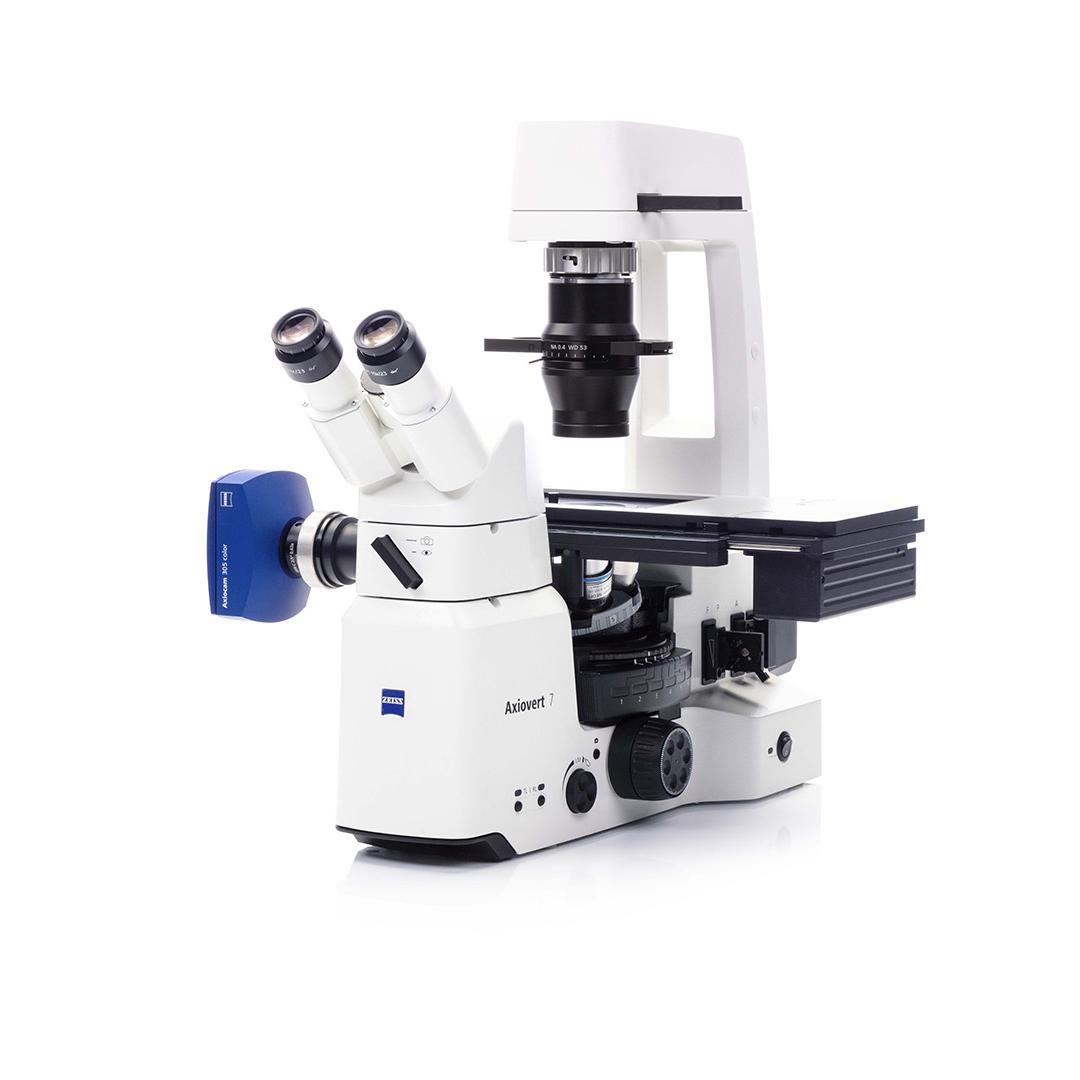

ZEISS Axiovert 7
Your inverted microscope for automated workflows in life scienceStart into your research: from monolayers to organoids.
ZEISS Axiovert 7 is your inverted microscope designed for routine cell culture work as well as multidimensional life science research. With an intuitive Snap-button workflow, excellent image quality, powerful automation and its small footprint, Axiovert 7 allows researchers to focus on their experiments not on microscope operation.
Whether you work with live cells, fixed samples, tissue sections, or fluorescence experiments, Axiovert 7 adapts seamlessly to your workflow and evolves with your research needs.

Work smarter with intelligent microscopy
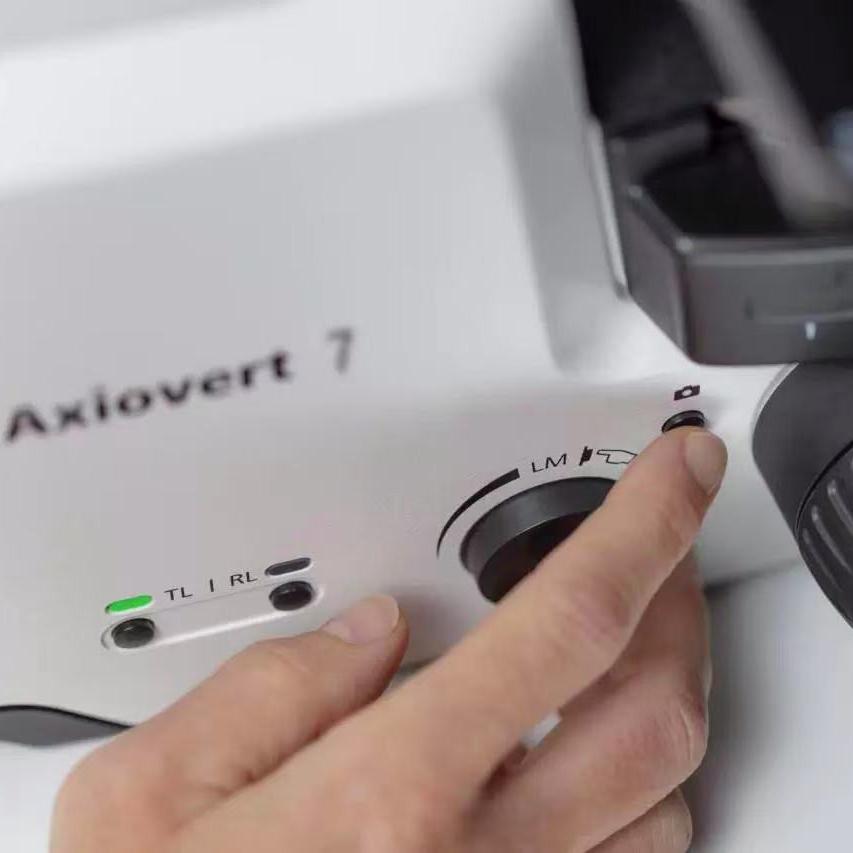
ZEISS Axiovert 7 delivers fast time-to-image for everyday laboratory work. Simply focus on your sample, press the Snap button on the stand, and instantly capture sharp, reproducible images. Multichannel fluorescence images are automatically overlaid and saved together with scale and metadata, ensuring traceability and reproducibility.
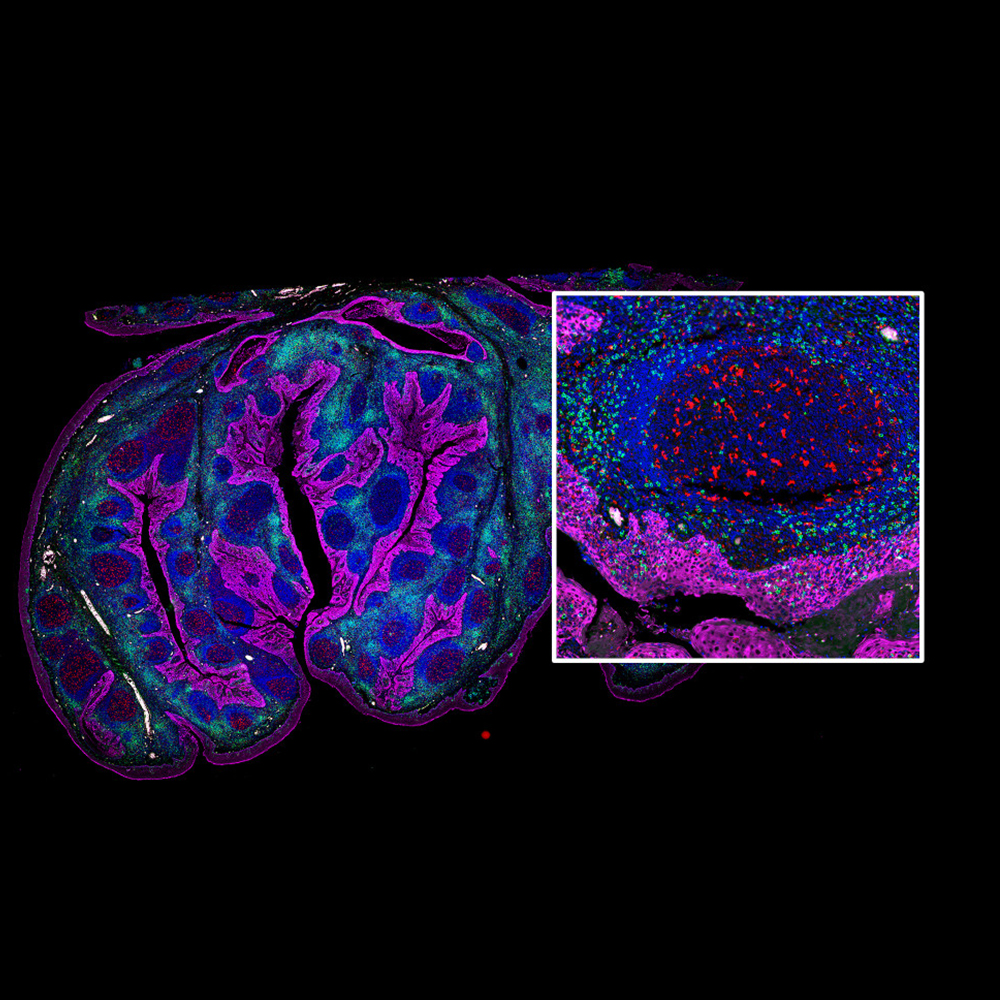

Whole-slide scanning of human tonsil tissue. Sample courtesy of Aikefa (Beijing) Biotechnology Co., Ltd. Green: CD8 (a T cell marker), red: CD68 (a macrophage marker), magenta: Panck, an epithelial cell marker.
Designed for daily life science research
Motorized components combined with ZEISS ZEN imaging software enable precise multidimensional experiments, including Z-stacks, time-lapse imaging, and automated scanning for slides and multiwell plates. The system supports a wide range of contrast methods and fluorescence techniques, allowing you to tackle research questions with confidence.


A future-proof platform
With modular hardware, upgradable software, and extensive interfaces, Axiovert 7 grows with your lab. From digital optical sectioning to long-term live-cell imaging, the system adapts as your experimental requirements change even in accordance with GxP Guidelines.
Designed for daily laboratory operation and basic research
- Motorized focus and stage for reproducible, automated imaging
- Modular, upgradeable system design always adapted to your application
- Intuitive Snap-button workflow for fast image acquisition
- Wide range of contrast methods: PH, FL, DIC, PlasDIC, iHMC, POL
- Multichannel fluorescence with automatic overlay and metadata storage
- Field of view: 23 mm
- Objective magnification range: 1.25× – 100×
Typical applications






FAQ
-
ZEISS Axiovert 7 is an inverted microscope designed for applications from routine cell culture in 2D or 3D work to life science research, including fluorescence imaging, live cell observation, tissue analysis, and multidimensional experiments.
-
Yes. Axiovert 7 supports long-term live cell imaging with automated focus stabilization.
-
Axiovert 7 supports multiple contrast techniques, including phase contrast, differential interference contrast (DIC), PlasDIC, improved Hoffmann modulation contrast (iHMC), polarization, and fluorescence.
-
Yes. With its 6-position fluorescence turret and ZEISS Colibri, Viluma 5 or Viluma 7 LED illumination, Axiovert 7 enables fast multichannel fluorescence imaging with automatic overlay and metadata storage.
-
Axiovert 7 is controlled by ZEISS ZEN imaging software, which provides intuitive workflows for image acquisition, processing, automation, deconvolution, Z-stacks, time-lapse imaging, and ready to use analysis tools.
-
Absolutely. Axiovert 7 features modular hardware and upgradable software, allowing the system to evolve with changing research requirements and new applications.
-
Yes. Equipped with its motorized stage, Axiovert 7 supports automated whole slide imaging with accurate focus mapping for large tissue sections.
-
Axiovert 7 is compatible with multiple ZEISS Axiocam color and monochrome cameras, optimized for fluorescence, brightfield, and high-resolution imaging.