

When clinical data drives performance.
ZEISS AI IOL CalculatorThe new ZEISS AI IOL Calculator is a data-driven IOL power calculation algorithm that uses advanced artificial intelligence (AI) and paraxial ray tracing to provide excellent IOL power calculations.1 It presents an exciting opportunity for ZEISS customers to benefit from AI advancements in the field of cataract surgery.1,2
A new clinical data-driven approach
- A unique, growing data collection forms the basis for approaching the complexity of the interaction between the human eye and IOL in a new and evolving way.
- Making A-constants obsolete: ZEISS AI IOL Calculator can utilize more than 16,000 IOL parameters to fine-tune its predictions for each IOL model.
- Advanced artificial intelligence is used to process the huge amounts of real-world clinical data for IOL power calculation. At the moment, the following IOLs are supported:
- ZEISS: CT LUCIA® 621P
- Alcon: AcrySof AU00T0, AcrySof SA60AT, AcrySof SA60WF, AcrySof SN60AT3, AcrySof SN60WF, Clareon CC60WF3, Clareon CCA0T03, Clareon CNA0T0, Clareon SY60WF
- Bausch & Lomb: Akreos AO3, enVista MX60E, SofPort LI61AO
- Johnson & Johnson: Sensar AAB003, Tecnis DCB00, Tecnis DIB00, Tecnis PCB00, Tecnis ZCB00
- Rayner: RayOne Aspheric RAO600C3, RayOne EMV RAO200E3
A unique, growing data collection
The new ZEISS AI IOL Calculator so far uses more than 100,000 real-world clinical data sets. This unique and continuously growing data collection forms the basis for approaching the complexity of the interaction between the human eye and IOL in a new and evolving way.


Making A-constants obsolete
By design, IOL constants are unable to compensate for offsets with higher degrees of freedom, such as different curvatures, thicknesses, and haptic designs, over the different IOLs’ power range. These effects can cause variable postoperative effective lens positions. Therefore, IOL-constants implicitly bear a certain risk of post-op refractive surprises.Contrary to the IOL constant approach ZEISS AI IOL Calculator can utilize more than 16,000 IOL parameters to fine-tune its predictions for each IOL model.2


Advanced artificial intelligence
To process the huge amounts of real-world clinical data for IOL power calculation, ZEISS developed a sophisticated artificial intelligence (AI). For each IOL model, it’s trained using a minimum of 1,000 clinical cases while considering more than 16,000 parameters to account for differences in IOL designs. Finally, it also predicts the postoperative physical IOL position.
-
1
Kenny PI, Kozhaya K, Truong P, Weikert MP, Wang L, Hill WE, Koch DD. Efficacy of segmented axial length and AI approaches to IOL power calculation in short eyes. J Cataract Refract Surg. 2023 Mar 17.
-
2
ZEISS reserves the right to deactivate IOL models that have already been published for technical or other reasons.
-
3
Currently only available on ZEISS VERACITY Surgery Planner, not on ZEISS EQ Workplace.
-
4
Data on file.
-
5
Li Wang. AI-Based and Constants-Free IOL Power Calculation and Associated Methods for Performance Evaluation. ASCRS 2023. https://ascrs.org/clinical-education/presentations-on-demand/meetings/2023-ascrs-annual-meeting/dos-digital-day/2023-dos-1

Easy to rely on
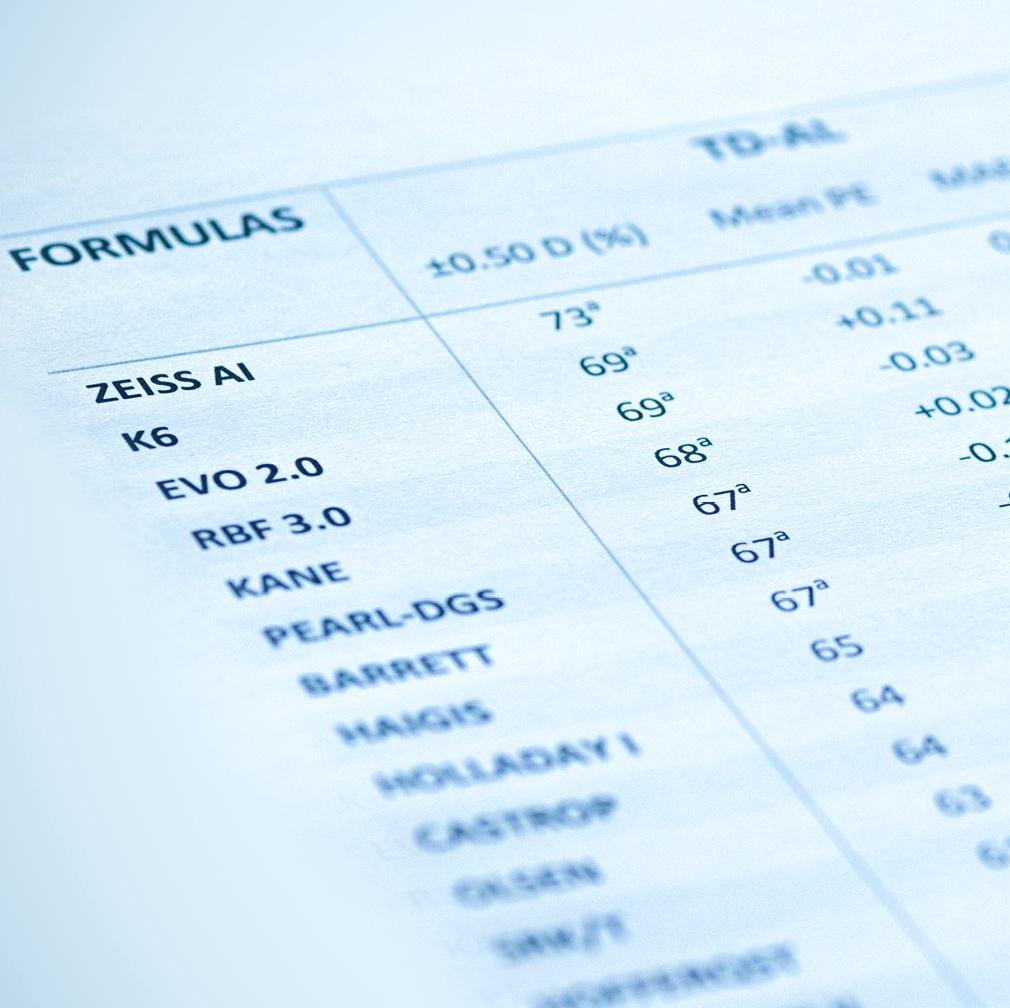
- First clinical data for the ZEISS AI IOL Calculator that compare it to other top formulas demonstrate its performance.1,4,5
- ZEISS experts individually check the performance of the ZEISS AI IOL Calculator.
- When using the ZEISS AI IOL Calculator you can rely on the work of our best engineers, software developers and AI experts.

First clinical data
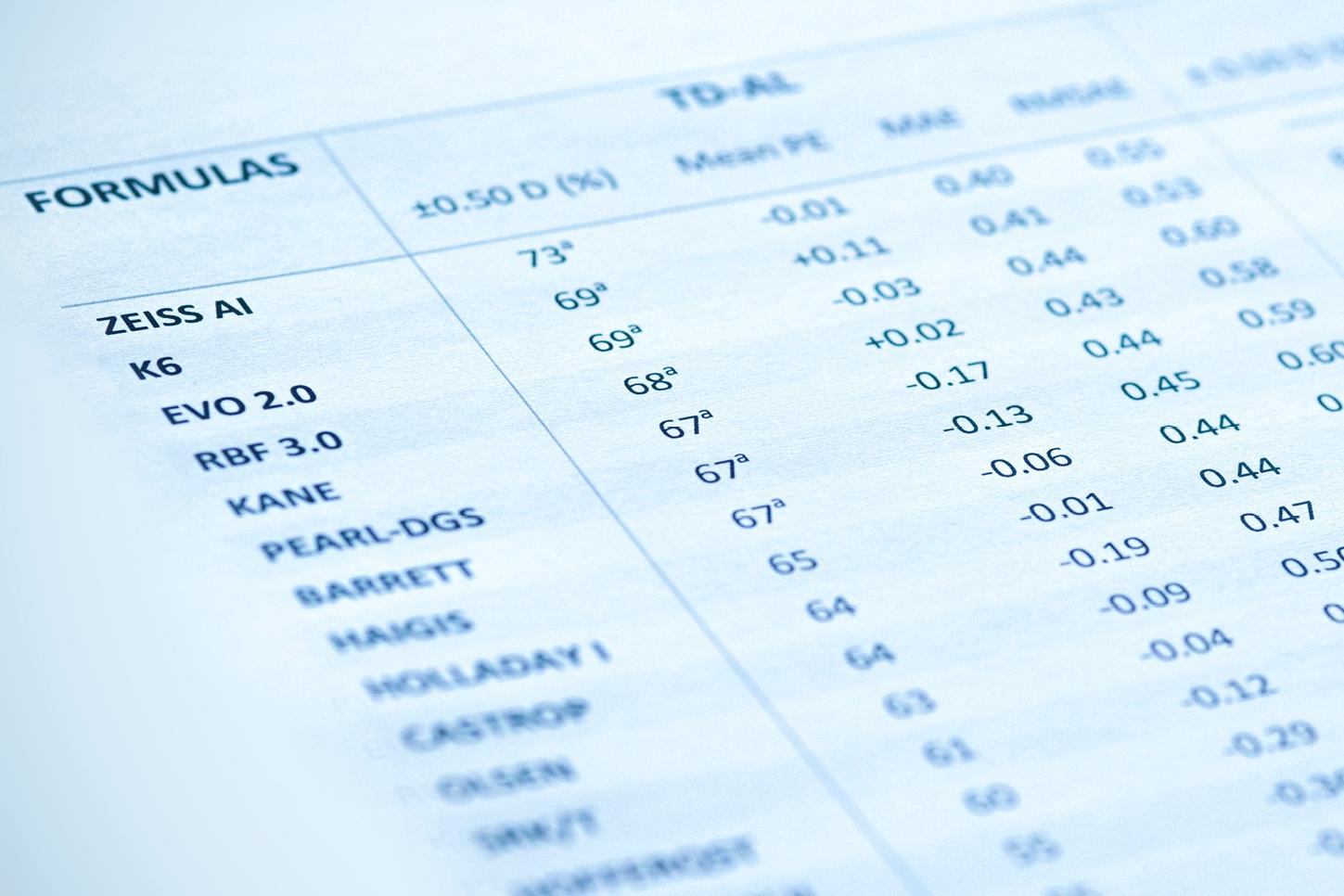
- In a peer-reviewed publication for 278 short eyes (AL ≤ 22.0 mm) ZEISS AI IOL Calculator had a significantly smaller MAE than other top performing formulas.1
- The same study concluded that the ZEISS AI IOL Calculator was the most accurate out of seven other top-performing formulas.1
- In another study the ZEISS AI IOL Calculator demonstrated an equivalent or lower (p<0.05) standard deviation of prediction error in a data set of 16,000+ eyes for three different IOL models.4
- In the same study the ZEISS AI IOL Calculator showed an equivalent or lower (p<0.05) mean absolute error of prediction than other top performing formulas in a data set of more than 1,400 short eyes (AL < 22.5 mm) implanted with three different IOL models.4,5


Thorough human experts checks
Before any IOL model can be calculated ZEISS experts individually check the performance of the ZEISS AI IOL Calculator. Only when its performance meets the ZEISS high-quality standards it’s being released and can be calculated.2
Pushing the boundaries since 1846
Fore more than 175 years ZEISS pushes the boundaries of what’s possible in optics. When using the ZEISS AI IOL Calculator you can rely on the work of our best engineers, software developers and AI experts who did what we do best: innovate to open a new chapter in precise IOL power calculation.
-
1
Kenny PI, Kozhaya K, Truong P, Weikert MP, Wang L, Hill WE, Koch DD. Efficacy of segmented axial length and AI approaches to IOL power calculation in short eyes. J Cataract Refract Surg. 2023 Mar 17.
-
2
ZEISS reserves the right to deactivate IOL models that have already been published for technical or other reasons.
-
3
Currently only available on ZEISS VERACITY Surgery Planner, not on ZEISS EQ Workplace.
-
4
Data on file.
-
5
Li Wang. AI-Based and Constants-Free IOL Power Calculation and Associated Methods for Performance Evaluation. ASCRS 2023. https://ascrs.org/clinical-education/presentations-on-demand/meetings/2023-ascrs-annual-meeting/dos-digital-day/2023-dos-1
Peer perspective video: Introducing the new ZEISS AI IOL Calculator
Douglas D. Koch, MDDr. Douglas D. Koch, is one of the first experts to test a new data-driven IOL power calculation algorithm that uses advanced artificial intelligence and paraxial ray tracing: the ZEISS AI IOL Calculator. In this video, he explains why this is a promising new approach and shows first clinical results.

Easy to work with
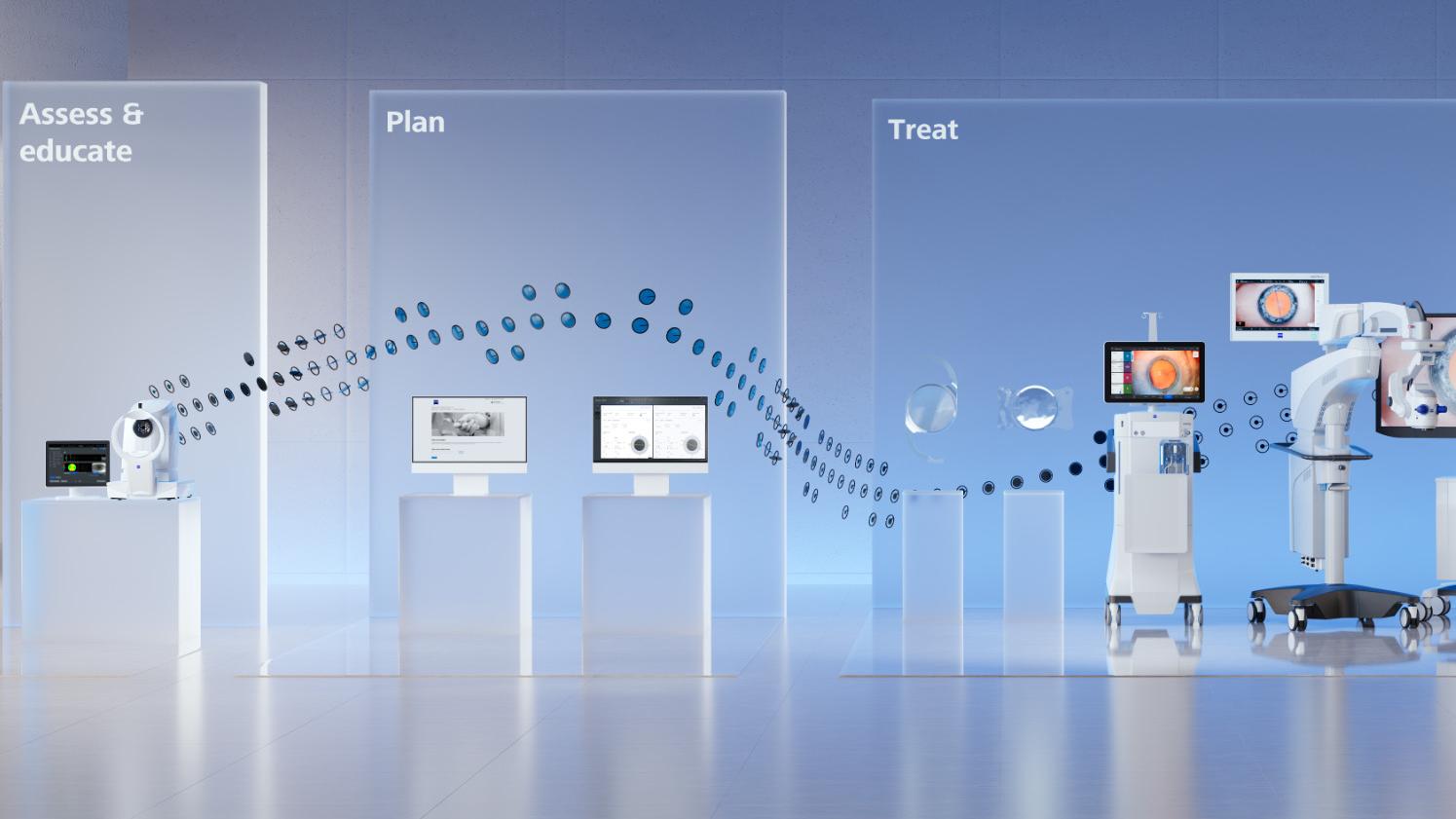
ZEISS AI IOL Calculator provides latest IOL power calculation in one click. It can be used like any other formula with no change in the clinical workflow. As it does not require any manual typing, it eliminates the risk of transcription errors.
Get in touch with us!
Receive more information about the product and availability in your country!Related products





-
1
Kenny PI, Kozhaya K, Truong P, Weikert MP, Wang L, Hill WE, Koch DD. Efficacy of segmented axial length and AI approaches to IOL power calculation in short eyes. J Cataract Refract Surg. 2023 Mar 17.
-
2
ZEISS reserves the right to deactivate IOL models that have already been published for technical or other reasons.
-
3
Currently only available on ZEISS VERACITY Surgery Planner, not on ZEISS EQ Workplace.
-
4
Data on file.
-
5
Li Wang. AI-Based and Constants-Free IOL Power Calculation and Associated Methods for Performance Evaluation. ASCRS 2023. https://ascrs.org/clinical-education/presentations-on-demand/meetings/2023-ascrs-annual-meeting/dos-digital-day/2023-dos-1