The real-world bottleneck: When brain data outgrows established analysis
In modern neuroscience research, the challenge often begins after the microscope has done its job. Advanced imaging can now capture entire brain regions and intricate cellular structures in three dimensions, often in hours rather than weeks.
But as datasets scale from gigabytes to terabytes, many imaging platforms encounter a new bottleneck: analysis workflows that no longer scale with scientific ambition.
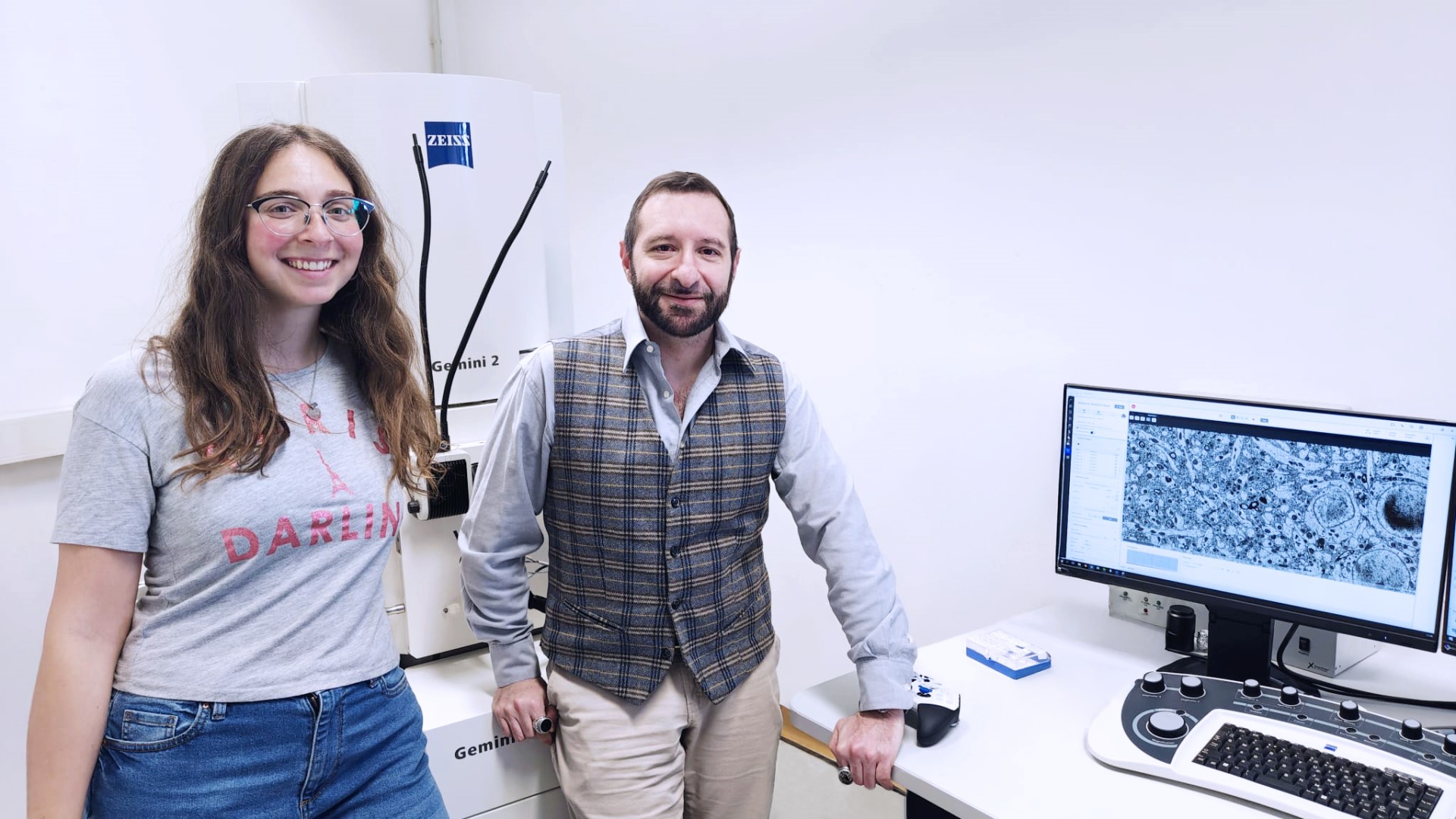
Chinese Institute of Brain Research (CIBR), where large-scale neuroscience imaging workflows are developed and applied
When global accuracy isn't enough
What once worked reliably at a global level can start to break down when precision is required locally. Small inaccuracies that seem negligible in large-scale datasets can directly affect quantitative results and downstream interpretation.
This becomes especially critical in imaging platforms, where multiple projects, data types, and user groups must be supported in parallel. As datasets grow in size and structural complexity, image analysis is no longer just a downstream step. It becomes a decisive factor in whether complex brain data can be translated into reliable scientific insight.
At the Chinese Institute of Brain Research (CIBR) in Beijing, this challenge is part of everyday practice. The institute investigates brain structure and function across scales, from whole-brain organization to subcellular networks. Supporting this research requires workflows that can keep pace with increasing complexity while maintaining scientific rigor.
These pressures raise a fundamental question for imaging platforms: what happens when established neuroscience imaging workflows are no longer sufficient?
In summary, we are facing three major challenges: extremely large data volumes, highly complex structures, and very high requirements for accuracy.
Established workflows reach their limits
In platform settings, the challenge is practical, not theoretical. Researchers expect workflows to be:
Reproducible across users and projects
Scalable as data volume and complexity increase
Applicable without constant one-off adjustments
When these expectations are not met, workflows become a bottleneck rather than an enabler.
At CIBR, this reassessment was driven by two concrete analytical challenges:
Local brain region registration required higher precision than existing workflows could consistently deliver .
Quantifying complex intracellular networks required more than visualization, but controlled extraction of measurable parameters.
Rather than replacing workflows wholesale, the focus shifted toward strengthening and extending analysis pipelines. The goal was to ensure workflows remain robust, repeatable, and platform-ready as data complexity grows.
This shift defined two key areas for quantitative 3D image analysis: precise local brain region alignment and quantitative analysis of complex intracellular structures.
The first of these challenges became visible in a particularly clear way during local brain region registration.
Comparison of brain atlas alignment before and after local refinement, showing improved accuracy of hippocampus registration within the whole‑brain context
Improving local brain region registration when precision becomes critical
One of the first areas where limitations became visible was 3D brain registration. At the whole-brain level, established registration workflows were reliable and efficient. But challenges emerged when researchers needed to focus on specific regions of interest, such as the hippocampus.
At this scale, small misalignments matter. Local inaccuracies can make it harder to compare signals across samples. They can also reduce confidence in quantitative interpretation. In other words: what works well for global context does not always deliver the precision needed for region-specific analysis.
To address this, local brain region registration was treated as a distinct analytical challenge. By combining brain atlas registration with volume fusion techniques, local alignment could be refined while preserving broader anatomical context.
This was not only a technical improvement. It removed a bottleneck for downstream analysis and increased confidence when evaluating region-specific signals.
At platform level, this case illustrates a broader lesson: as research questions become more targeted, analysis workflows must evolve to deliver precision exactly where it is needed.
Later, by combining the brain atlas registration algorithms with the Volume Fusion function, the alignment accuracy of local brain regions improved significantly.
Refining local brain region registration for higher precision
Third-party Content Blocked
The video player is blocked due to your cookie preferences. To change the settings and play the video, please click the button below and consent to use of "Functional" tracking technologies.
Registration of mouse hippocampus data into a whole‑brain atlas, showing the transition from initial misalignment outside the atlas to accurate integration after correction
2026,
Sample prepared by Dr. He Di, Sun Wenzhi Lab
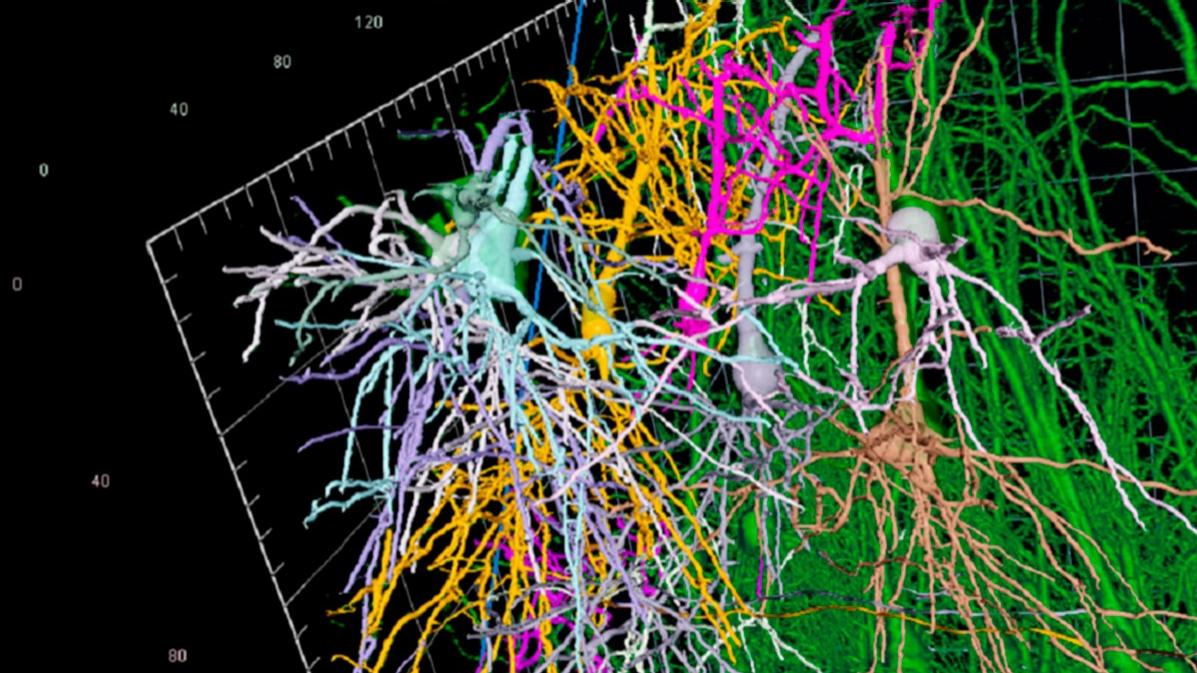
ER network visualized by fluorescence microscopy, illustrating the complex and interconnected structures that challenge purely visual analysis
When visualization is not enough: quantifying endoplasmic reticulum topology
Beyond brain region registration, similar limitations emerge at an even finer structural level. In intracellular imaging, visualization alone is often insufficient – especially when research questions require quantitative comparison across conditions. This is particularly true for studies focusing on the endoplasmic reticulum (ER), where subtle changes in network organization need to be compared quantitatively. Even with advanced microscopy techniques such as structured illumination microscopy, visual inspection alone does not reliably capture subtle but biologically relevant differences in network organization.
For imaging platforms, this creates a specific challenge. Quantitative analysis of ER networks must be reproducible across datasets and users. Features such as branch points, endpoints, and segment geometry need to be identified consistently, while common artifacts – e.g. loops or short fragments – must be controlled to avoid biasing results and reducing confidence in the analysis.
To address this, ER analysis was approached as a quantitative, parameter‑controlled workflow rather than a descriptive one. AI‑based image segmentation enables the extraction of ER structures from complex image data, reducing user‑dependent variability at the segmentation stage. Subsequent tubular analysis translates these structures into defined, measurable network elements, allowing parameters to be adjusted and applied consistently across datasets.
At platform level, this shift moves ER analysis from visual interpretation toward reproducible quantification. As a result, the same analysis logic can be applied consistently across experiments and users, an essential requirement for imaging platforms that support multiple projects in parallel.
This level of control over accuracy is what gives quantitative research its confidence.
From ER network visualization to quantitative analysis
Sample prepared by Dr. He Di, Sun Wenzhi Lab
ER network structure analyzed with arivis (original data), representing raw microscopy visualization
ER network structure analyzed by arivis (original data).
Sample prepared by Dr. He Di, Sun Wenzhi Lab
Segmented ER network showing extracted tubular structures for further structural analysis
ER network structure analyzed by arivis (analysis result).
Sample prepared by Dr. He Di, Sun Wenzhi Lab
Zoom‑in view highlighting ER network topology with clearly defined branches and node connectivity
ER network structure analyzed by arivis (zoom-in result).
Quantitative parameters derived from ER network analysis, enabling reproducible measurement of structural features
Arivis facilitates the identification of ER types and the extraction of quantitative parameters.
What matters in platform level image analysis
Across these applications, one requirement stands out: workflows must perform reliably beyond individual experiments.
In platform environments, software is used by researchers with varying experience levels, across multiple projects, often under time pressure.
That places clear demands on workflow design:
Robustness and repeatability once a pipeline is established
Flexibility as data types and research questions evolve
Scalability as datasets grow
When these elements align, image analysis becomes a dependable foundation for advanced neuroscience research and not a limiting factor.
Key takeaways for imaging platforms
Global workflows reach their limits
As data volume and structural complexity increase, analysis workflows designed for global alignment alone are no longer sufficient.
Quantification requires local precision
Reliable quantitative research depends on precise local alignment and controlled accuracy, especially for region‑specific and intracellular analysis.
Platform‑ready workflows must scale
Imaging platforms need workflows that balance robustness, scalability, and usability to support multiple users and projects in parallel.
Looking ahead: from complex data to dependable insight
As neuroscience imaging continues to advance, the gap between acquisition and interpretation is likely to grow. Resolution, scale, and dimensionality will increase. Expectations for quantitative rigor will rise in parallel.
In this environment, image analysis workflows will become even more central.
Future progress will depend not only on handling larger datasets, but also on integrating analysis more seamlessly into platform environments that support increasingly diverse users, projects, and biological questions.
About the CIBR
The Chinese Institute of Brain Research (CIBR) in Beijing advances understanding of brain structure and function across scales.
The institute brings together neuroscience, imaging, and data analysis, supporting both fundamental research and translational applications.
Yes, these workflows are designed to handle diverse biological structures across multiple scales and imaging modalities.
The quantitative 3D image analysis approach demonstrated at CIBR is built on platform-ready principles that extend beyond specific applications. Whether analyzing neuronal networks, vascular structures, organoid morphology, or other complex 3D biological systems, the core workflow elements – AI-based segmentation, parameter-controlled quantification, and scalable processing – can be adapted to different research questions. The key is that workflows maintain robustness and reproducibility regardless of the specific biological structure being studied, making them suitable for multi-project imaging platforms across diverse research domains.
Workflows are designed for researchers with varying experience levels, balancing accessibility with advanced analytical control.
Platform-ready image analysis workflows prioritize usability across different user skill levels. While initial workflow setup may benefit from imaging platform expertise, once established, pipelines can be applied consistently by researchers without deep computational backgrounds. The combination of AI-based segmentation and parameter-controlled analysis reduces the need for manual, expertise-dependent adjustments. This design philosophy ensures that advanced quantitative capabilities remain accessible in multi-user environments where team members have diverse technical backgrounds and experience levels.
Platform-ready workflows are specifically designed to maintain performance and reproducibility as both datasets and user numbers grow.
Scalability is a core design principle for modern imaging platform workflows. As demonstrated at CIBR, the approach handles the transition from gigabyte to terabyte-scale datasets while maintaining analytical consistency. Key scalability factors include robust algorithms that perform reliably across data sizes, standardized pipelines that deliver reproducible results across different users and projects, and flexible parameter control that accommodates evolving research questions without requiring complete workflow redesign. This ensures that imaging platforms can support growing research demands without compromising quantitative accuracy or creating new bottlenecks.