
Digital Slide Scanner
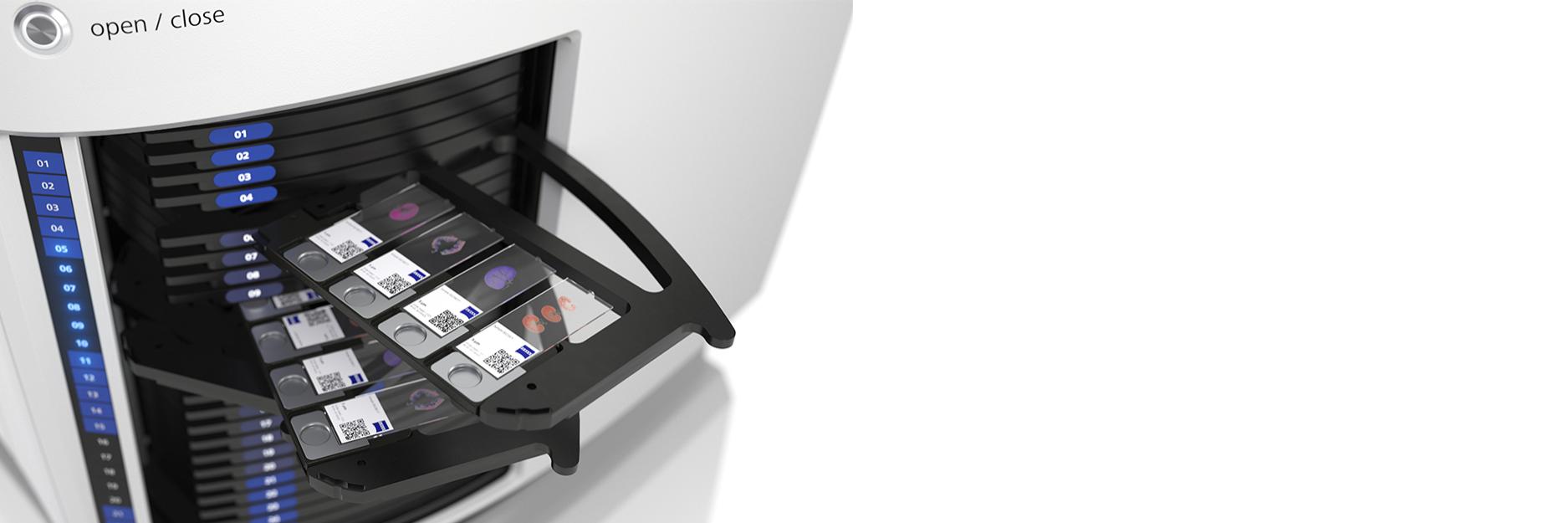
ZEISS Axioscan 7Discover high-performance digital slide scanning tailored to your application needs. Whether your focus is spatial biology at scale, life science research, clinical applications or geology, the Axioscan 7 slide scanning microscope brings you advanced automation capabilities and exceptional image quality.
Workflow demos for biotech & pharma
Select the demo that suits your needs- Virtual demo: Personalized insights into ZEISS technology
- Demo at ZMCC: Visit ZEISS Microscopy Customer Center (ZMCC)
- Select your experience: Choose the demo that fits your schedule
Slide Scanning Solutions for Your Field of Application
ZEISS Axioscan 7 configurations are designed to meet your unique requirements.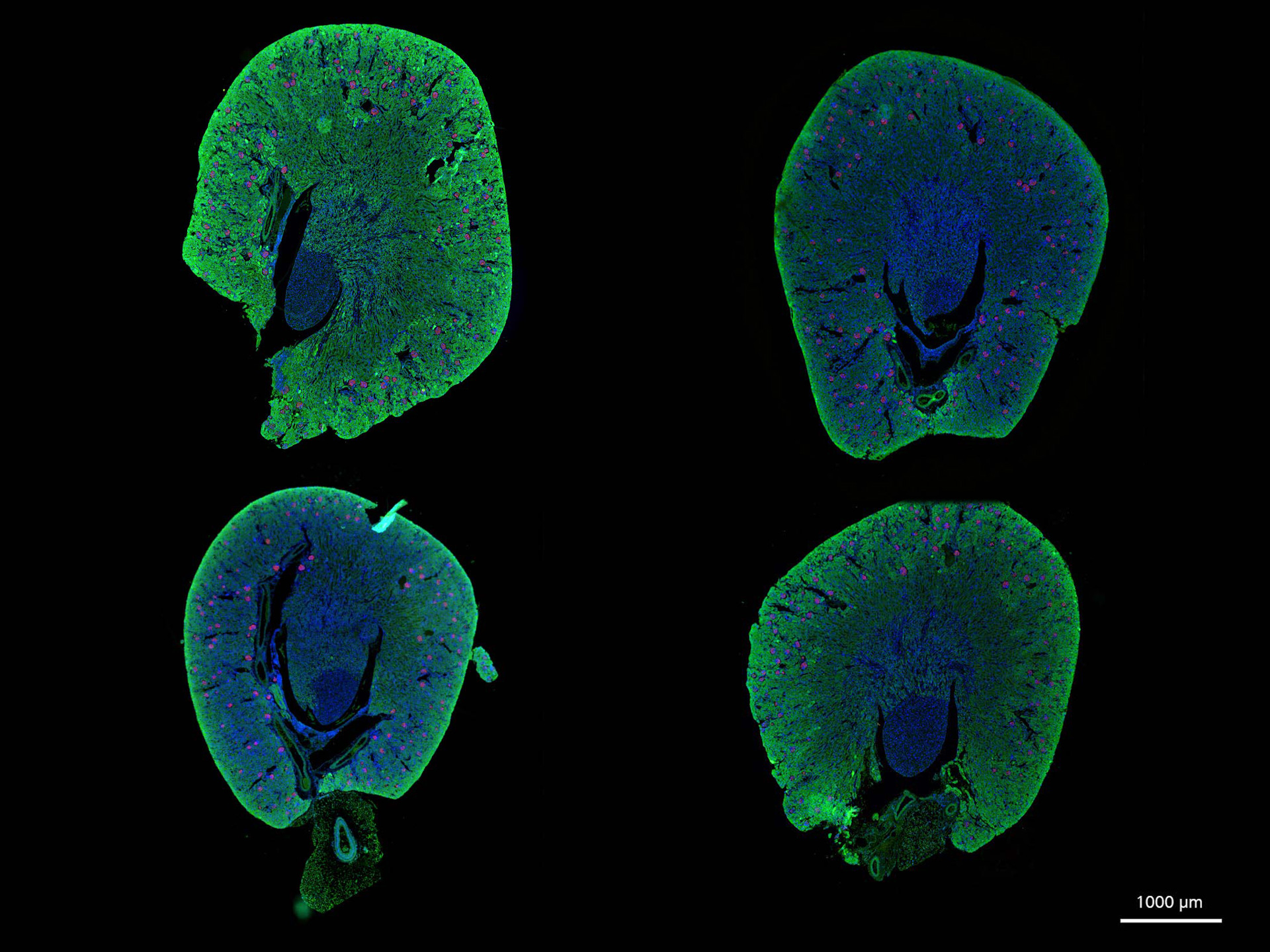

Axioscan 7
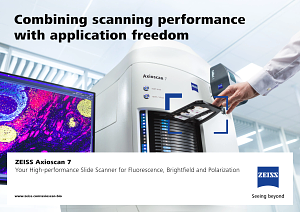
Scanning performance combined with application freedom- Benefit from application flexibility in a multi-user environment.
- Switch rapidly between fluorescence, brightfield and polarization.
- Get research-grade data quality for demanding fluorescence applications.
- Use powerful ZEN software to access many more processing and analysis functions.


Axioscan 7 spatial biology
Scalable multiplex imaging for routine applications- Speed up multiplex imaging of up to eight fluorescence stained biomarkers.
- Benefit from solutions for robust, automated tissue detection and hyperplex cyclic imaging assays.
- Get an optimized configuration for superior inter-day and inter-device reproducibility.
- Choose from complementary software offerings for lab-automation, LIMS integration and AI-based image analysis.


|
Axioscan 7
|
Axioscan 7 spatial biology
|
Axioscan 7 geology
|
|
|---|---|---|---|
|
Slide formats |
12 / 100 slides |
100 slides |
12 / 100 slides |
|
Contrasting techniques |
Brightfield, fluorescence, circular polarization, crossed linear polarization, TIE (transport of intensity equation) |
Brightfield, fluorescence; TIE (transport of intensity equation) |
Brightfield, fluorescence, circular polarization, crossed linear polarization, TIE (transport of intensity equation) |
|
Objectives |
Choose from 14 objectives |
3 objectives |
Choose from 14 objectives |
|
Recommended cameras |
Axiocam 705 color, Axiocam 712 mono, Hamamatsu Orca Flash 4.0 |
Axiocam 820 mono w/ 0.8x adapter, Axiocam 705 color w/ 0.8x adapter |
Axiocam 705 color, Axiocam 712 mono, Hamamatsu Orca Flash 4.0 |
|
Image analysis/ workflow integration |
ZEN or any third-party solution |
ZEN; Protocol selection and scan operation via SlideStream software; coregistration of multiple staining rounds; Mindpeak AI based image analysis |
ZEN or any third-party solution |
|
Certification for clinical diagnosis |
– |
– |
– |
-
Scanning performance combined with application freedom
Axioscan 7 combines qualities that you would never expect to find in a slide scanner—things like high-speed digitization and outstanding image quality, plus an unrivaled variety of imaging modes—all wrapped up in a fully automated and easy to operate system. Even the most challenging research tasks are supported by powerful hardware and perfectly featured software. Give your imaging facility users the ability to capture virtual slides quickly and with consistently high quality, whether their applications call for brightfield, fluorescence or polarization imaging.
A Variety of Super-fast Brightfield Imaging Modes
A newly designed condenser with its motorized modulator disk lets you switch automatically between different brightfield imaging modes to adapt to the different requirements of your applications. This opens up a whole new range of experiments and modality combinations, with:
- dramatically improved scan speeds in all brightfield imaging modes
- better sample detection and focusing
- new phase and relief contrast options
- circular and linear polarization now fully supported.

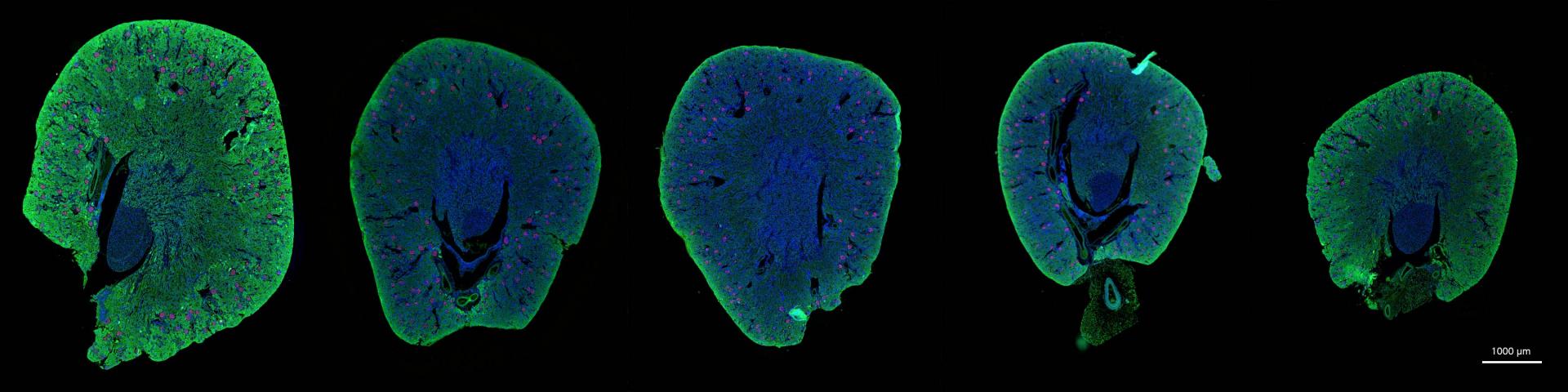
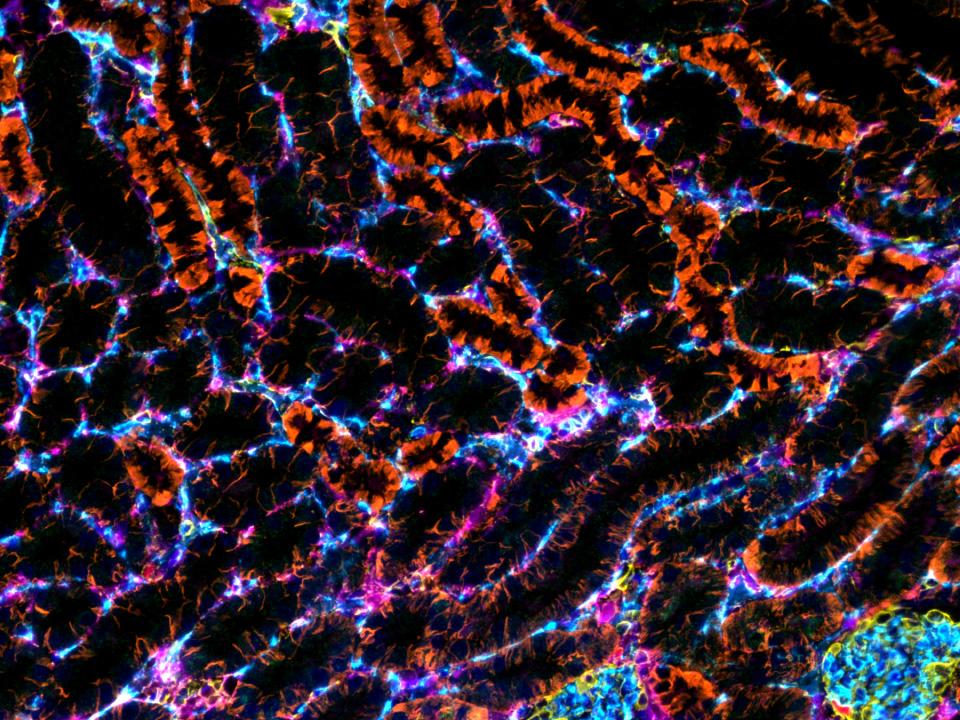
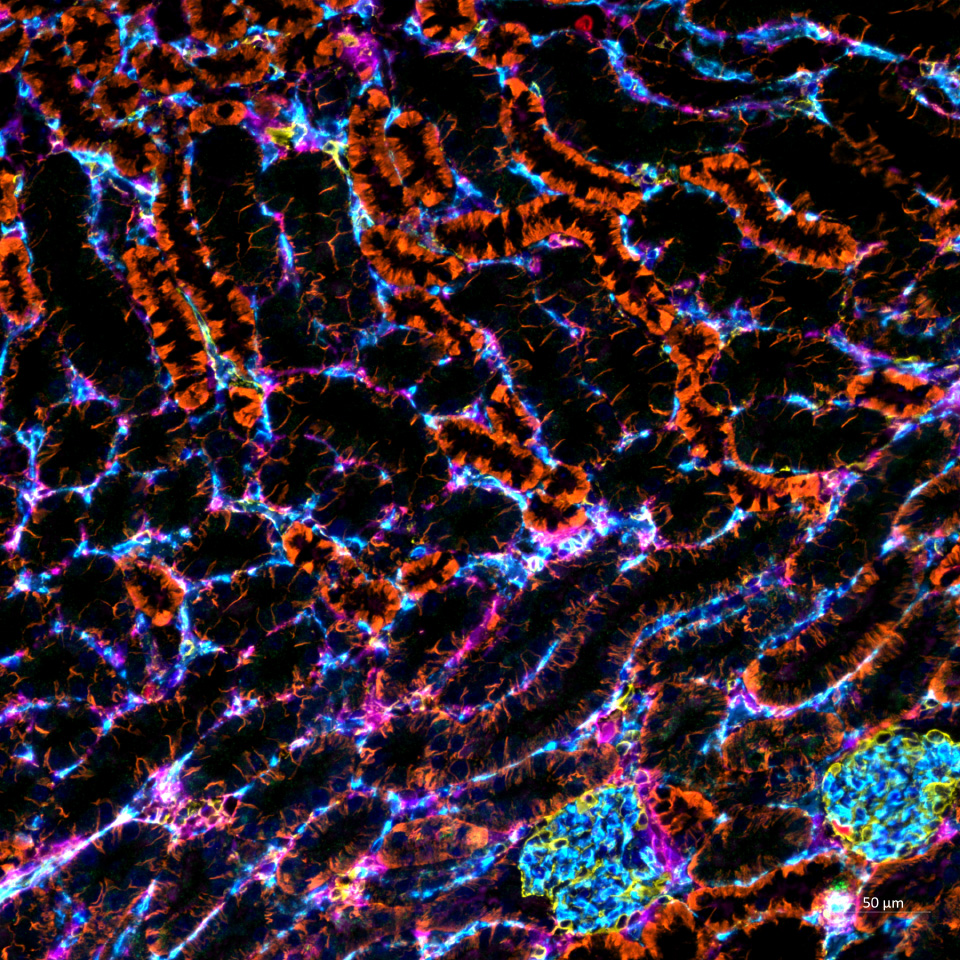
Paraffin-embedded mouse kidneys from healthy wildtype animals (12 weeks). Nephrin stained with Cy3. PCNA APC (FarRed) and DAPI as counterstaining. Imaged with 20× NA 0.8 objective.
Paraffin-embedded mouse kidneys from healthy wildtype animals (12 weeks). Nephrin stained with Cy3. PCNA APC (FarRed) and DAPI as counterstaining. Imaged with 20× NA 0.8 objective.
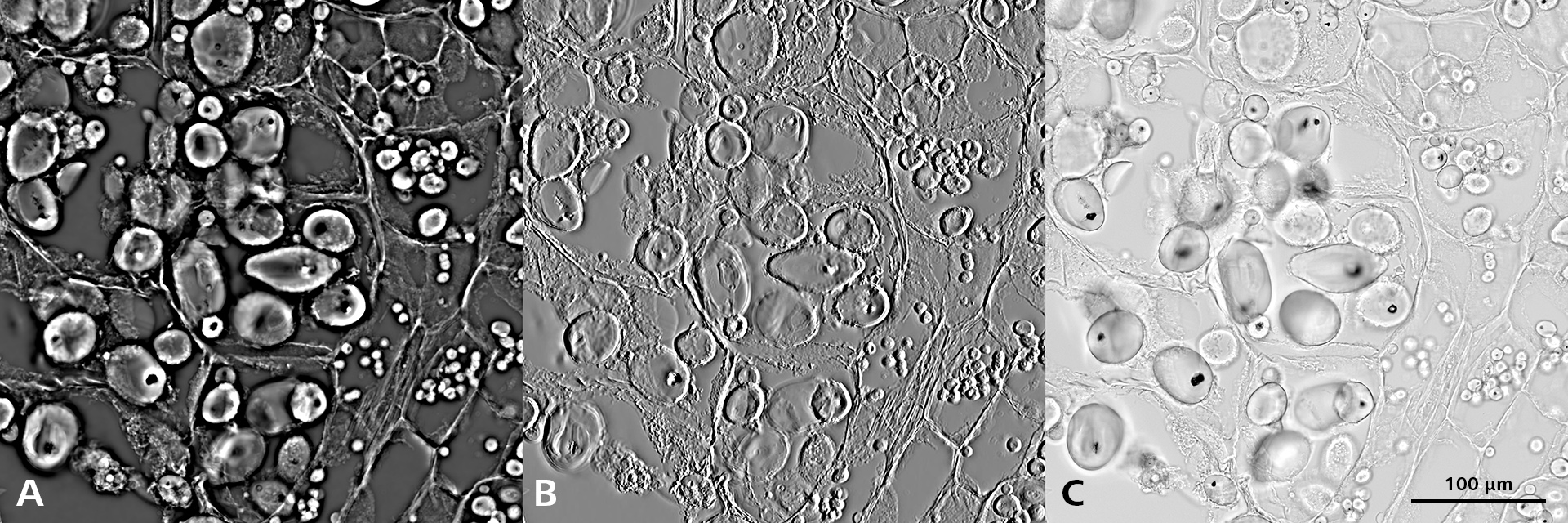
Solanum tuberosum – potatoe starch, 20x Plan-Apochromat 0.8; A) TIE phase contrast, B) TIE relief contrast, C) Brightfield
Solanum tuberosum – potatoe starch, 20x Plan-Apochromat 0.8; A) TIE phase contrast, B) TIE relief contrast, C) Brightfield
-
Workflow automation for multiplexed spatial profiling at scale
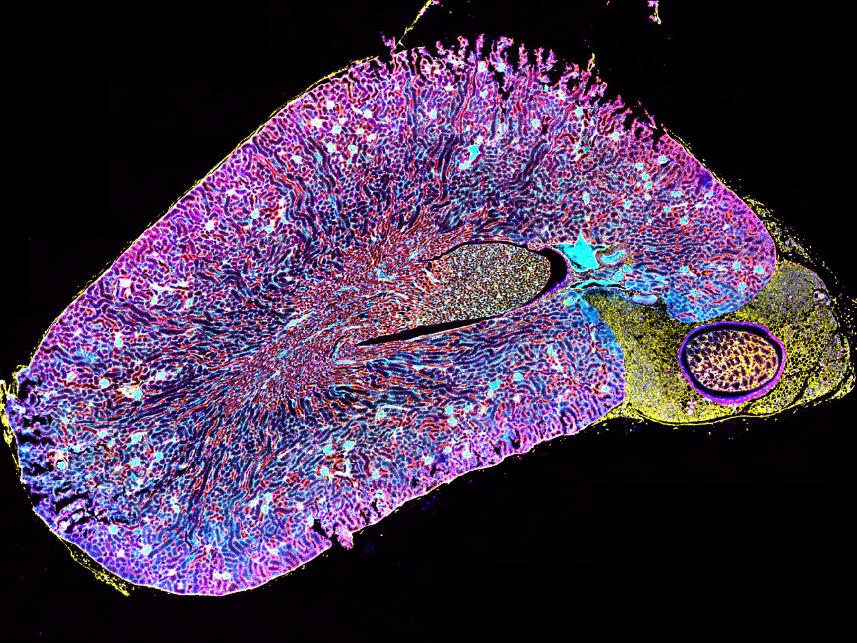
By leveraging multiplex immunofluorescence (mIF) staining with multiple biomarkers, spatial biology allows simultaneous visualization and quantification of numerous proteins within a single tissue section. This enables detailed analysis of cell presence, abundance, spatial distribution and cell-to-cell interactions.
Load ZEISS Axioscan 7 spatial biology with 100 samples and scan them all in less than a day with unprecedented speed, fully automated and supported by AI-enabled tissue detection and high dynamic range imaging. Analyze up to eight biomarkers at the same time and generate highly reproducible data that you can rely on. We offer complimentary service solutions to integrate streamlined workflow solutions into pre-existing LIMS and IMS systems.


Increase your plex, not your workload
High‑plex imaging provides more insights per sample, but often comes at the cost of more complex workflows. Different reagent vendors may require dedicated filter sets supporting their fluorophores, limiting your flexibility to choose the best staining chemistry. At the same time, adding more markers reduces the spectral distance between fluorophore emission peaks, making it harder to titrate staining intensities to minimize cross‑talk and bleed‑through.
Axioscan 7 spatial biology provides a filterset with the broad compatibility to popular reagent systems together with factory‑defined scan protocols including spectral unmixing. This helps you to:
- Stain more markers without constantly changing filters or re‑engineering your optical setup,
- Stay flexible in your choice of staining chemistries,
- Generate high quality images, even as you increase the number of markers.
In short, you can grow the plex of your assays while keeping setup costs and optimization work under control.
Compatible single dyes (examples)StreptaClick® TSA KromnigonIn-Situ-Plex Ultivue by VizgenCFP™ Cleavable TSA SpatomicsOPAL™ TSA Quanterix Spatial (formerly Akoya Biosciences)SignalStar® mIHC Cell Signaling TechnologyViolet-Z
DAPI, Hoechst 33342, Alexa Fluor 405, BFP, Lysotracker Blue
DAPI
DAPI
DAPI
DAPI
DAPI
Blue-Z
CF 430, CFP, Alexa Fluor 430, LysoSensor Green, Atto 425, Aqua, OPAL 480, Tyramide, CF 430
Tyramide CF 430
–
CFP 440
OPAL 480
–
Green-Z
Atto 488, FITC, Alexa Fluor 488, GFP, MitoTracker Green, OPAL520, Tyramide 488
Tyramide 488
FITC
CFP 490
OPAL 520
Signalstar 488
DeepRed-ZL
Z488L, Tyramide LS
Tyramide LS
Tyramide LS
–
–
–
Yellow-Z
Atto565, Cy3, Alexa Fluor 546, Alexa Fluor 555, Alexa Fluor 568, Cy3.5, TRITC, DsRed, OPAL 570, Tyramide 555
Tyramide 555
Cy3
CFP 545
OPAL 570
–
Red-Z
Alexa Fluor 594, Atto 594, Alexa Fluor 594, mCherry, Texas Red, OPAL 620, Tyramide 594
Tyramide 594
–
CFP 595
OPAL 620
Signalstar 594
DeepRed-Z
Cy5, Cy5.5, Atto 647, Alexa Fluor 647, Alexa Fluor 660, OPAL 650, OPAL 670, OPAL 690, Tyramide 647
Tyramide 647
Cy5
CFP 645
OPAL 690
Signalstar 647
NIR-Z
Alexa Fluor 750, iFluor750, Cy7, Alexa Fluor 750, OPAL 780, Styramide iFluor750
Styramide iFluor 750
Cy7
CFP 750
OPAL 780
Signalstar 750


Autofluorescence correction for cleaner, more usable channels
Tissue autofluorescence can become a major limitation for high‑plex imaging, especially in the blue to green spectral range (for example, DAPI and FITC channels). In some tissue types, these channels become so noisy that they are practically unusable. Unlike assay chemistry or filter selection, researchers have very few effective levers to reduce autofluorescence, and simple signal amplification is not always possible or desirable.
With Axioscan 7 spatial biology, spectral unmixing also extends to tissue autofluorescence. By capturing the characteristic autofluorescence signal and separating it from the true fluorophore signals, the system can:
- Substantially improve image quality in the affected channels
- Recover markers that would otherwise be obscured by background
- Enable more accurate quantification in downstream image analysis
This means you can make better use of the full spectrum, rather than avoiding certain channels because of autofluorescence.
![Composite figure illustrating spectral unmixing and FINE correction on multiplex immunofluorescence of tissue. Panel A (left): Four large images of the same tissue section. First image shows a blue DAPI nuclear stain. Second is a series of overlaid cytokeratin (CK) images displayed in multiple colors (cyan, green, yellow, red, magenta) corresponding to different channels. Third image shows CK in a single magenta channel. Fourth image is an unstained grayscale image of the tissue, highlighting autofluorescence and background. Panel B (top right): Line graph titled “New reference spectra – Unmixing Spectra” with wavelength on the x‑axis (≈450–750 nm) and relative intensity on the y‑axis (0–1). Multiple colored curves (DAPI, CFP, FITC, Cy5‑L5, TRITC, Cy5, Cy7, AF Tonsil) show distinct emission profiles used as updated reference spectra for unmixing. Panel C (bottom left): Two schematic diagrams labeled “Before FINE” and “After FINE”. Each has a plot with the y‑axis “rel. channel intensity [%]” from −50% to +50% and three vertical gray bands labeled Scanner 1–3 on the x‑axis. Colored dots (blue, green, red) indicate channel intensities across scanners: before FINE they are scattered and inconsistent; after FINE they cluster near the horizontal center line, indicating harmonized intensities. Next to each plot is a simplified spectral diagram with colored lines (blue, green, red) showing misaligned spectra before FINE and overlapping, aligned spectra after FINE. Panel D (bottom right): Example of a multiplex stained whole‑slide image. Left image labeled “Raw” shows a brightly colored composite map of the tissue with pseudocolors for markers (CD3, CD8, CD68, PDL1, Ki67, CK, Nuclei) listed in a legend. To the right, two images labeled “unmixed” display the same tissue after spectral unmixing, with cleaner separation of markers and reduced background, including a zoomed‑in region on the far right.](https://www.zeiss.com/content/dam/rms/reference-master/products/imaging/axioscan-7/spatial-biology/spectral-unmixing-screens_02.jpg/_jcr_content/renditions/original.image_file.1920.960.0,47,1920,1007.file/spectral-unmixing-screens_02.jpg)
(A) Prepare a set of tissue sections stained with one fluorophore per section, plus one unstained section to measure tissue autofluorescence. Robust, easy‑to‑stain markers such as cytokeratin or Ki‑67 can be used for all channels; your actual markers of interest are not required for calibration.
(B) The wizard uses these sections to automatically generate the required reference spectra.
(C) All Axioscan 7 spatial biology instruments are adjusted to deliver very similar fluorescence response per channel, so the same reference spectra can be used on multiple scanners.
(D) The resulting reference spectra are used by the optimized unmixing algorithm and can be applied across a wide range of assays using the same fluorophore set.This combination of pre‑optimized and easy‑to‑generate unmixing profiles helps you standardize unmixing across panels, studies, and instruments, reducing setup time and improving reproducibility.

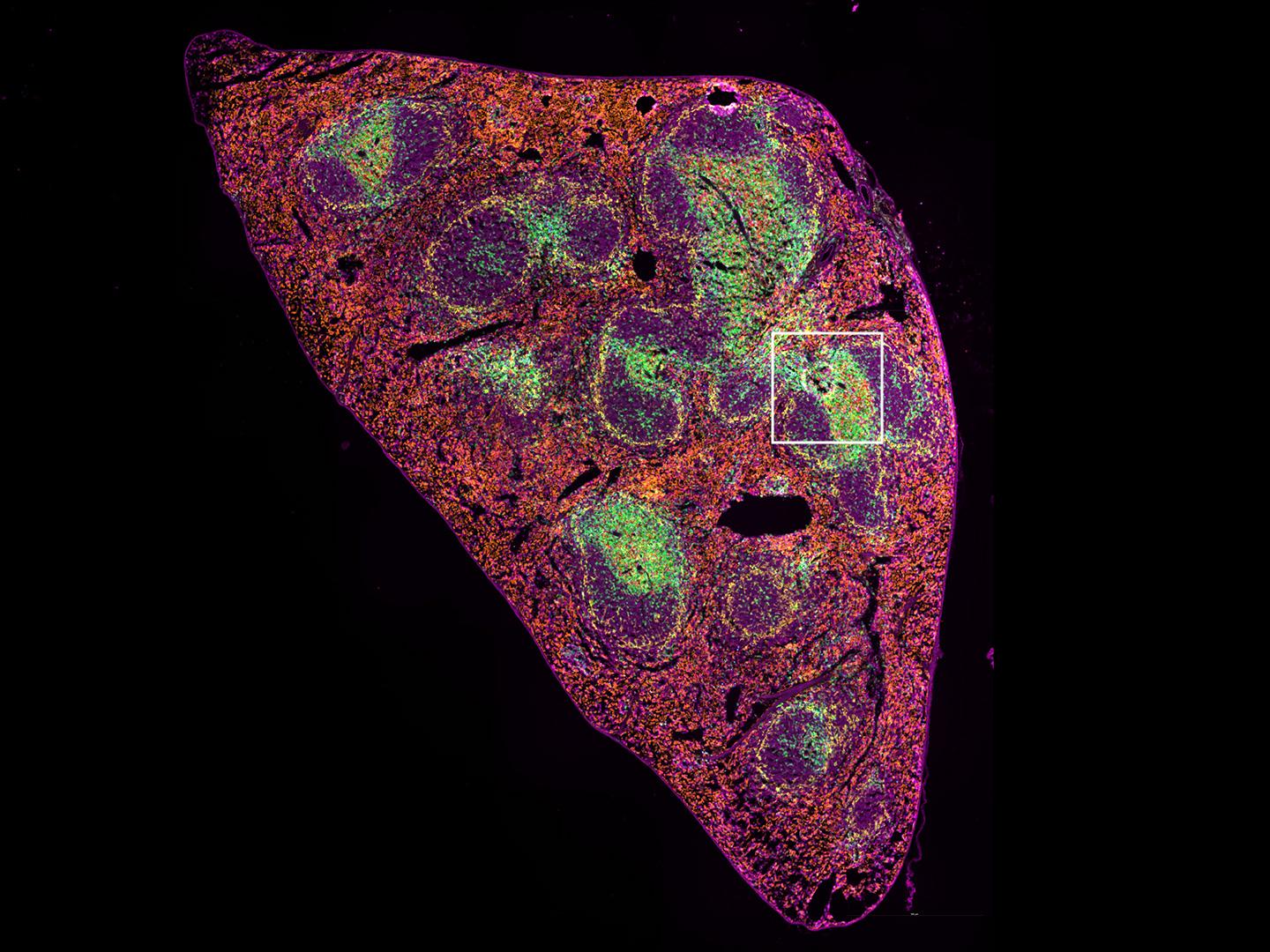
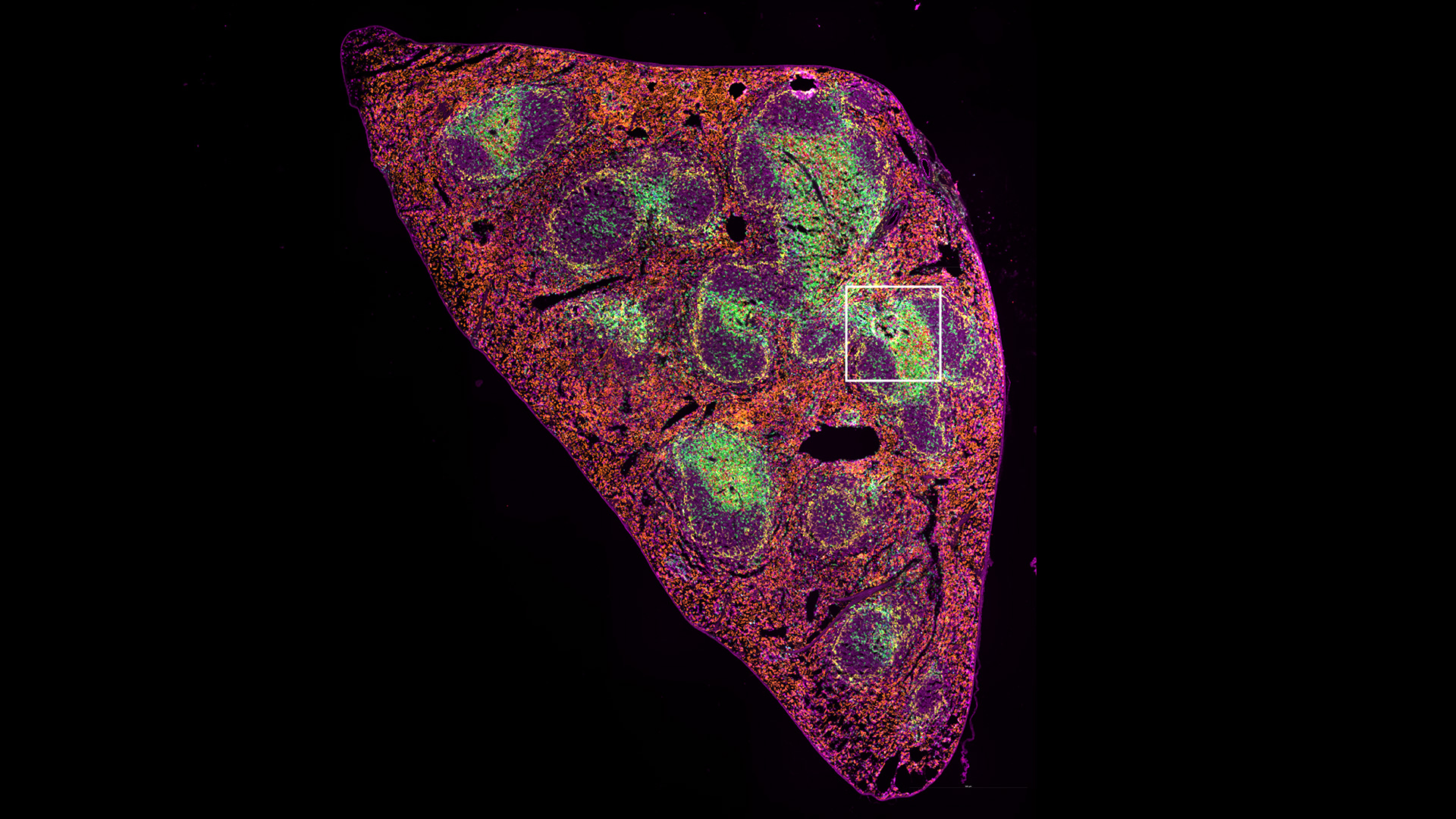
Mouse spleen fresh frozen sections, 8-plex staining of CD11c, CD4, F4/80, CD8, CD11b, B220, CD169, DAPI using Kromnigon StreptaClick® technology. DAPI is not shown on this image.

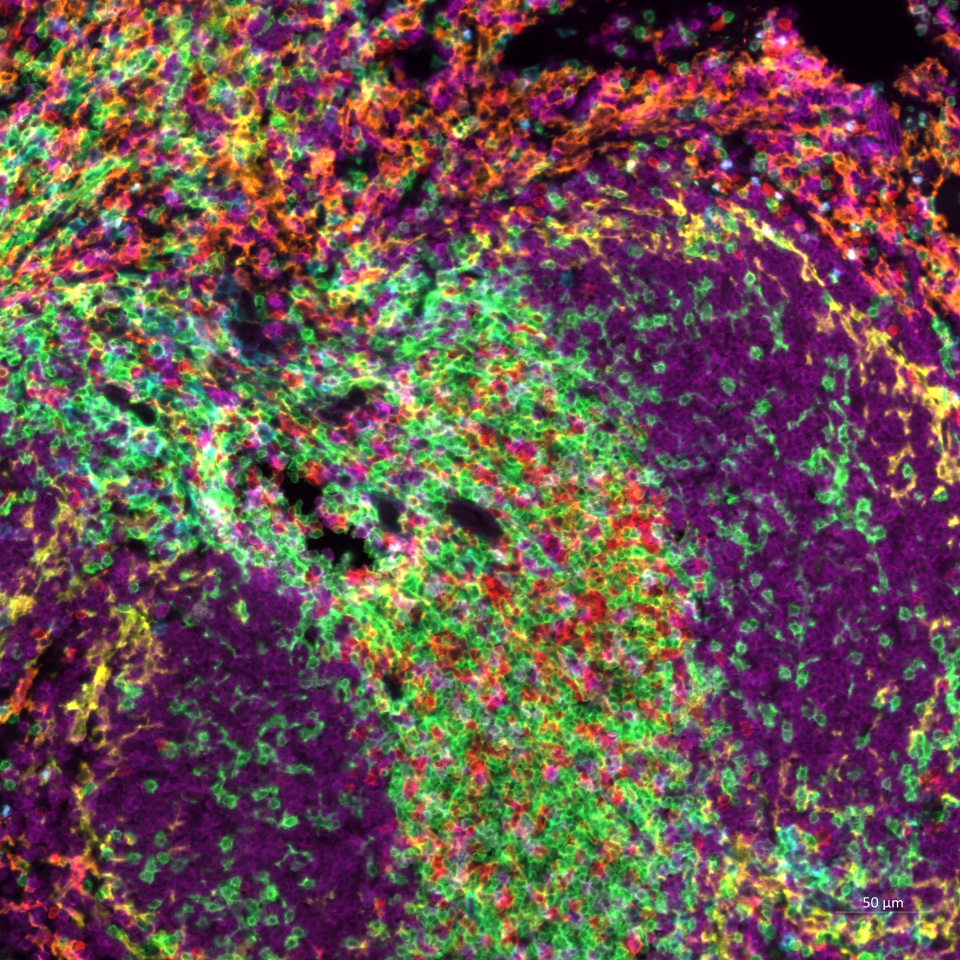
Mouse spleen fresh frozen sections. Picture detail.
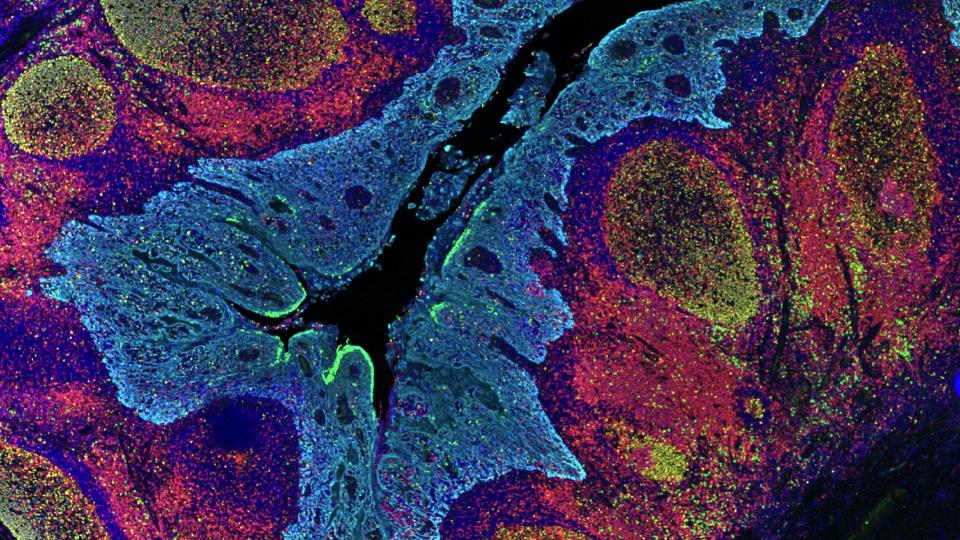
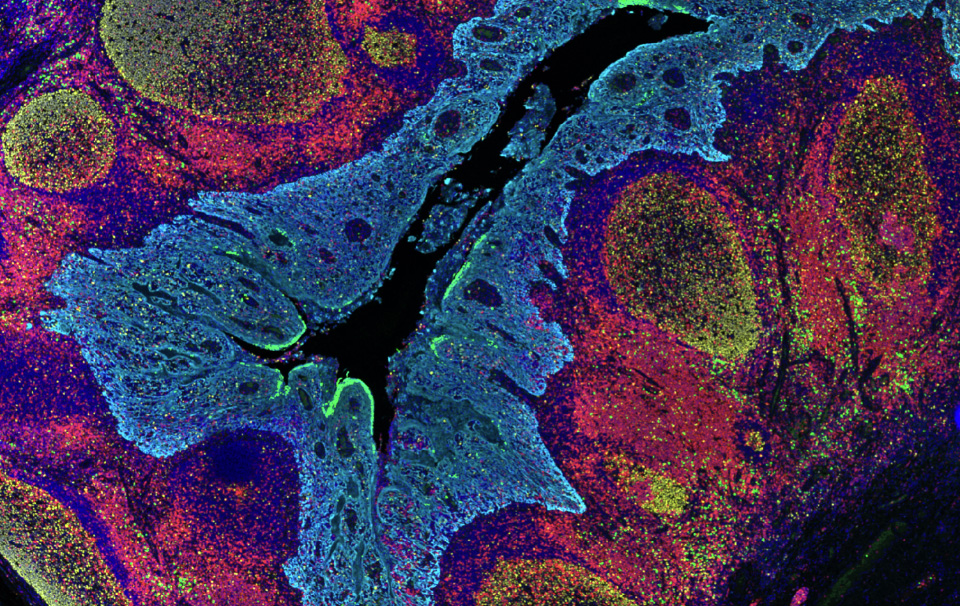
Human tonsil FFPE tissue section stained with Ki67, GranzymeB, CD3, CK/SOX10, DAPI.
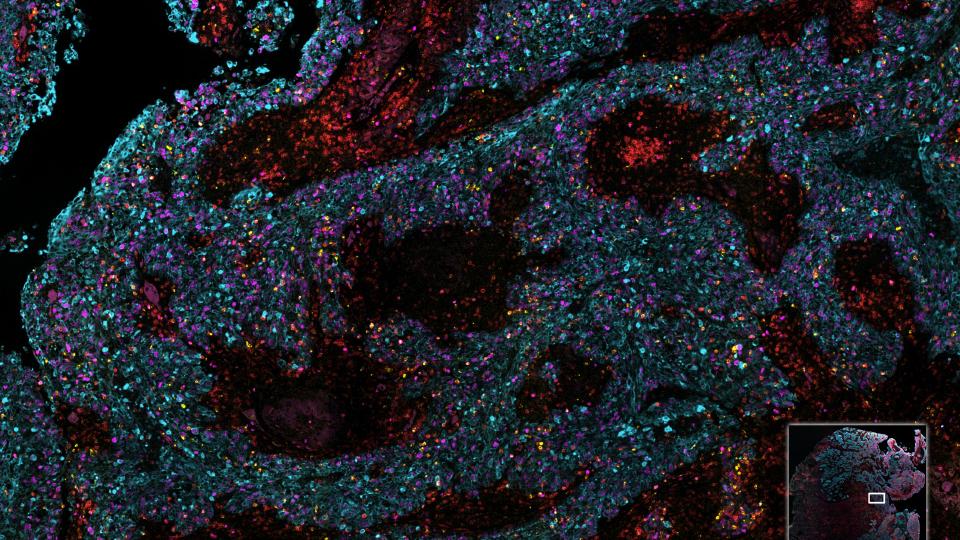
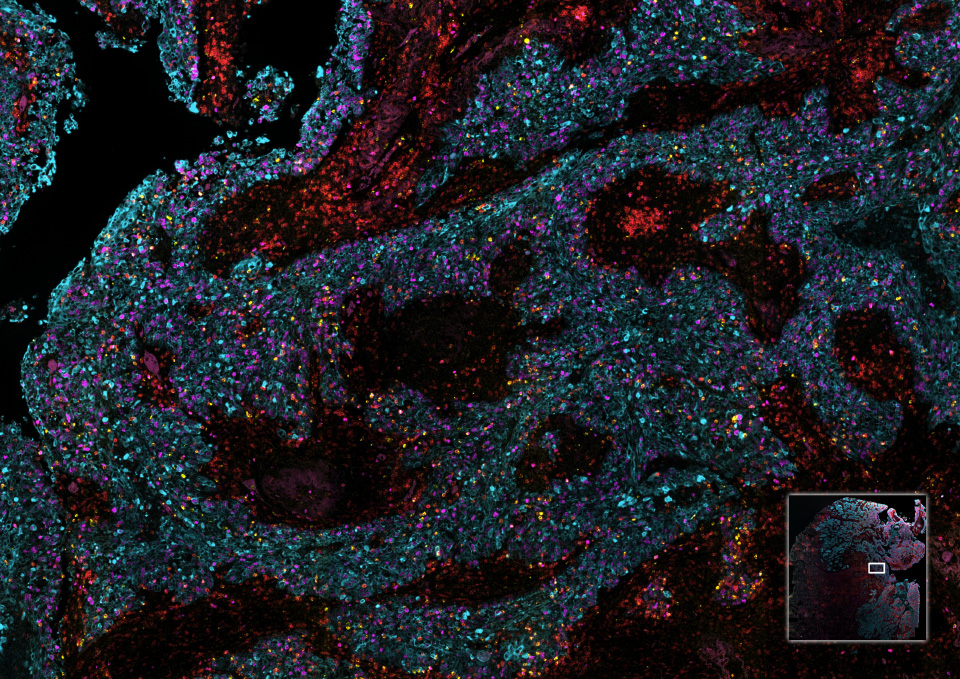
A composite image of Non-Small Cell Lung Cancer tissue, stained with Ki67, GranzymeB, CD3, CK/SOX10, DAPI.
Sample is courtesy of Concept Life Sciences, CRO in UK.
A mouse liver FFPE tissue section stained with 6 biomarker targets and DAPI.
A mouse liver FFPE tissue section. Picture detail.
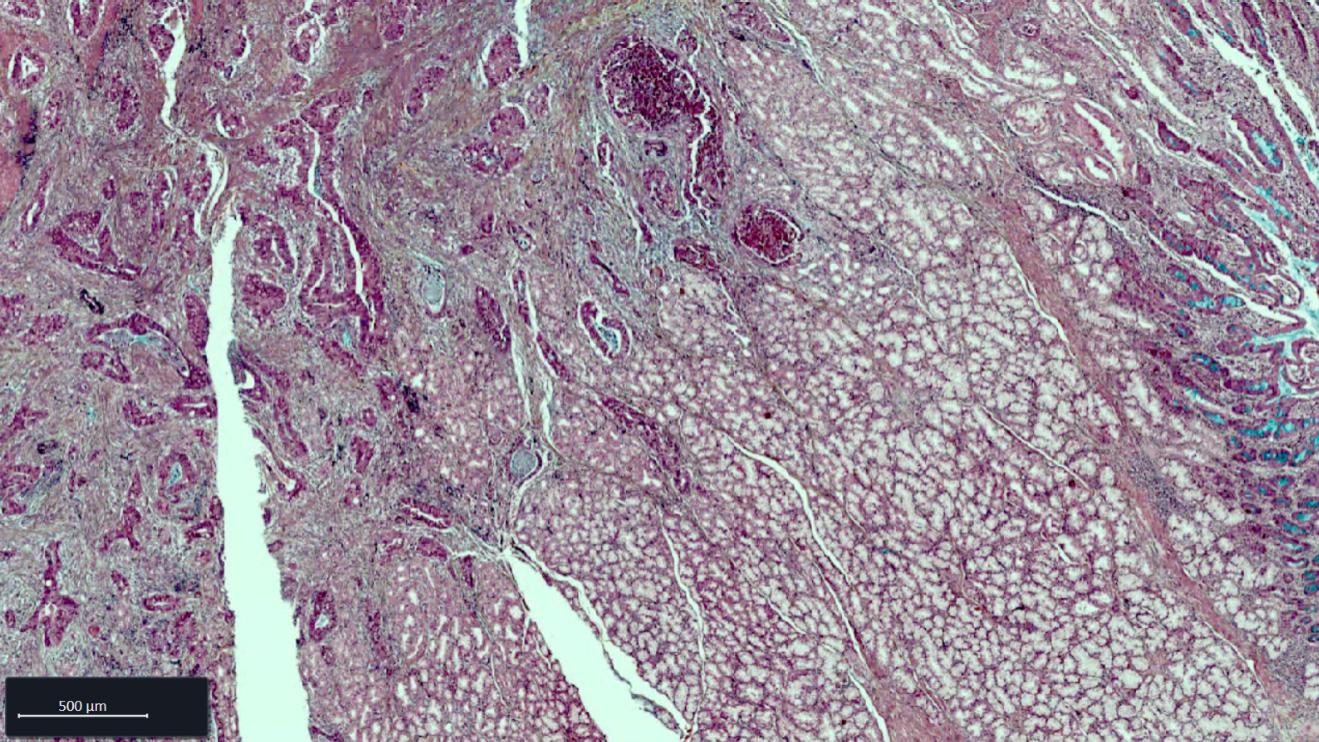
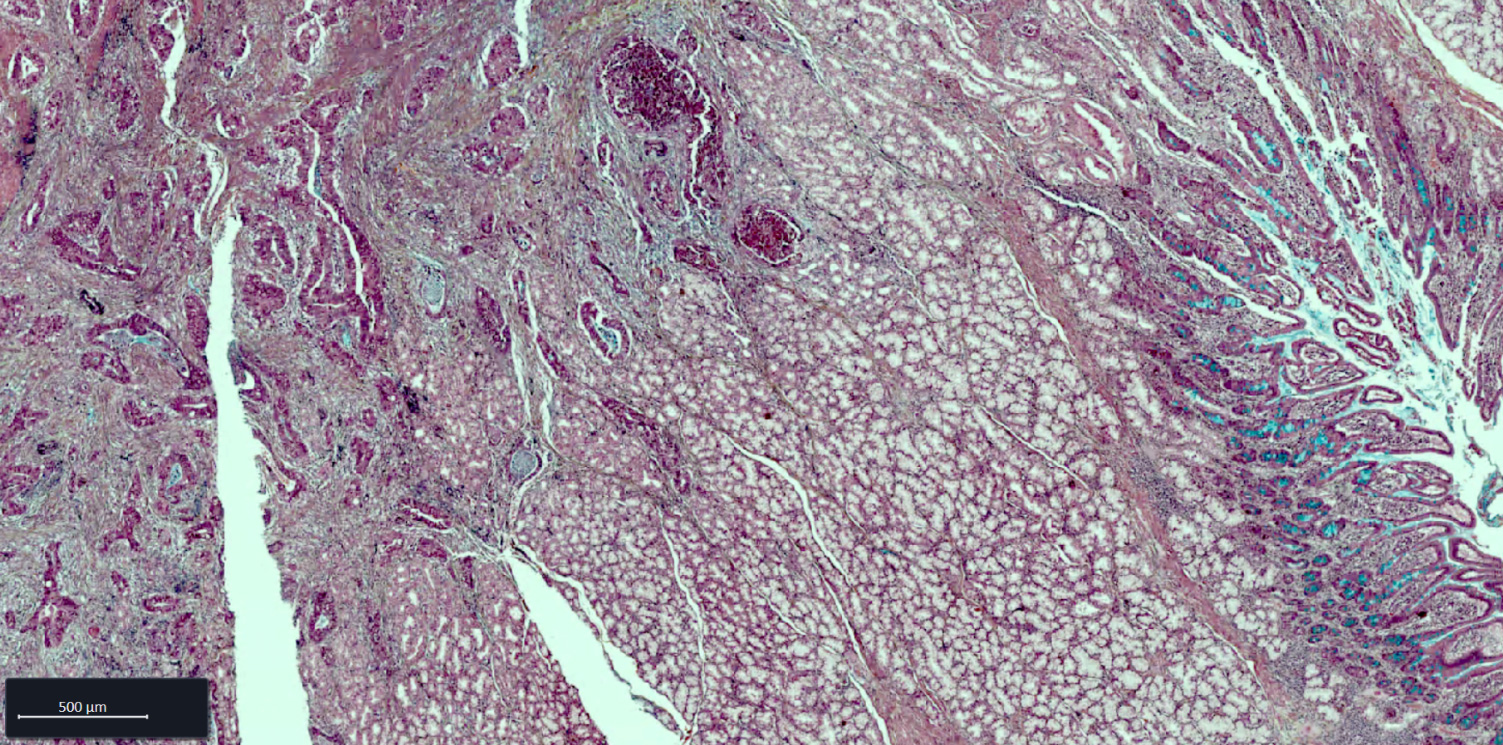
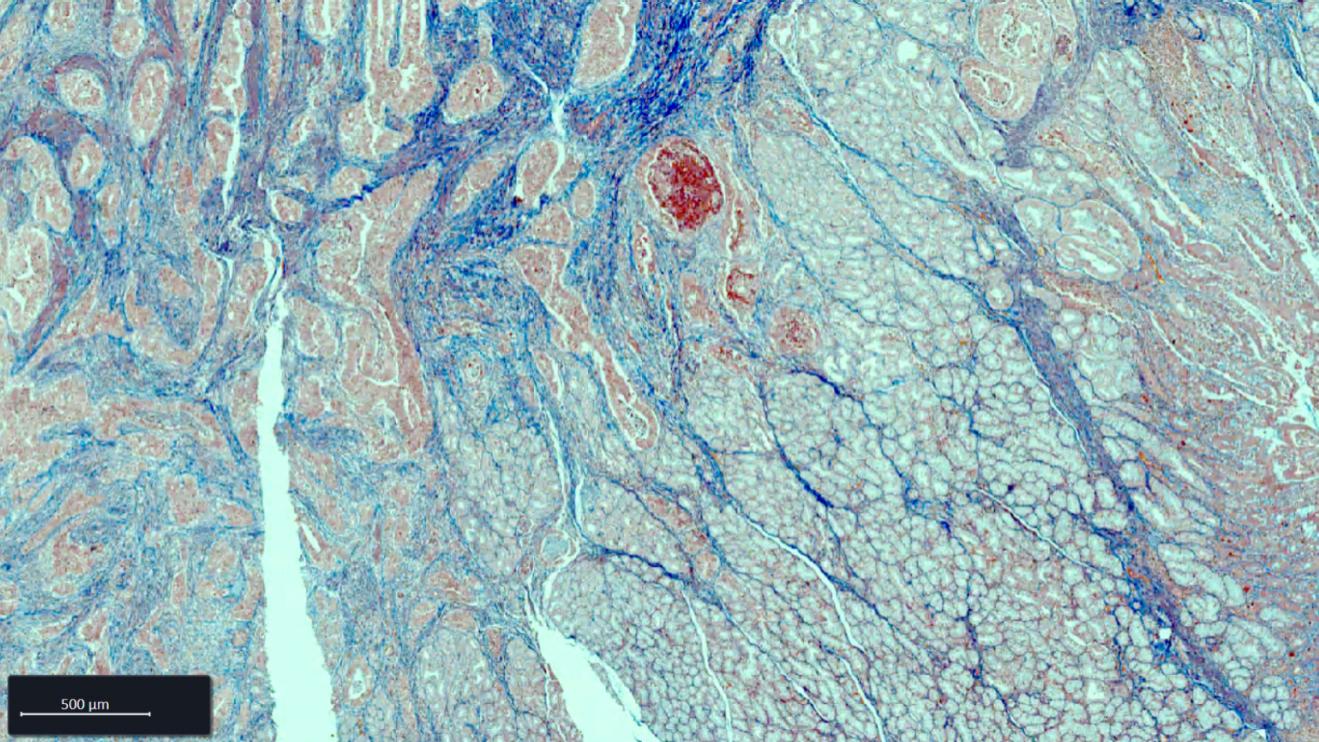
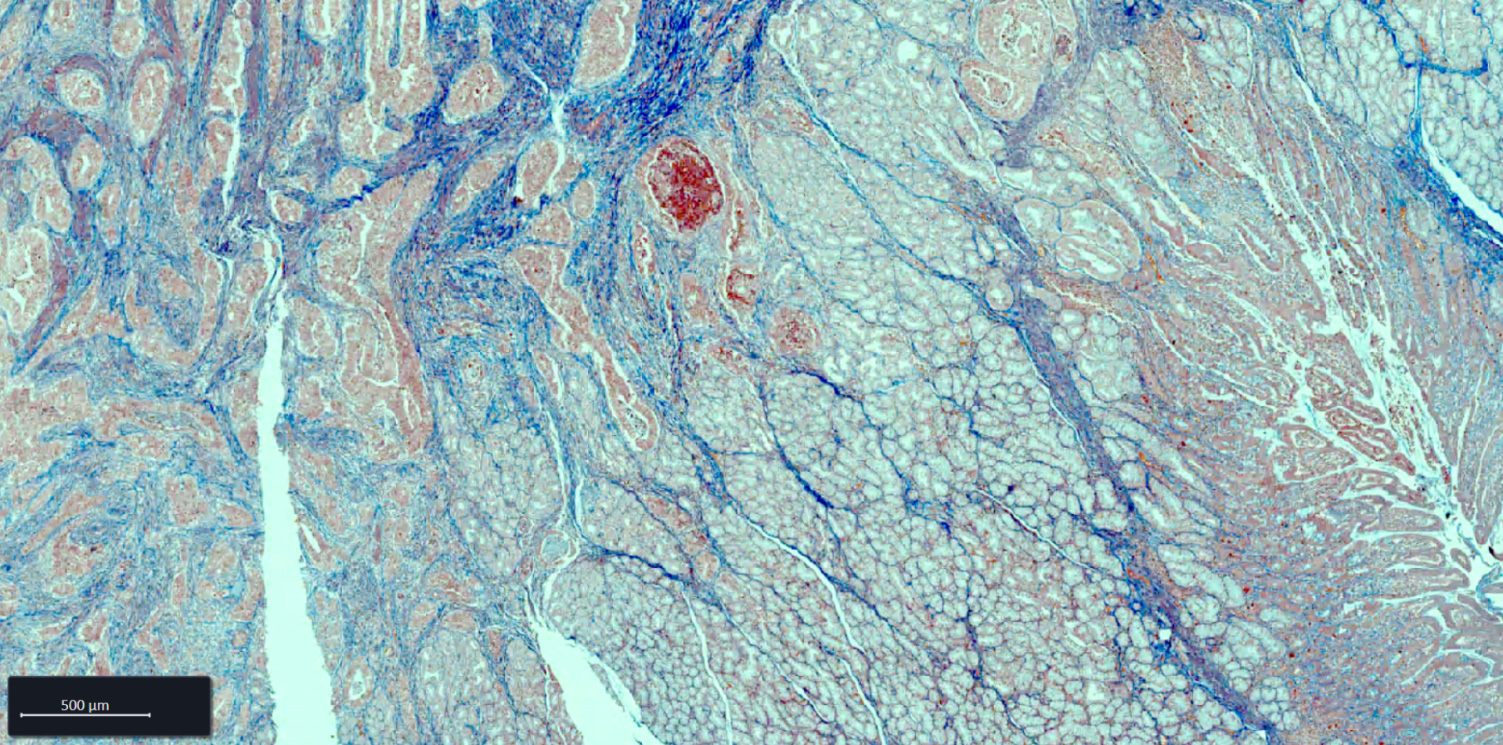
Movat staining
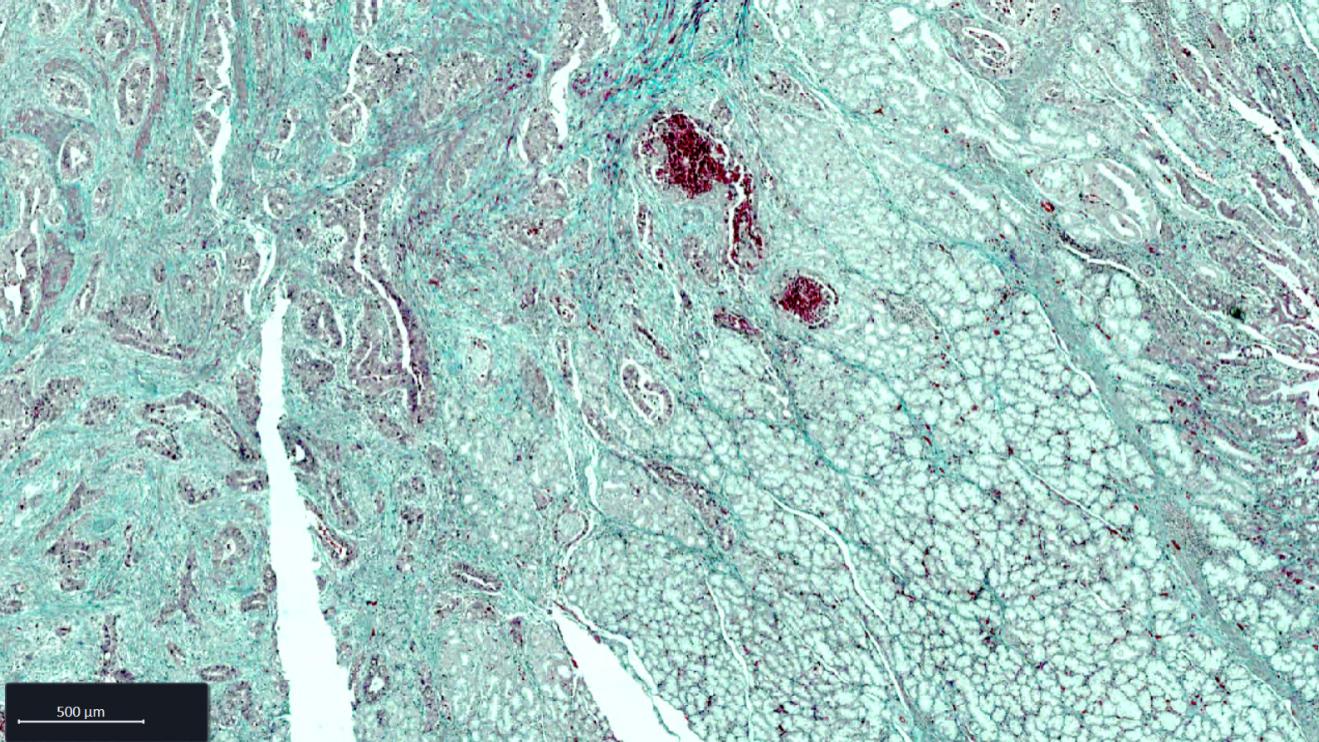
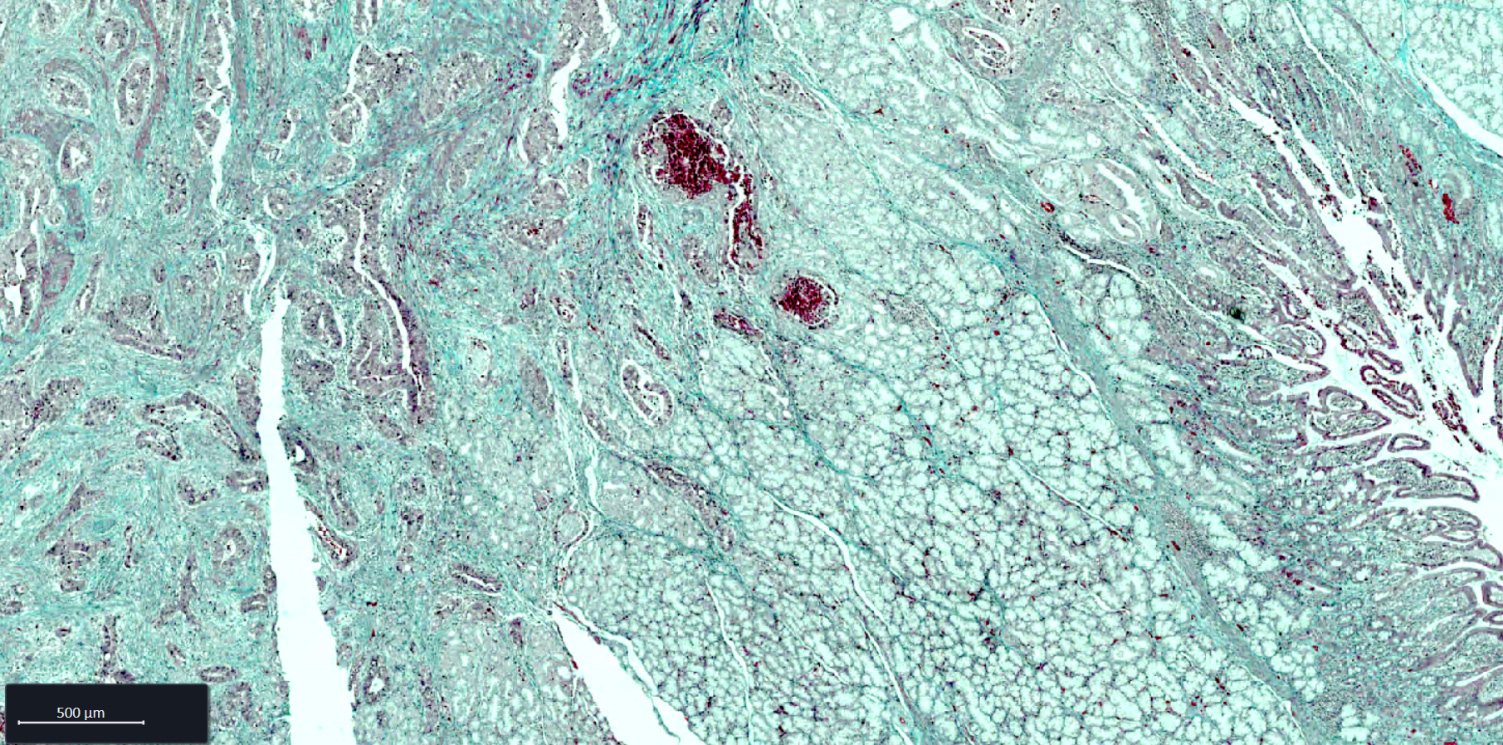
AZAN staining
Goldner staining
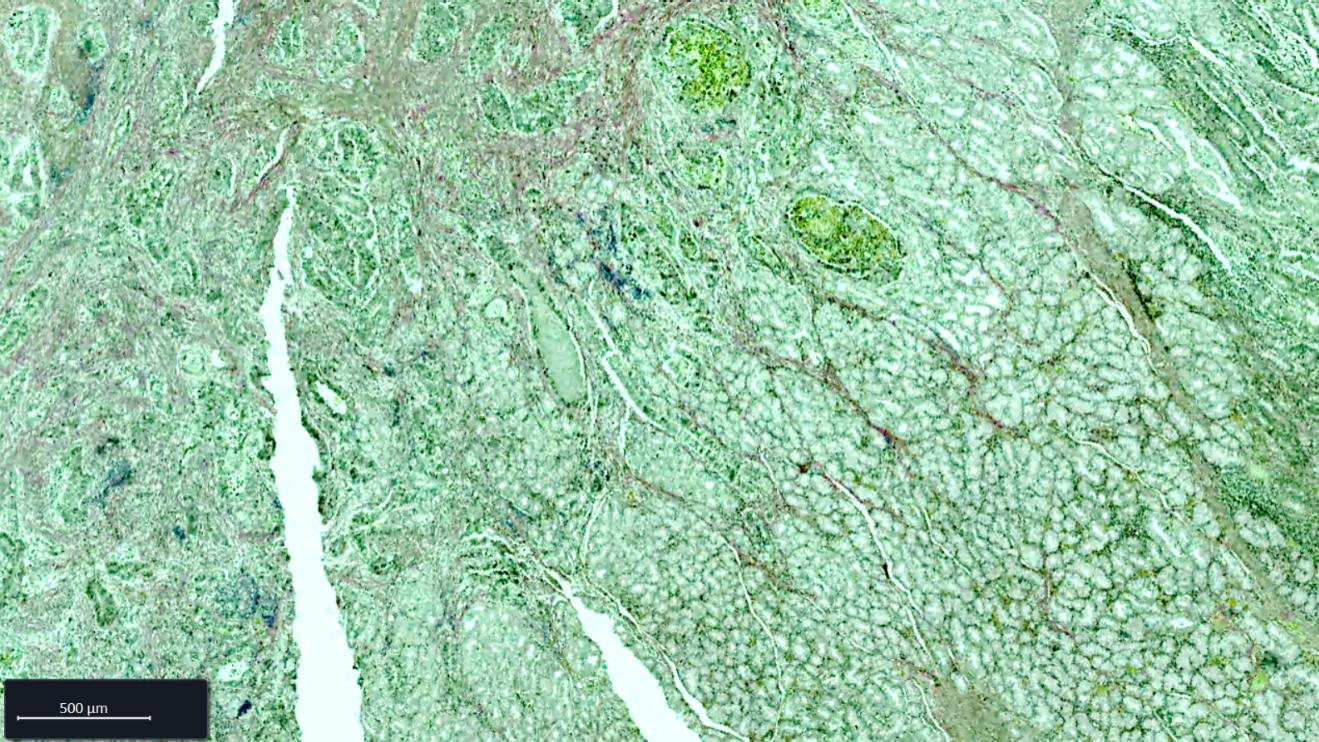
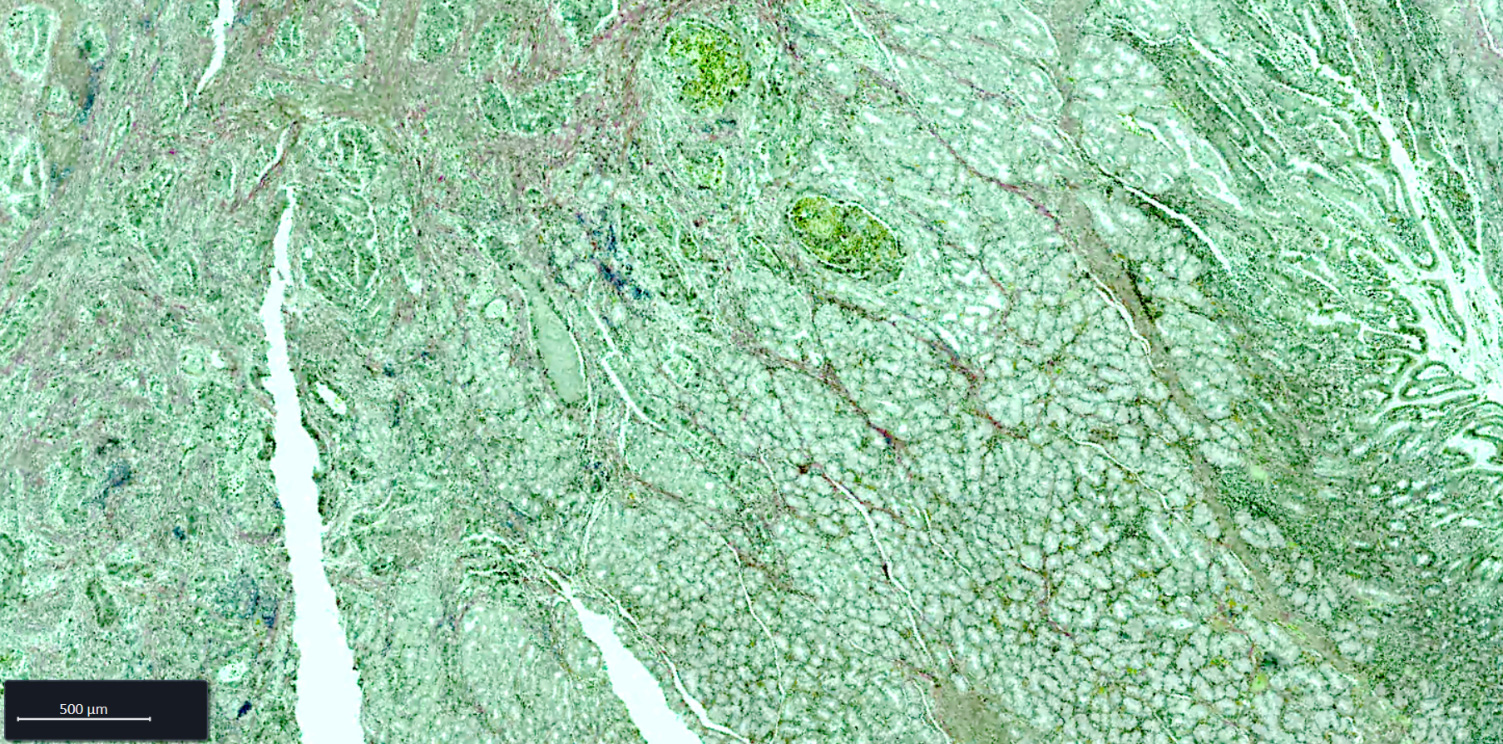
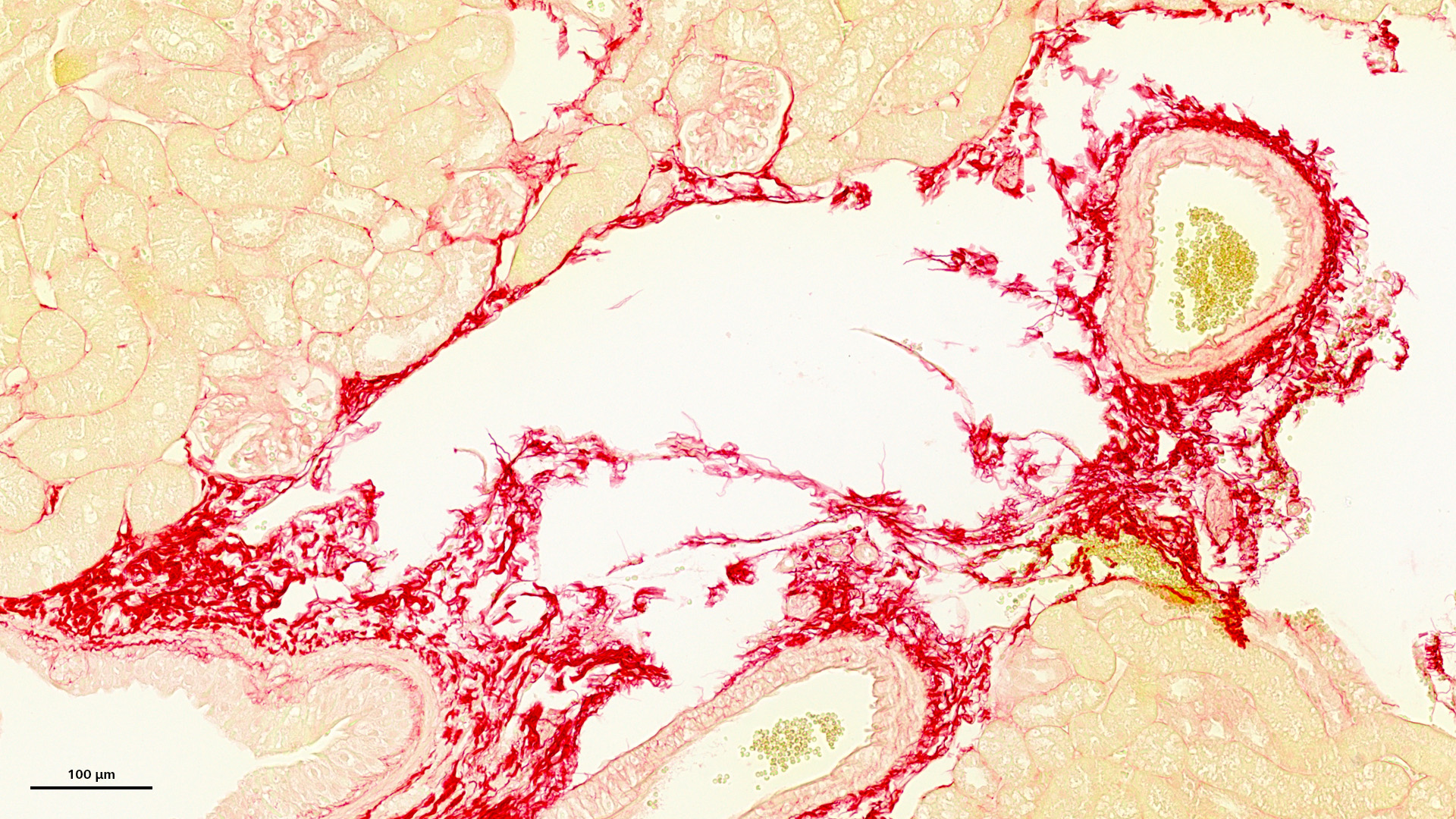
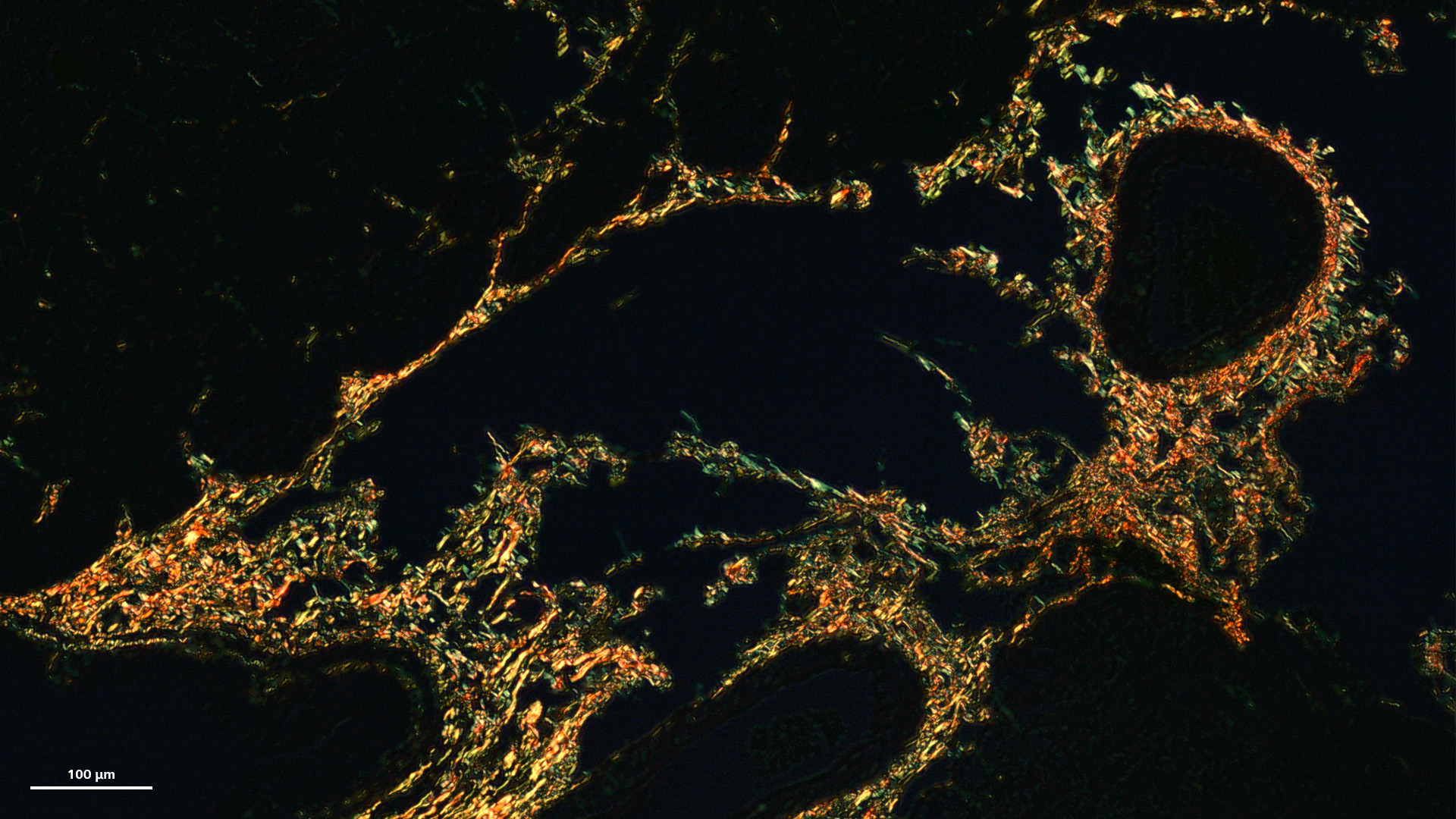
Weigert-Van Gieson (WvG) staining
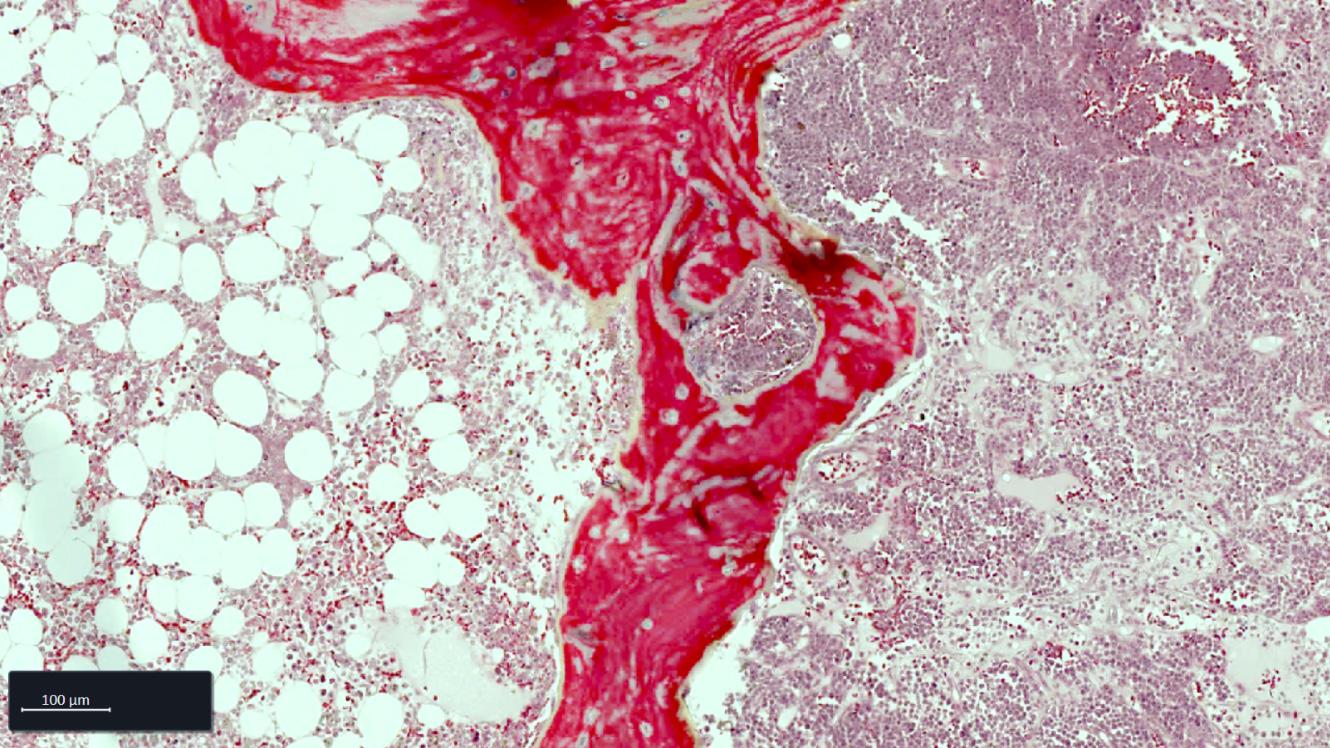
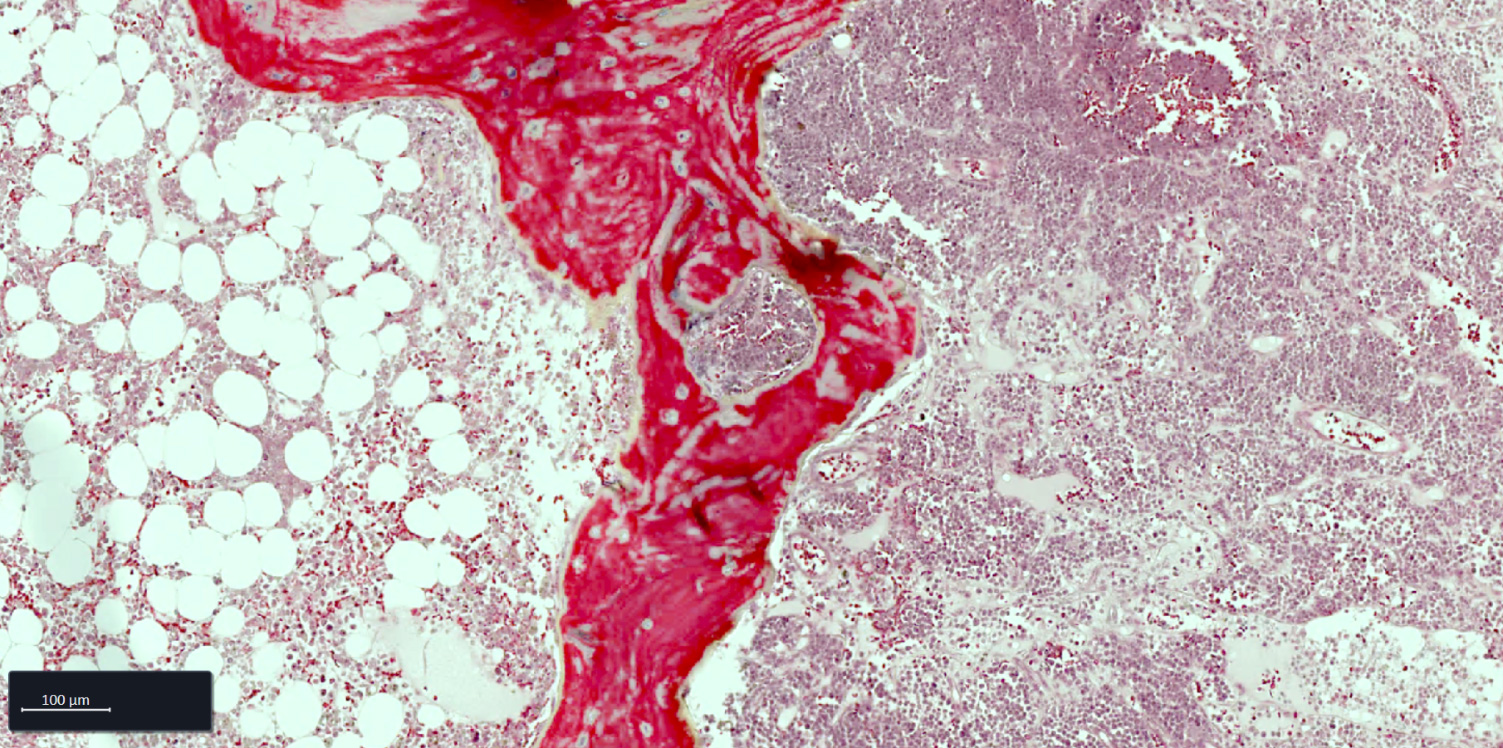
Movat staining
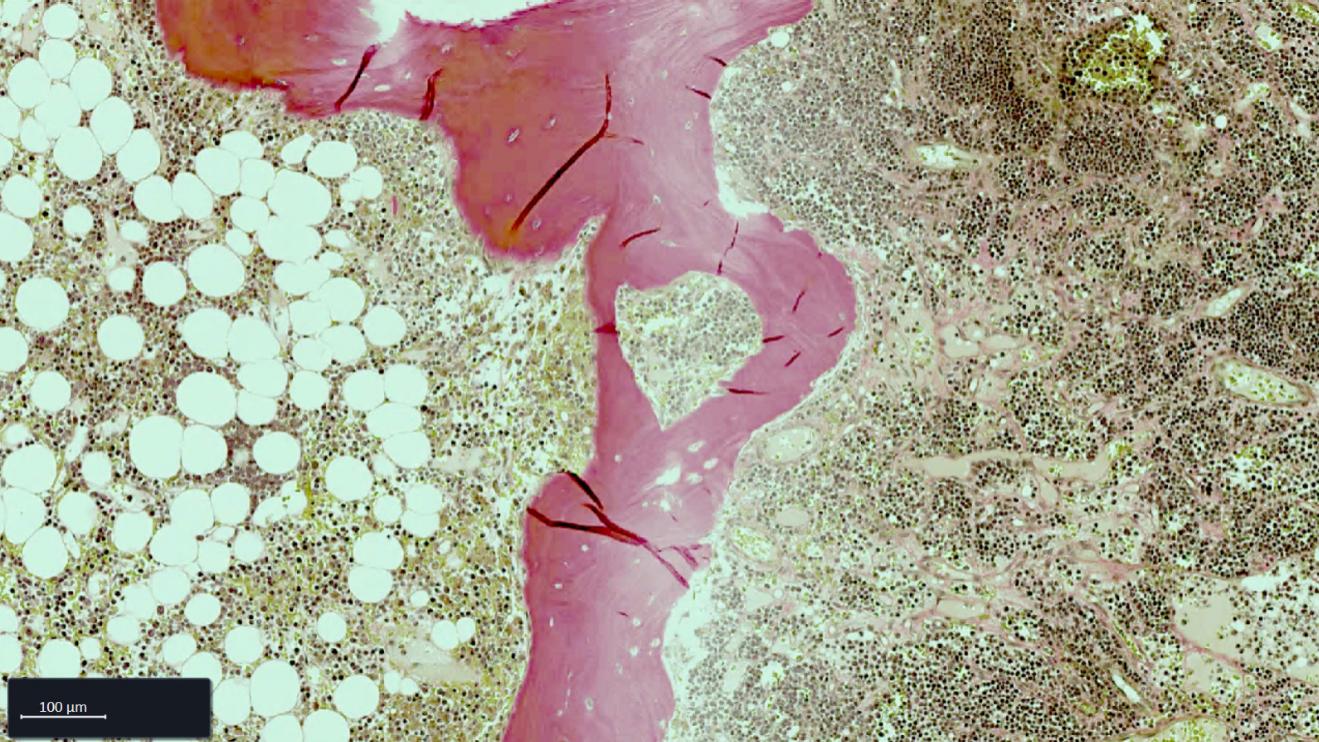
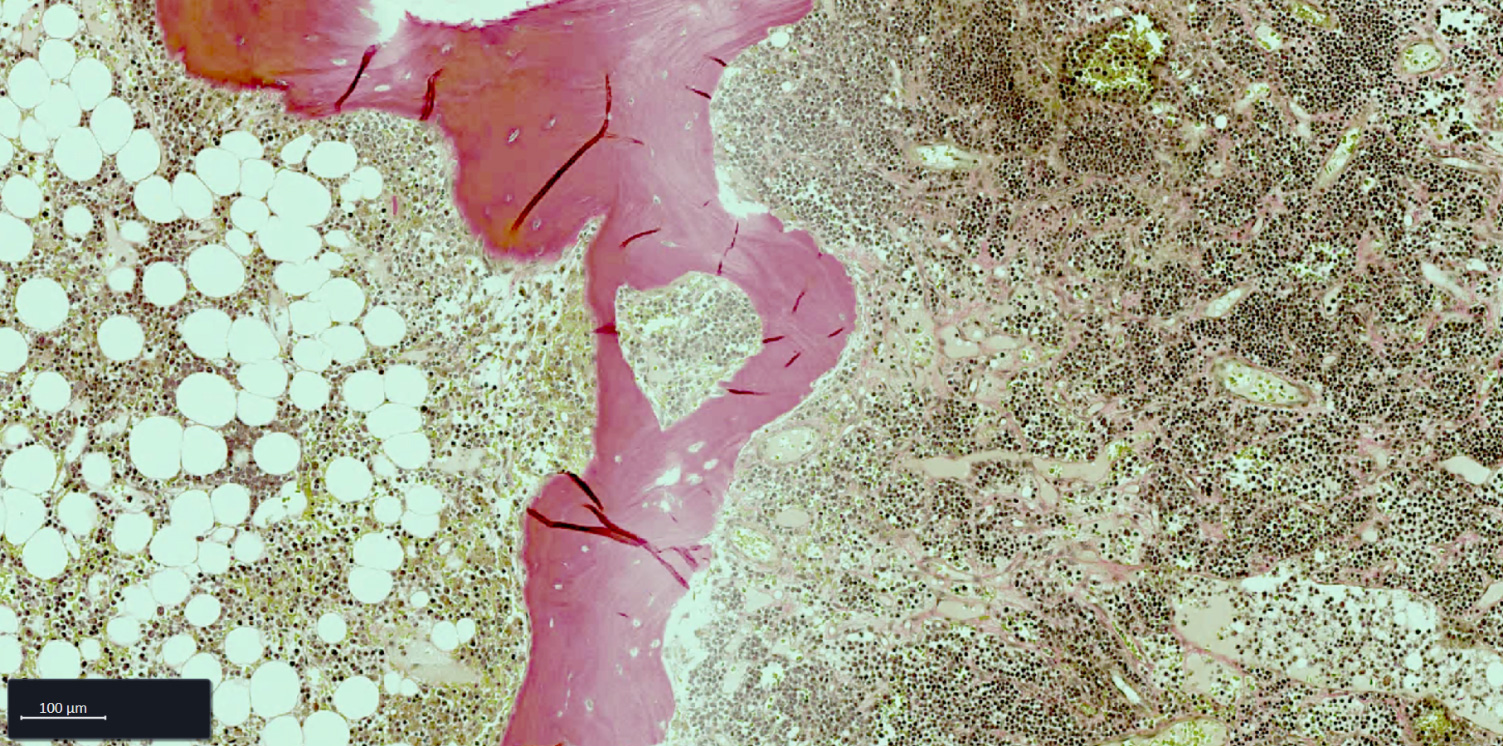
Weigert-Van Gieson (WvG) staining
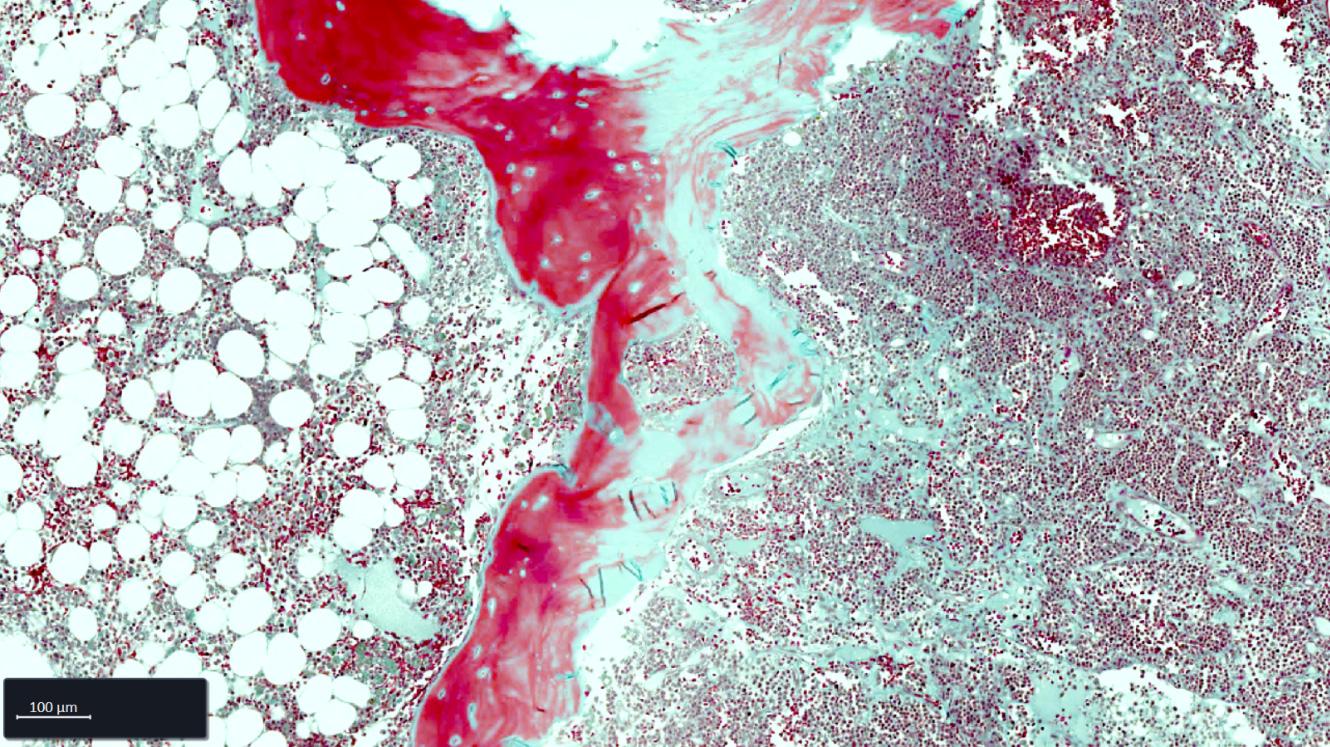
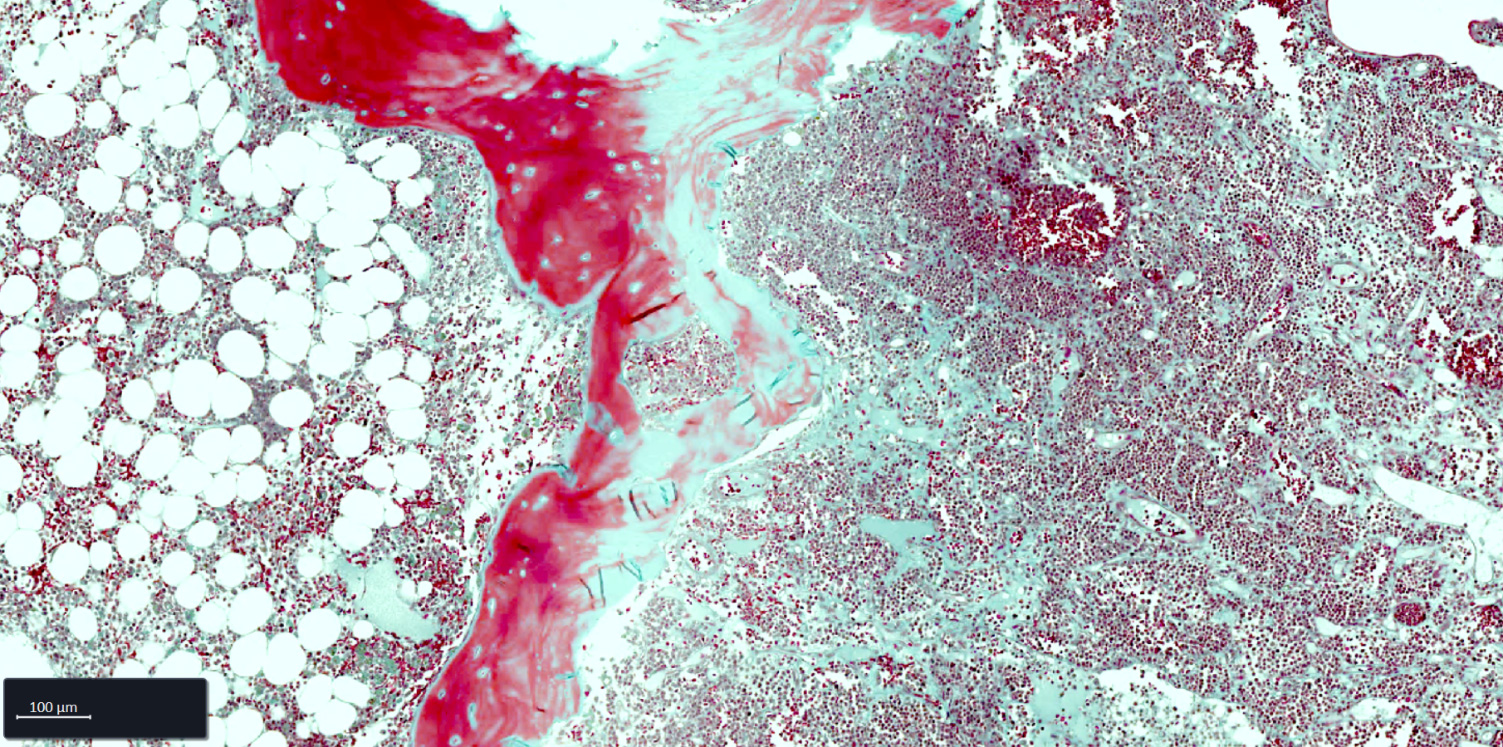
Goldner staining
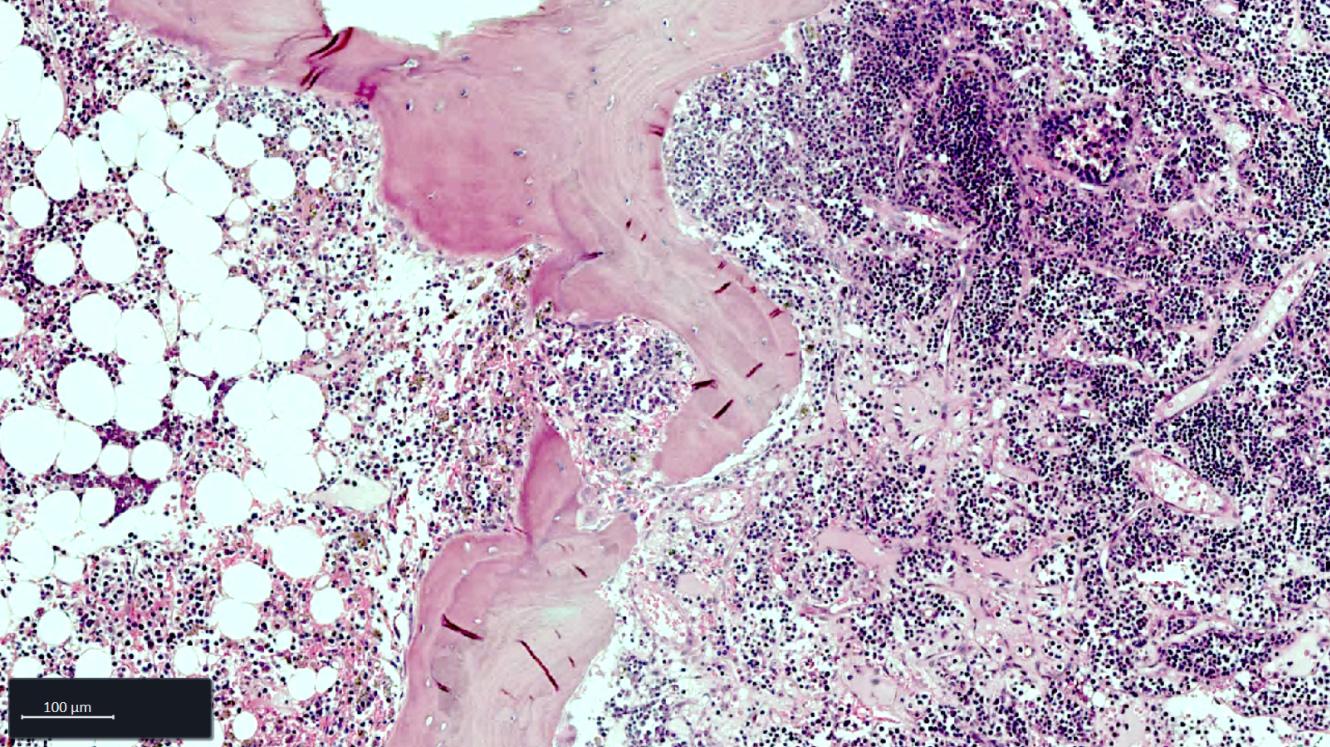
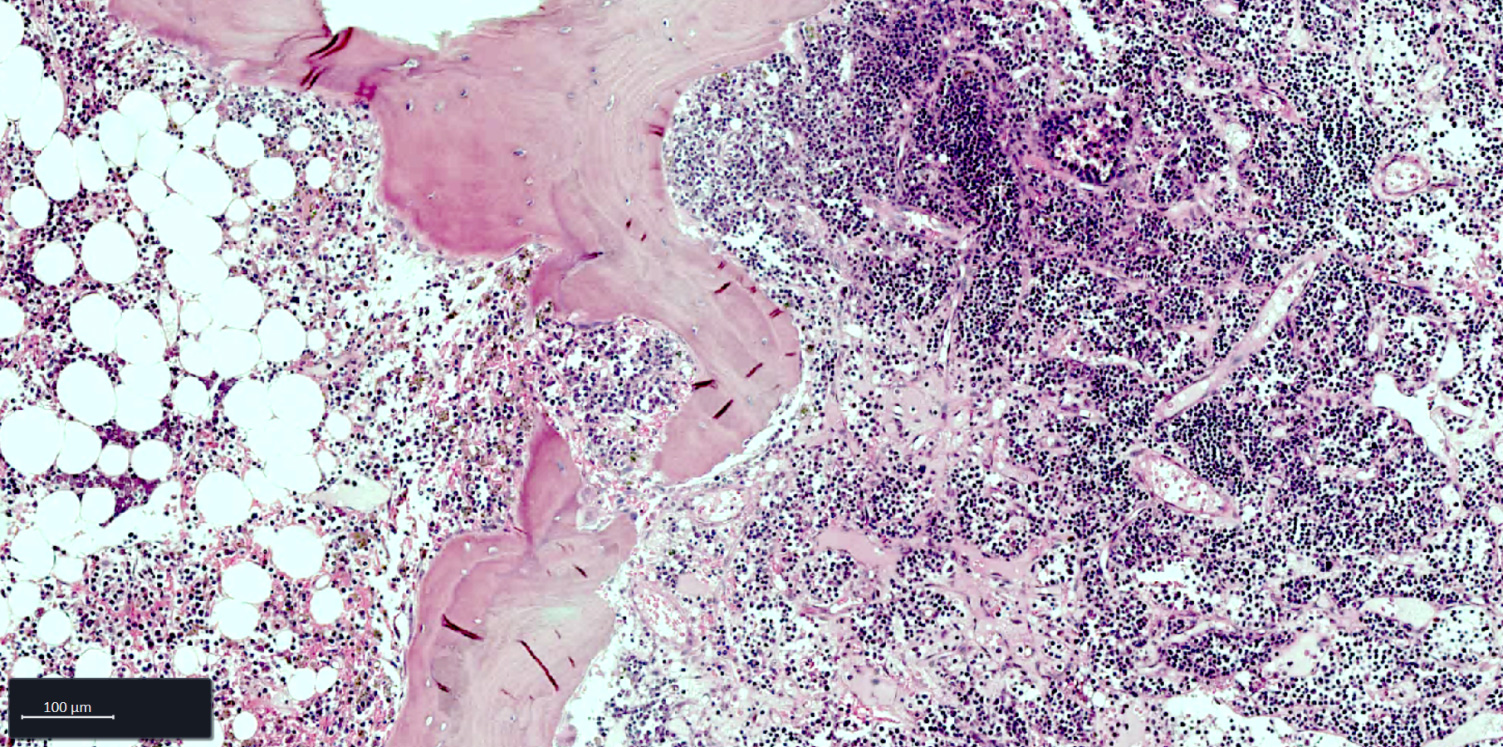
Hematoxylin and Eosin (H&E) staining
-
Thin Section Slide Scanning for Digitization of Petrography Data
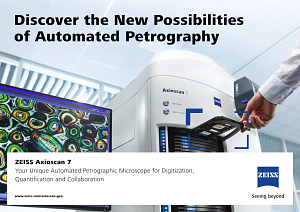
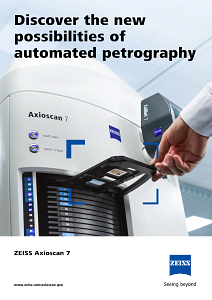
Embrace digitalization with Axioscan 7 and you will not only create high-quality digitized petrography data efficiently. You’ll also gain the advantage of easy data sharing and seamless integration into your geological workflows. With AI-integrated analysis and remote collaboration capabilities, Axioscan 7 empowers geologists and researchers to work together seamlessly from anywhere in the world. Maximize the benefits of modern technology in quantitative petrography and automated analytics.
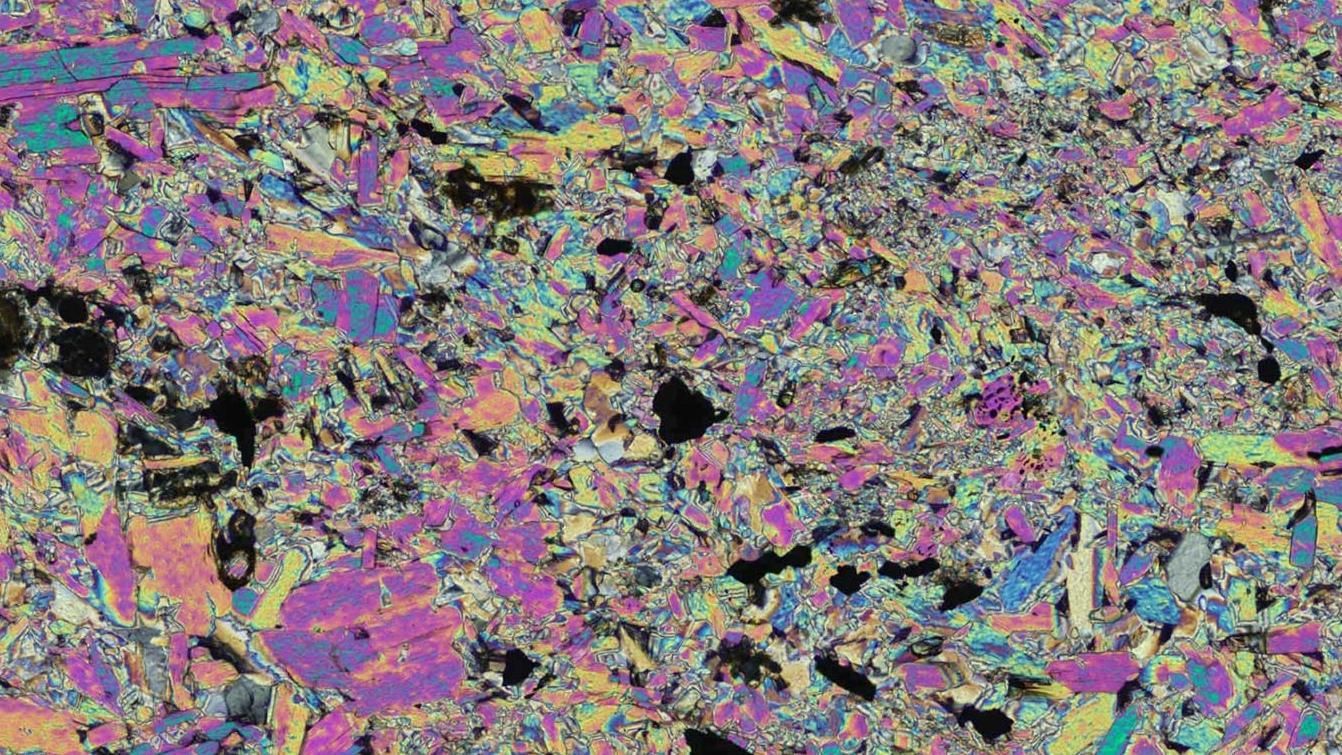
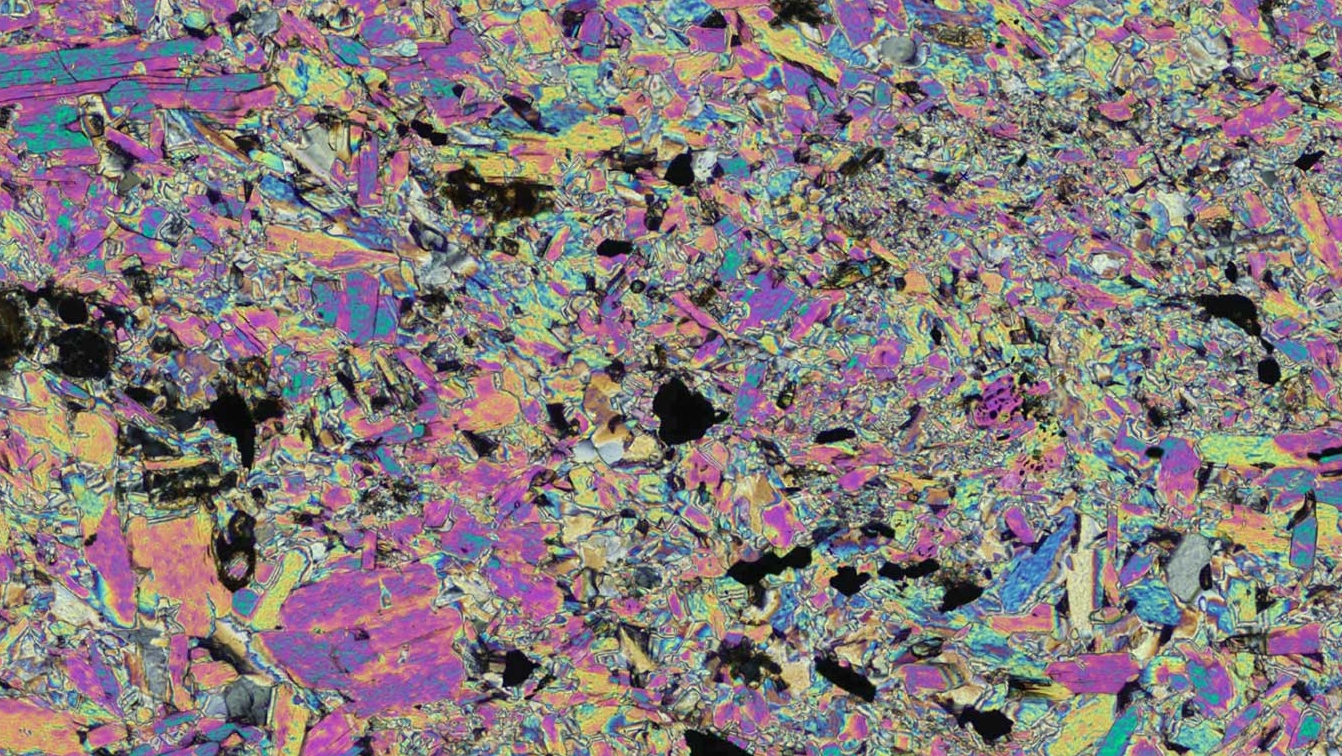
Circular Polarization
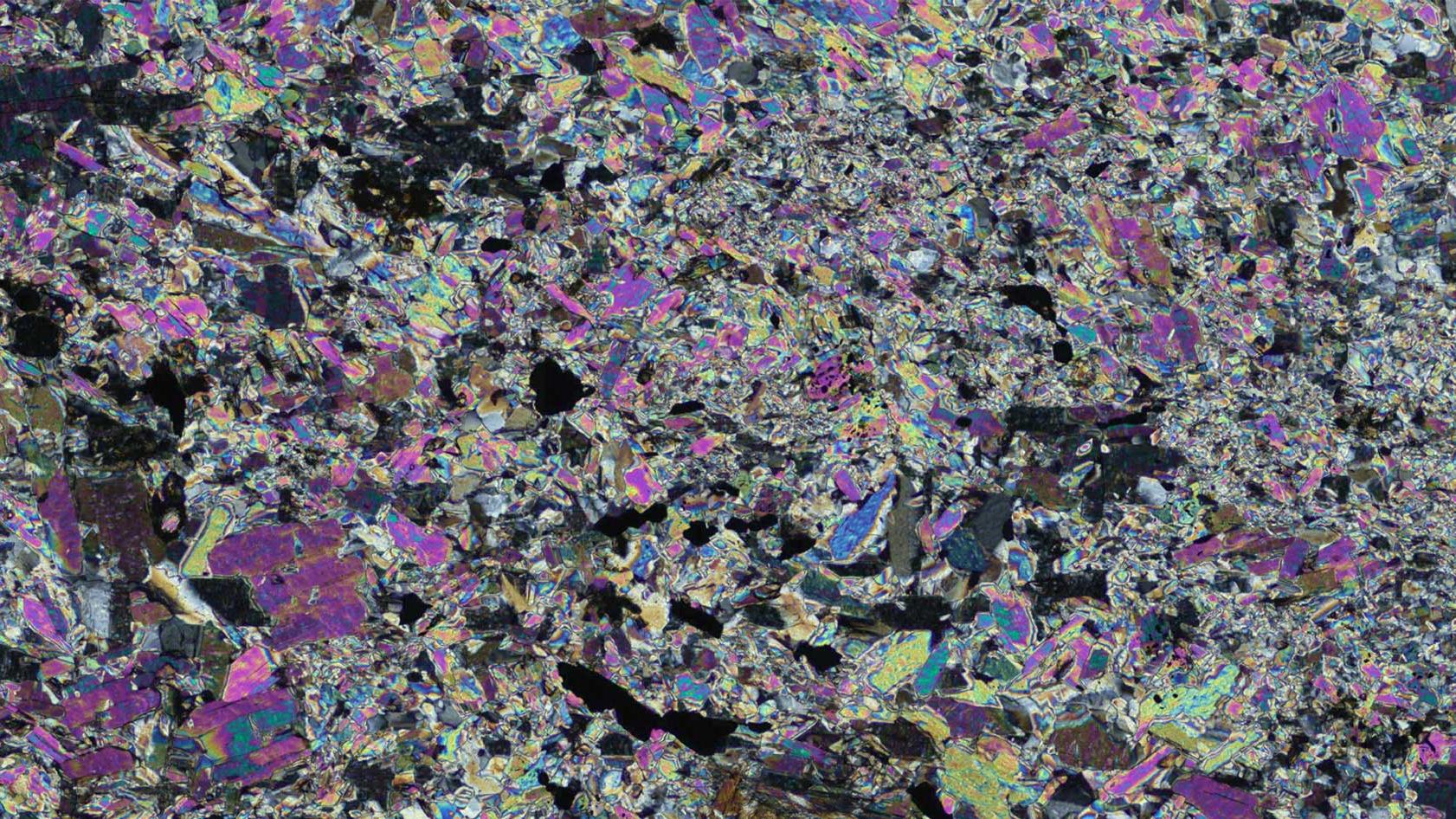
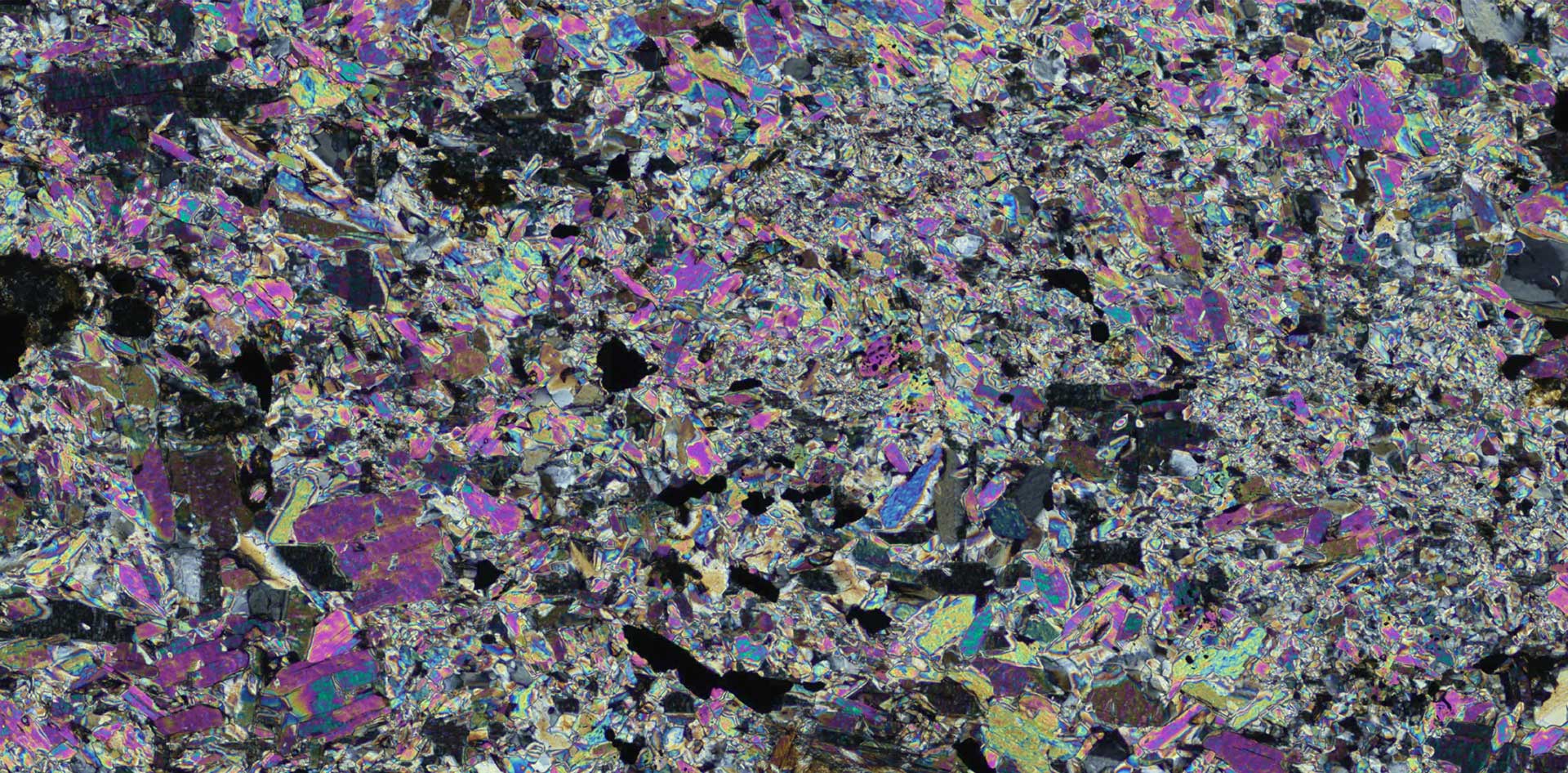
Cross Polarized Light (XPL)
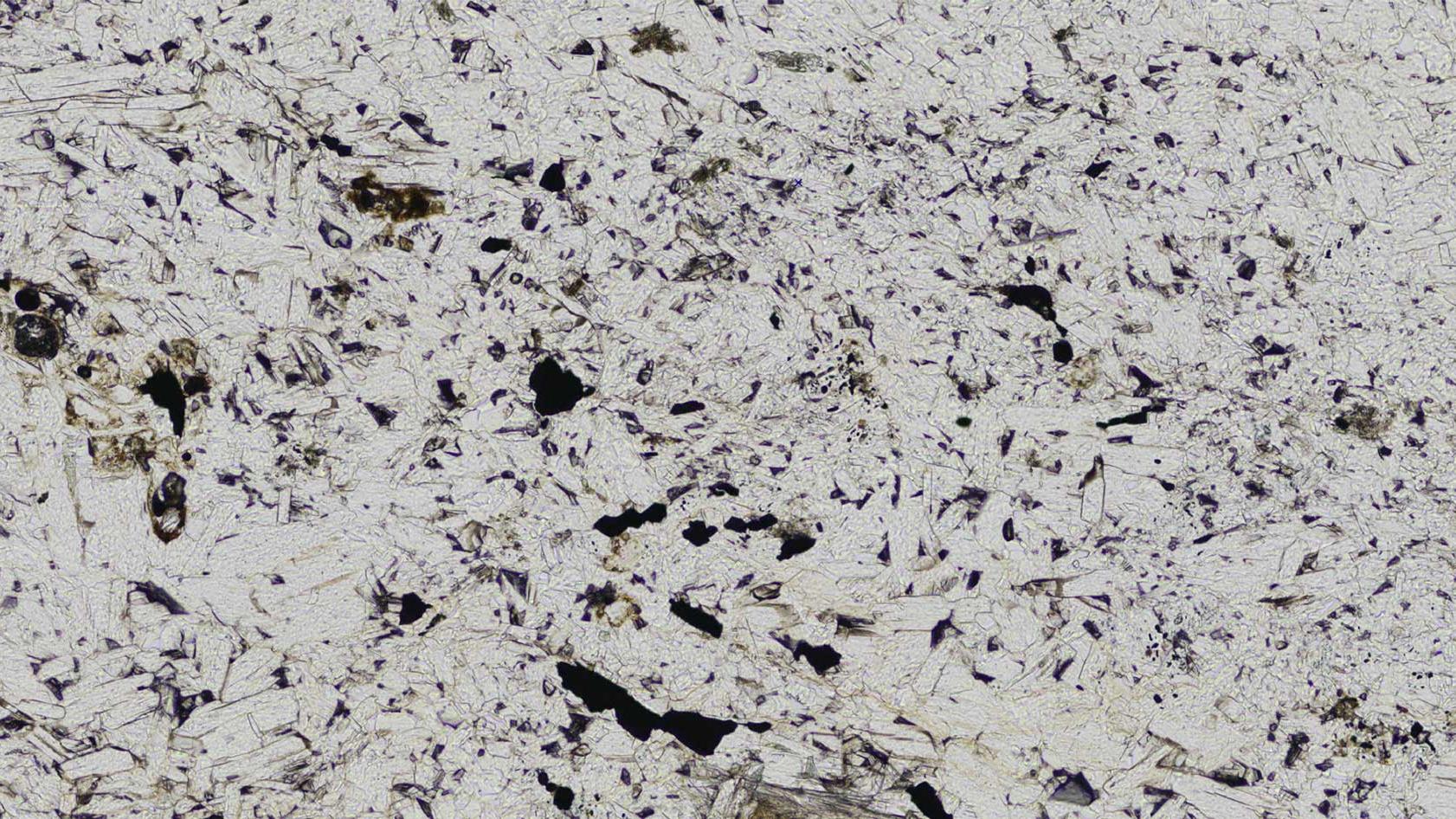
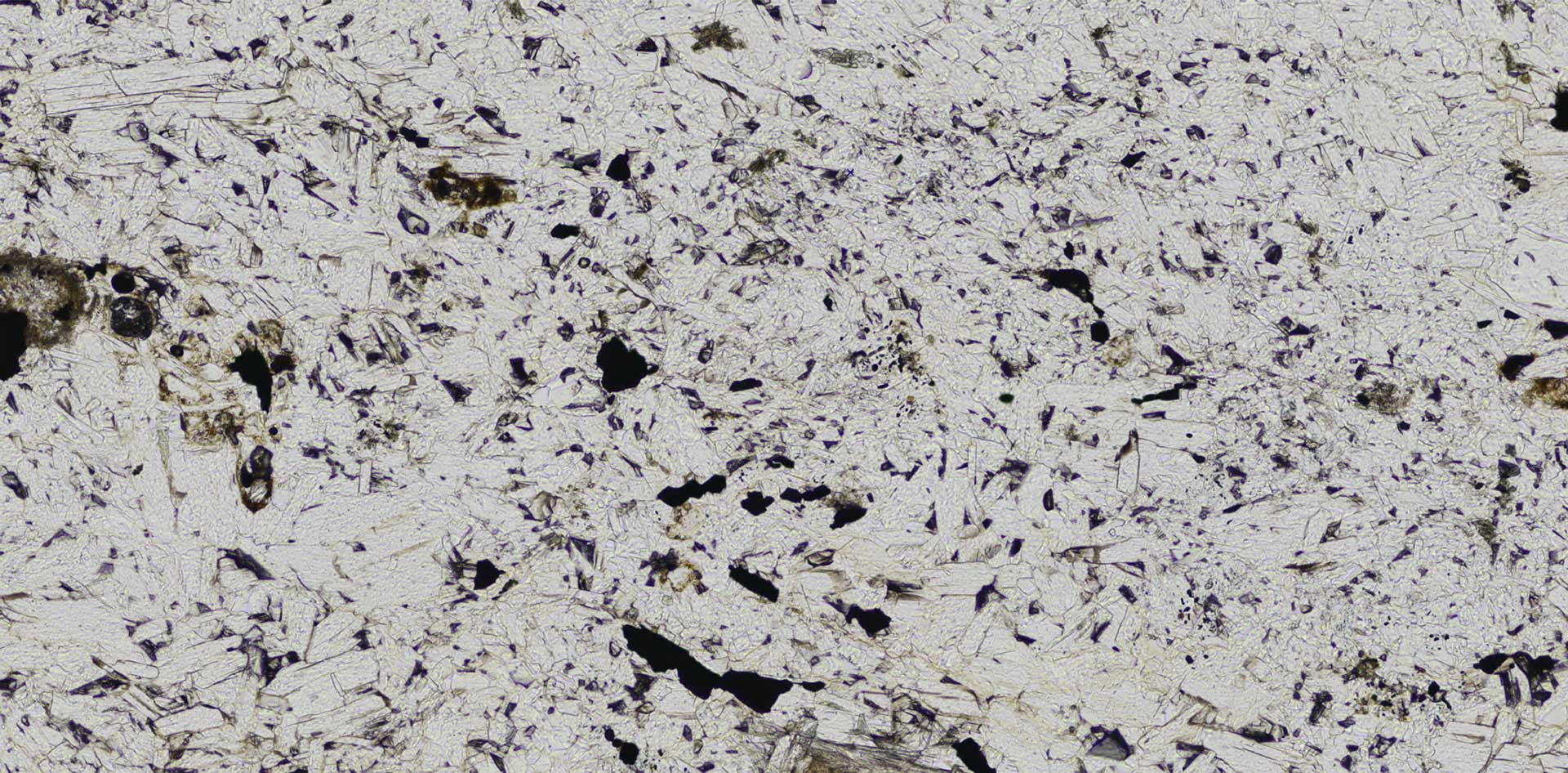
Plane Polarized Light (PPL)
Mineral Phase Analysis
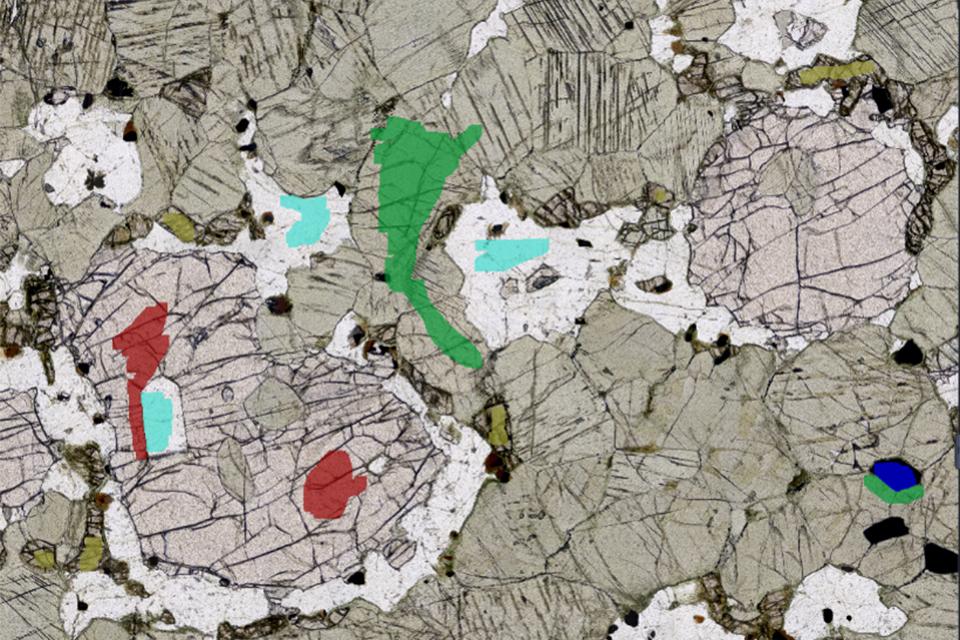
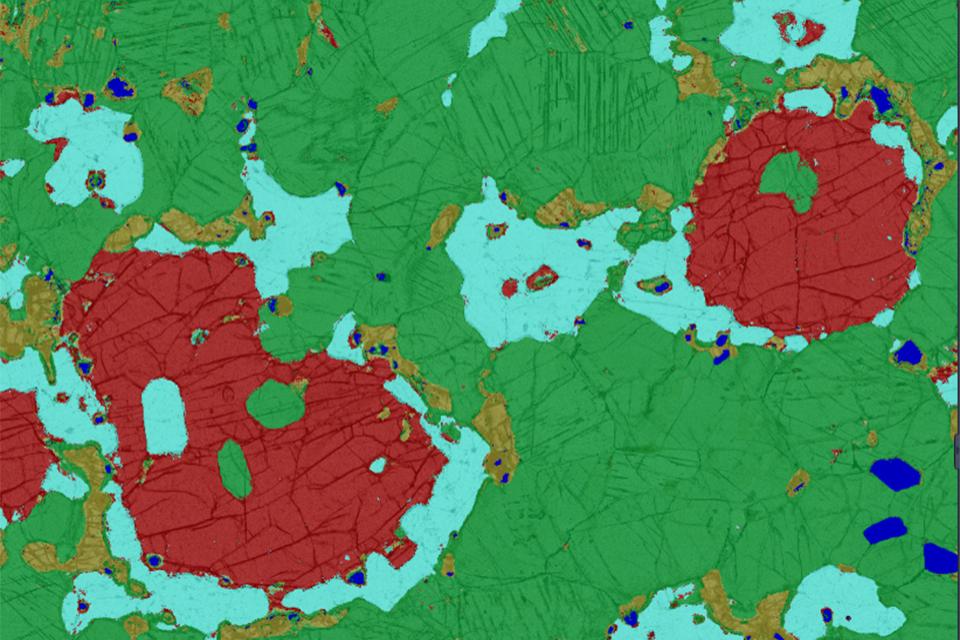
Combine ZEISS Axioscan 7 with ZEISS AI-based segmentation to enable automated analysis across large numbers of samples. Easy machine learning segmentation lets you label each mineral phase of interest, using an intuitive painting interface while the software builds a model of the mineralogy across your entire sample.
AI-Based Mineral Classification
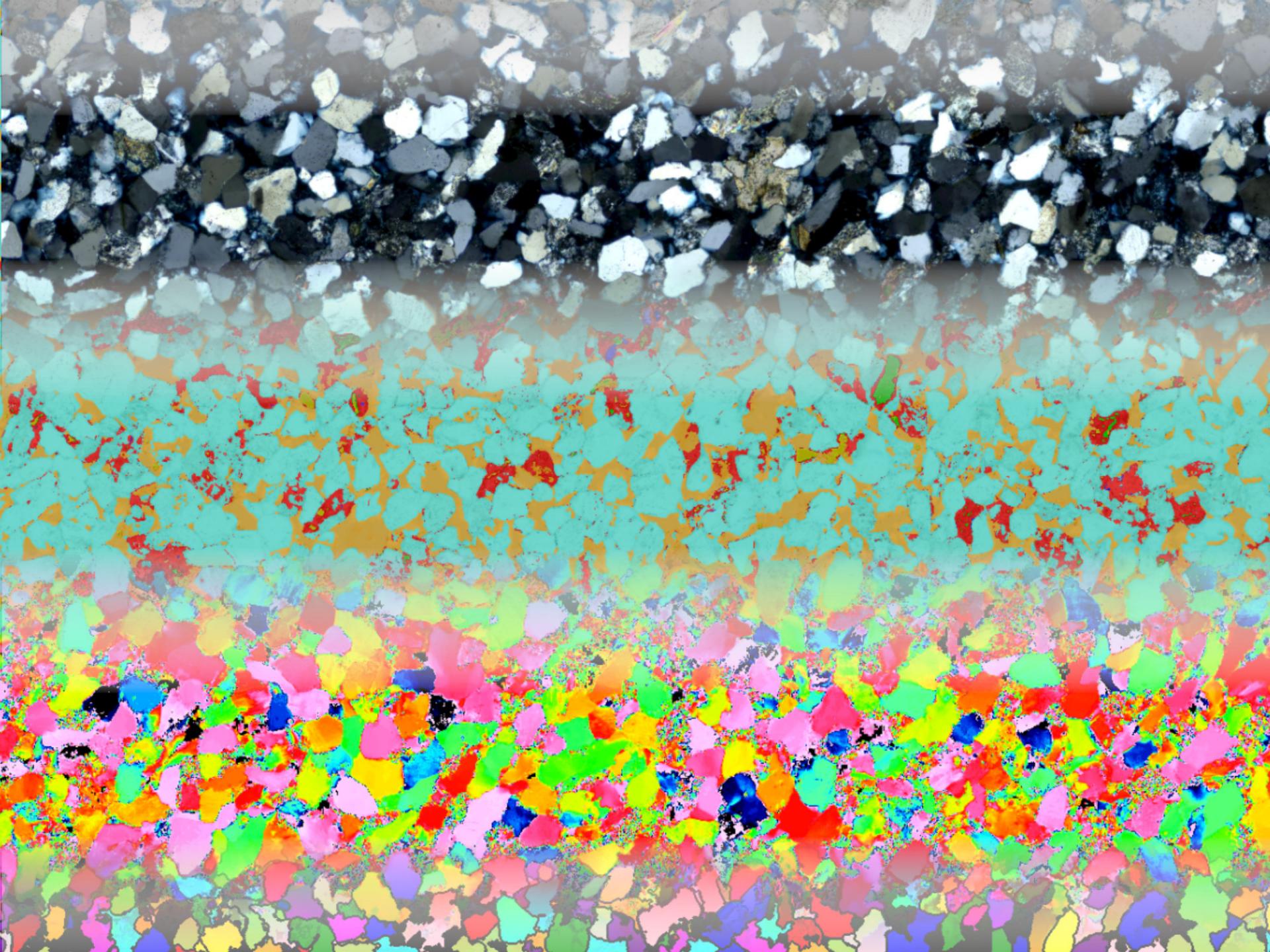
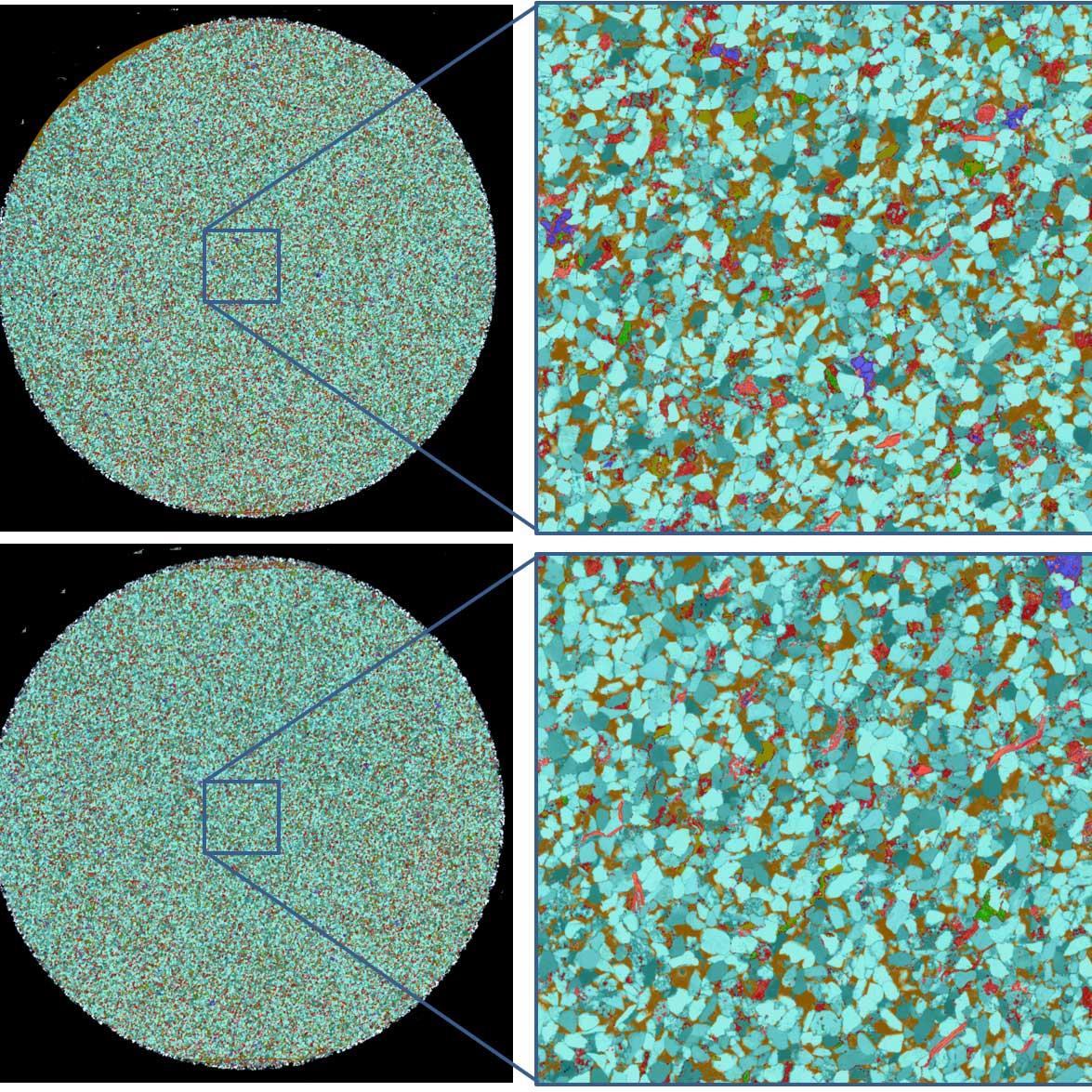
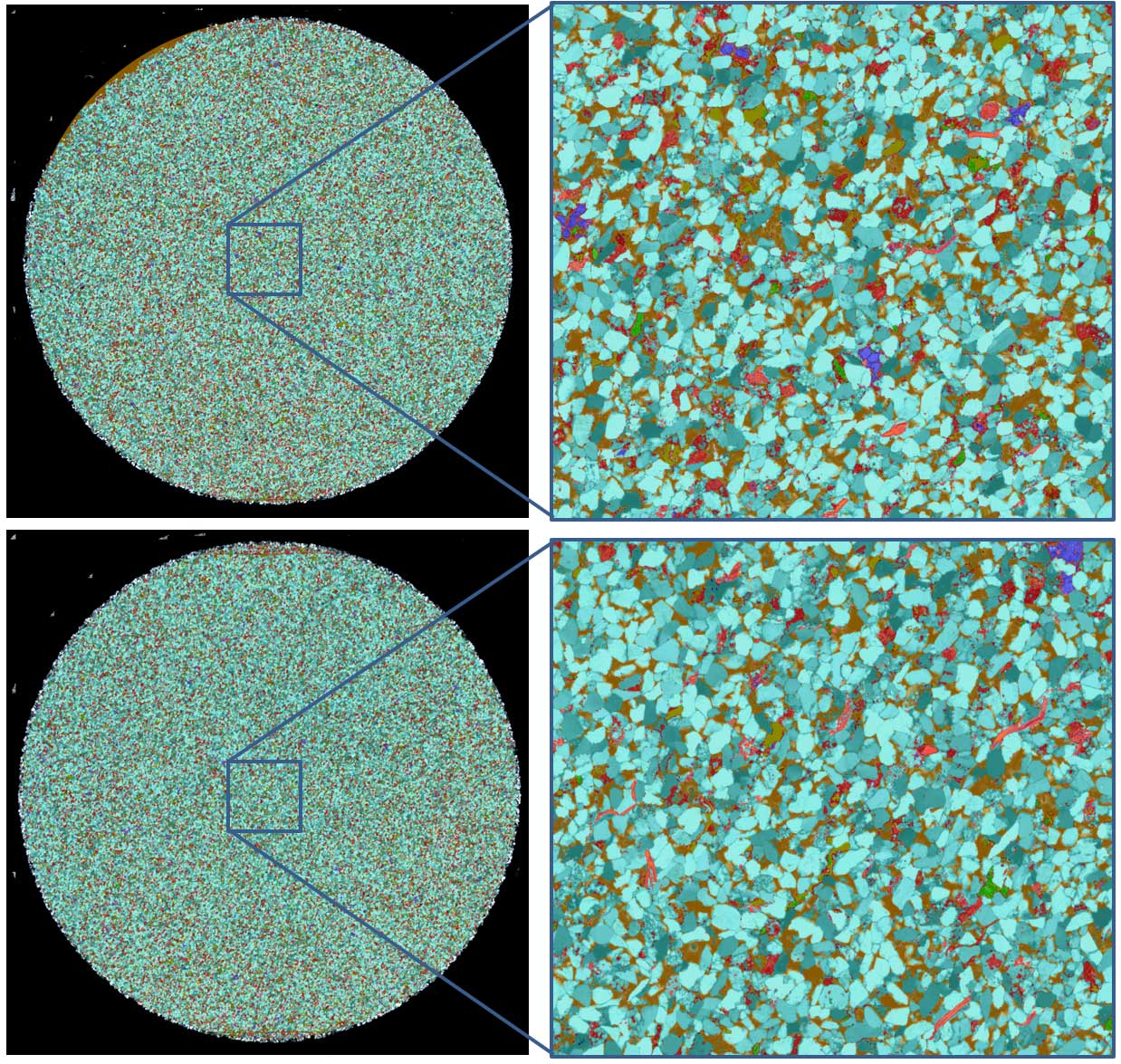
Automated machine learning-based mineral classification uses a single ZEN Intellesis model, applied here on two sandstone samples.
Both modal mineralogy and pore / grain sizes can be measured and automatically reported.
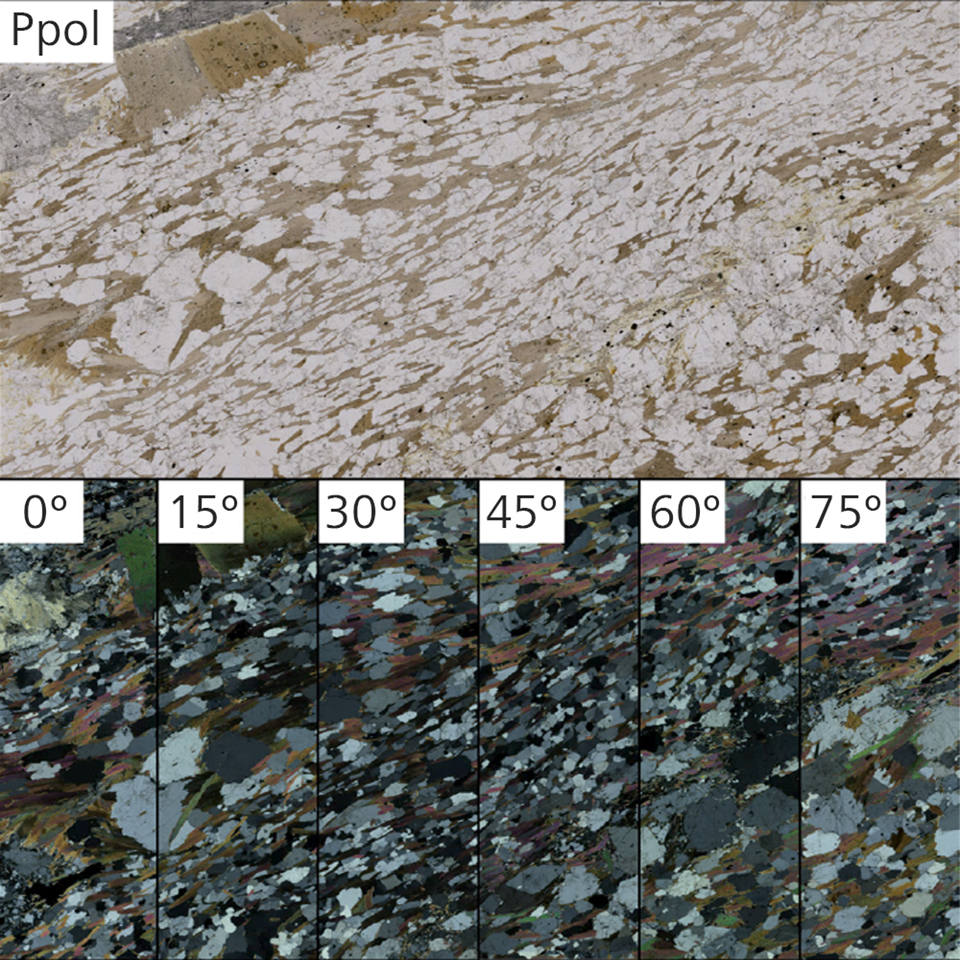
PPL-to-XPL
Full thin-section polarization images. This kyanite-bearing schist has been imaged as part of a digital thin section collection. The upper image shows a single PPL orientation while the lower view shows the capture of the thin section in multiple XPL orientations. This lets a simulated stage rotation observe and analyze extinction angles with the full XPL variation over 90°.
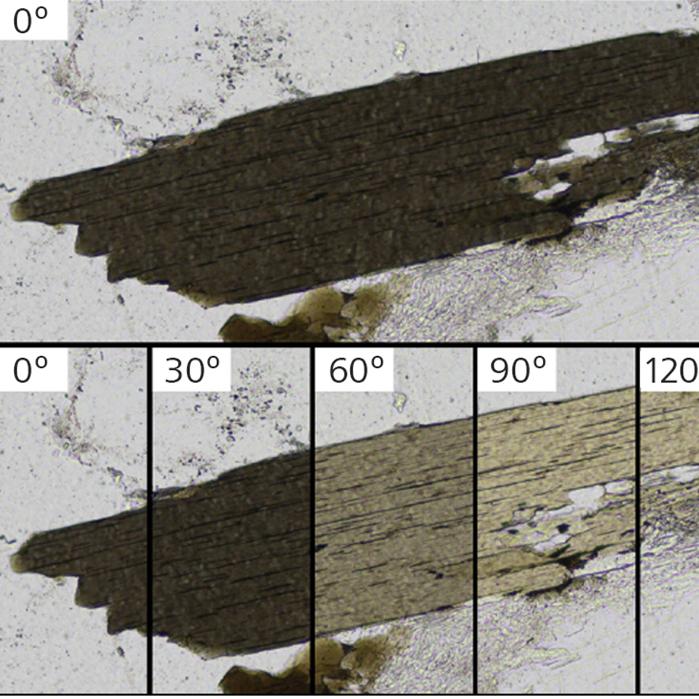
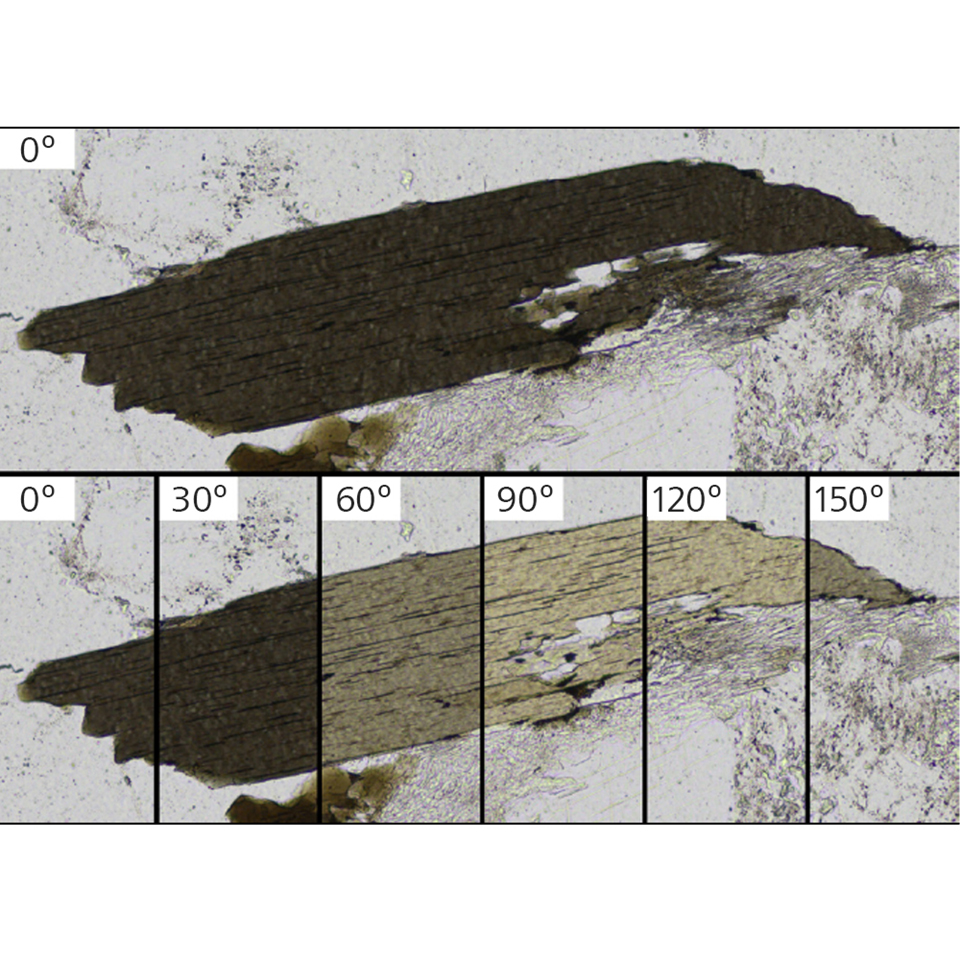
PPL-to-Pleochroism
Close up of a single biotite grain within a granite sample. Sample has been imaged in multiple PPL orientations in order to observe the full range of pleochroism as the sample is rotated through 180° relative to the polarizer.
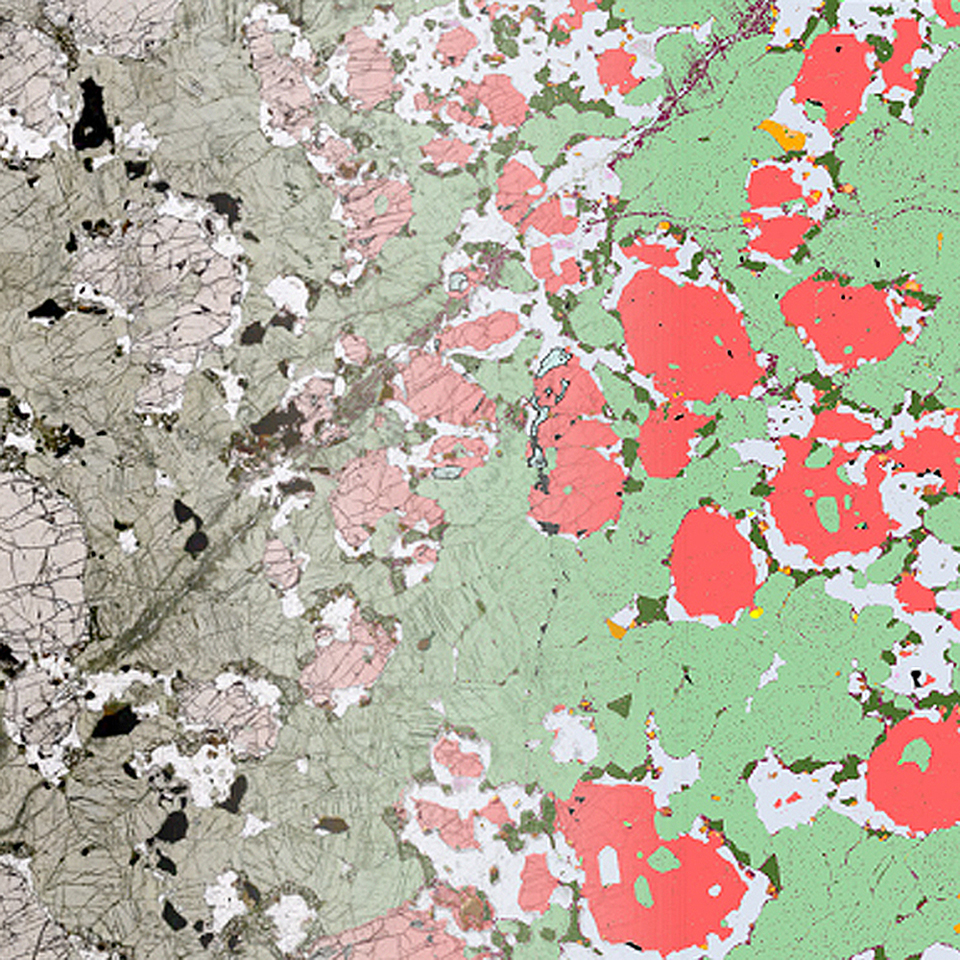
Correlative Microscopy
Use ZEN Connect to build intuitive correlative projects that start with the data-rich light microscopy environment from ZEISS Axioscan 7 geology. Here additional phase and geochemical information from ZEISS Mineralogic becomes the next step in a petrological investigation. The sample shown here is a granulite facies metagabbro from near Scourie more, Northwest Scotland.
Mineral Orientation Analysis
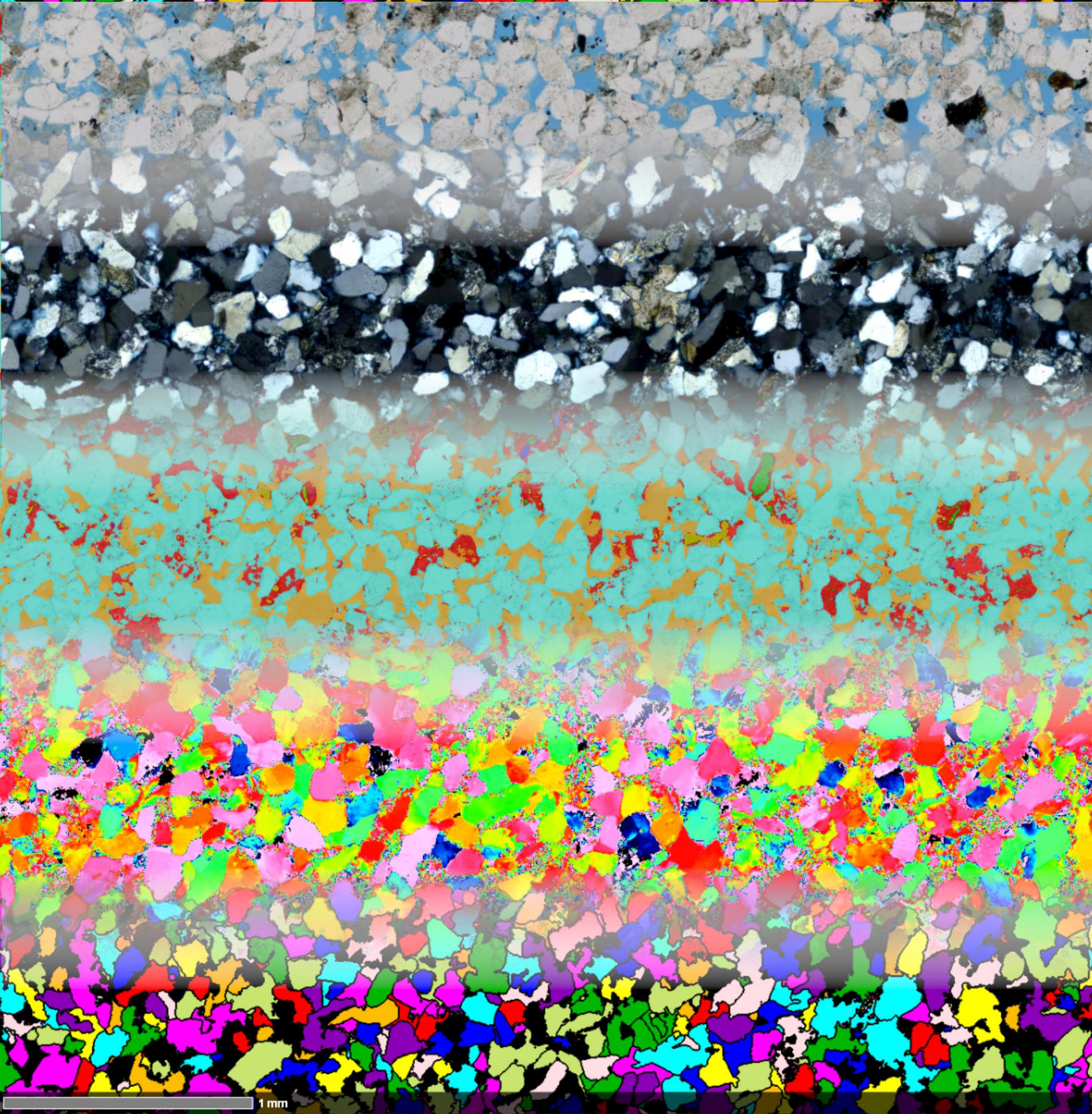
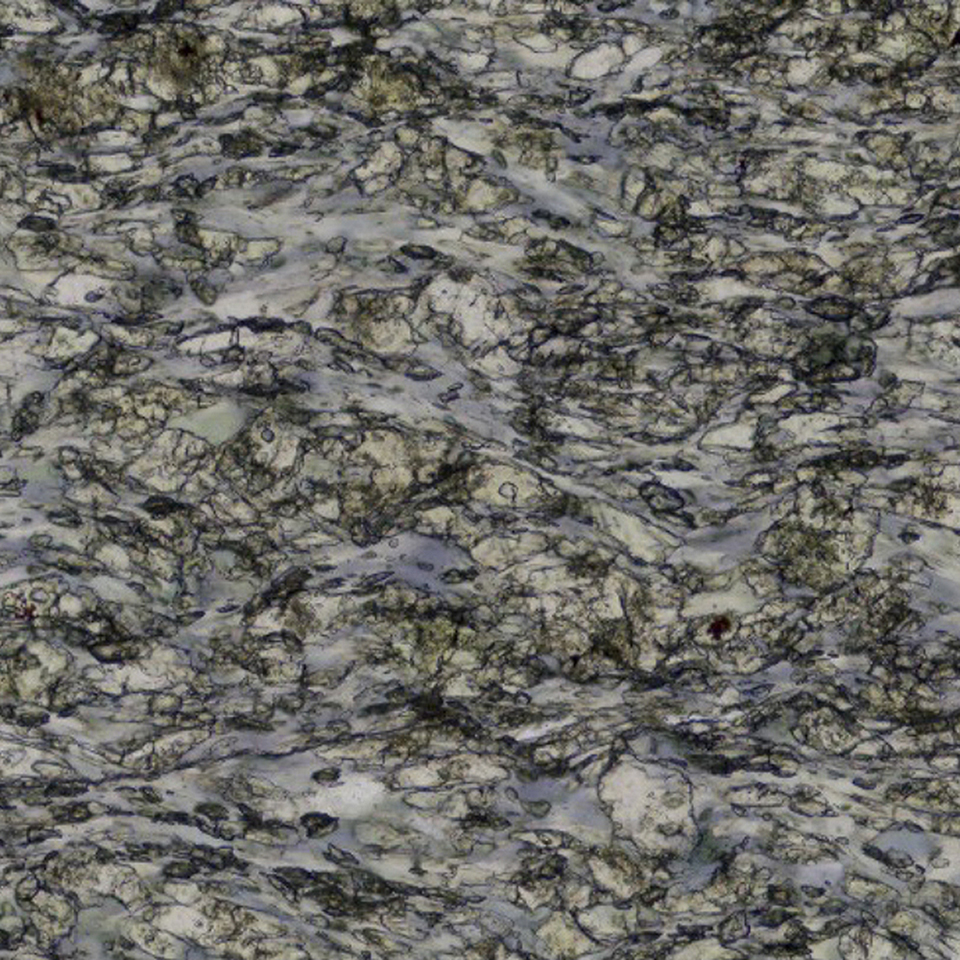
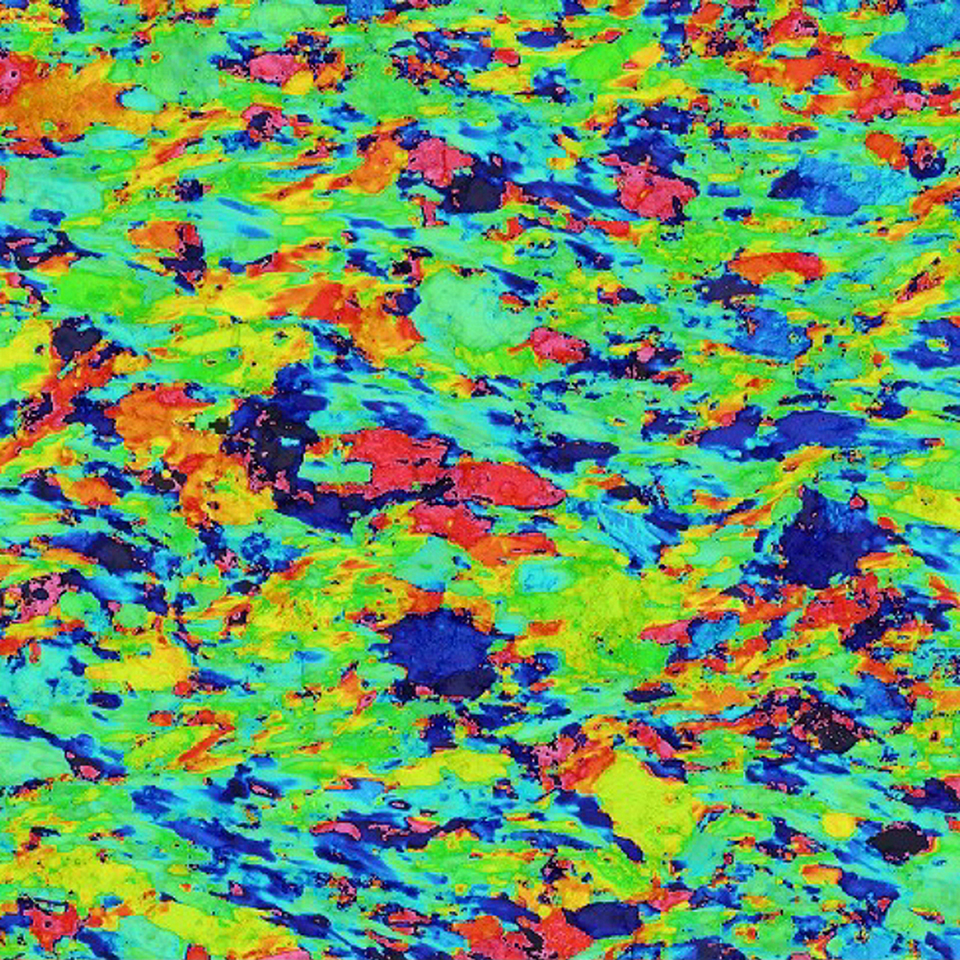
The optional PetPAT orientation analysis package turns entire thin sections into powerful mineral orientation maps. Use these datasets in conjunction with mineral segmentation for detailed studies and also to generate grain size distribution data.
- Use XPL image stacks to calculate the angle at which any given pixel is at maximum or minimum luminance.
- Then use these data to allow the entire thin section to be mapped for orientation of mineral grains in transmitted light.


![Composite figure illustrating spectral unmixing and FINE correction on multiplex immunofluorescence of tissue. Panel A (left): Four large images of the same tissue section. First image shows a blue DAPI nuclear stain. Second is a series of overlaid cytokeratin (CK) images displayed in multiple colors (cyan, green, yellow, red, magenta) corresponding to different channels. Third image shows CK in a single magenta channel. Fourth image is an unstained grayscale image of the tissue, highlighting autofluorescence and background. Panel B (top right): Line graph titled “New reference spectra – Unmixing Spectra” with wavelength on the x‑axis (≈450–750 nm) and relative intensity on the y‑axis (0–1). Multiple colored curves (DAPI, CFP, FITC, Cy5‑L5, TRITC, Cy5, Cy7, AF Tonsil) show distinct emission profiles used as updated reference spectra for unmixing. Panel C (bottom left): Two schematic diagrams labeled “Before FINE” and “After FINE”. Each has a plot with the y‑axis “rel. channel intensity [%]” from −50% to +50% and three vertical gray bands labeled Scanner 1–3 on the x‑axis. Colored dots (blue, green, red) indicate channel intensities across scanners: before FINE they are scattered and inconsistent; after FINE they cluster near the horizontal center line, indicating harmonized intensities. Next to each plot is a simplified spectral diagram with colored lines (blue, green, red) showing misaligned spectra before FINE and overlapping, aligned spectra after FINE. Panel D (bottom right): Example of a multiplex stained whole‑slide image. Left image labeled “Raw” shows a brightly colored composite map of the tissue with pseudocolors for markers (CD3, CD8, CD68, PDL1, Ki67, CK, Nuclei) listed in a legend. To the right, two images labeled “unmixed” display the same tissue after spectral unmixing, with cleaner separation of markers and reduced background, including a zoomed‑in region on the far right.]({"xsmall":"https://www.zeiss.com/content/dam/rms/reference-master/products/imaging/axioscan-7/spatial-biology/spectral-unmixing-screens_02.jpg/_jcr_content/renditions/original.image_file.100.50.0,47,1920,1007.file/spectral-unmixing-screens_02.jpg","small":"https://www.zeiss.com/content/dam/rms/reference-master/products/imaging/axioscan-7/spatial-biology/spectral-unmixing-screens_02.jpg/_jcr_content/renditions/original.image_file.360.180.0,47,1920,1007.file/spectral-unmixing-screens_02.jpg","medium":"https://www.zeiss.com/content/dam/rms/reference-master/products/imaging/axioscan-7/spatial-biology/spectral-unmixing-screens_02.jpg/_jcr_content/renditions/original.image_file.768.384.0,47,1920,1007.file/spectral-unmixing-screens_02.jpg","large":"https://www.zeiss.com/content/dam/rms/reference-master/products/imaging/axioscan-7/spatial-biology/spectral-unmixing-screens_02.jpg/_jcr_content/renditions/original.image_file.1024.512.0,47,1920,1007.file/spectral-unmixing-screens_02.jpg","xlarge":"https://www.zeiss.com/content/dam/rms/reference-master/products/imaging/axioscan-7/spatial-biology/spectral-unmixing-screens_02.jpg/_jcr_content/renditions/original.image_file.1280.640.0,47,1920,1007.file/spectral-unmixing-screens_02.jpg","xxlarge":"https://www.zeiss.com/content/dam/rms/reference-master/products/imaging/axioscan-7/spatial-biology/spectral-unmixing-screens_02.jpg/_jcr_content/renditions/original.image_file.1440.720.0,47,1920,1007.file/spectral-unmixing-screens_02.jpg","max":"https://www.zeiss.com/content/dam/rms/reference-master/products/imaging/axioscan-7/spatial-biology/spectral-unmixing-screens_02.jpg/_jcr_content/renditions/original.image_file.1920.960.0,47,1920,1007.file/spectral-unmixing-screens_02.jpg"})