Jason Oldak Chooses ARRI/ZEISS Master Primes & Standard Speeds for "Loot" Season 3


Cinematographer Jason Oldak (Lessons in Chemistry, Doin’ It, Minx) brought a brighter, more colorful vision to Season 3 of Loot, the Apple TV+ comedy starring Maya Rudolph. He made use of ARRI/ZEISS Master Primes and Standard Speeds with the Sony Venice to achieve a refined, character-driven aesthetic that reflected the show's evolution. Where previous seasons had a slightly darker, more contrasty look, Season 3 called for a more defined visual shift that mirrored protagonist Molly Wells' own journey of self-discovery.


Loot follows billionaire Molly Wells as she navigates the complicated world of extreme wealth, philanthropy, and personal relationships. Season 3 finds her at a pivotal moment: she has a clearer sense of who she is and what she stands for, as she realizes her own ideals, departing from the selfish leanings of her billionaire former friends. Plus, she is finally free from the baggage of her marriage that ruled season one and her disastrous infatuation for a married co-worker in Season 2. For Oldak, the cinematography needed to reflect her newfound clarity. "When I get involved in a lensing project, I ask myself, 'what is the story? How can my photography balance what's happening with the characters at hand?'" he explains. "It felt that Molly Wells was becoming more defined with a cleaner, clearer outlook. So, maybe we needed to change the look slightly to reflect that."


Oldak's relationship with Zeiss lenses goes back nearly a decade to his work on the Hulu series Casual, where he first used Master Primes. "From then on, I just fell in love with Zeiss, but I also specifically fell in love with that lens," he recalled. When it came time to establish Season 3's new visual direction, Oldak turned to Cam Tech for extensive camera tests with the Sony Venice–a camera he knew intimately from previous shows.
During testing, the Master Primes emerged as the clear choice. "We were dealing with Maya Rudolph and other actresses so how the lens captured a face became very important," Oldak said. "I found that at a 1.3-2 split, even though it's a sharper lens, the falloff is really beautiful. It adds nice texture to the color. The contrast balanced nicely—it wasn't too much and allowed us to light in a way where we created a level of ratios, but everyone still looked pretty beautiful." The lenses' shallow depth of field at T1.3 created cinematic separation–a quality that had been important in Season 2 and that Oldak wanted to maintain.


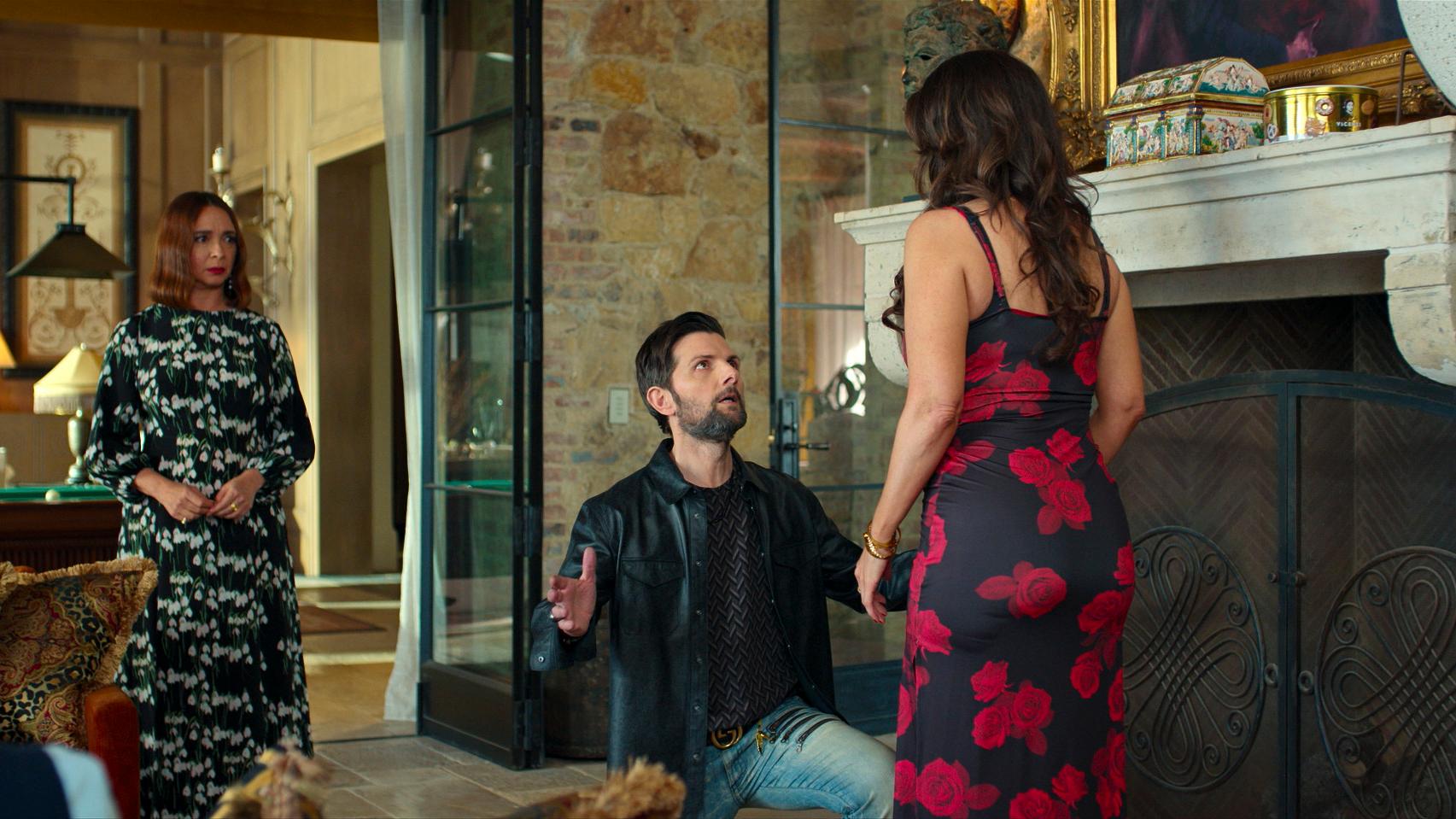

For a show with an ensemble cast, with as many as five people sharing one frame, the Master Primes' range of focal lengths proved essential. "The 21mm is a gorgeous lens, and that it doesn't have any aberrations or fisheye. We use that lens a lot," Oldak noted. "The 27mm was also a really great lens for group shots. I think overall, it was about control with the ARRI/ZEISS Master Primes. Getting a clean image, with color consistency and flare I could count on was important to me," he recounts. "It was about having a consistent approach throughout the season."
What made Season 3 particularly exciting for Oldak was the opportunity to explore different visual approaches for various storylines within the show. Episode 5 presented a unique challenge: a flashback to 2011 showing the origin of Molly's friendship with her best friend Nicholas, set just after her husband's IPO made them newly wealthy. "I wanted a lens that felt a little more unrefined. Maybe the flares are a little messier, more low contrast, just something that truly changed the look," Oldak explained. Working with Kavon Elhami at Cam Tech, he found the perfect complement to the Master Primes: ZEISS Standard Speeds.




"I thought it would be interesting to see what would happen if we used older design lenses from the same manufacturer." Oldak wondered, "Would it give us a different approach?" The ZEISS Standard Speeds provided exactly what the story needed: a less refined quality that matched Molly's character at that moment in time–newly thrust into wealth, not yet knowing how to navigate her circumstances. "We matched those together, and I thought it was a really great fit. We also added some things in post with grain and structure, but the lenses really helped convey the change in time periods," he added.
Oldak also made the deliberate choice to shoot Super 35 rather than following the large format trend. "For a long time, the fad was to shoot large format," he explained. "I do love that shallow focus, but I also wanted to change it up." The decision proved both practical and aesthetic: Designed for Super 35, Master Primes delivered the shallow depth of field and cinematic separation he wanted without requiring a larger format sensor. "It was nice to be back in the familiar Super 35 world,” he concluded.


Throughout the season, which also included ersatz Super Bowl commercial sequences and a Korean drama-within-the-show, Oldak maintained a philosophy of doing as much as possible in-camera. "I know there's lots of post possibilities at this point, but what if I'm on another job? I wanted to create as much of a stamp as I could." This approach, combined with the Zeiss lenses' consistent performance, allowed him to confidently craft distinct looks for each storyline while maintaining the show's overall visual cohesion.
For Oldak, lens choice is fundamental to cinematography. "I truly think that the lens defines the look. It's the paintbrush. It creates the level of contrast, the level of color, the kind of flares you're creating. What time period of lens you choose should be indicative of the conceptualization of the show that you're working on."


Loot Season 3 shot entirely in Los Angeles, with stages at Universal and extensive location work—often in Malibu's billionaire homes. The production enjoyed a generous seven-day schedule per 30-minute episode, allowing Oldak and his team to focus on each scene without rushing. "It was a great thing," Oldak reflected on working locally with a top-tier crew. "I am very thankful to work in this town."
Season 3 of Loot is now streaming on Apple TV+.