Advancing cancer treatment: The importance of microscopy in CAR-T cell therapy automation
In the rapidly evolving field of biopharmaceuticals, companies like Optima pharma are at the forefront of developing machinery for the production of advanced therapy medicinal products (ATMPs). These specialized therapies, which include gene and cell therapies, are crucial for treating various diseases, including cancer. The success of these therapies can significantly impact patient outcomes and revolutionize medicine. Several thousand patients could benefit from these treatments every year.
Manual CAR-T cell production is a multi-step process that is slow, operator-intensive, and technically demanding.
CAR-T cell therapies
Chimeric antigen receptor T (CAR-T) cell therapies are a promising cancer treatment. T cells are collected from the patients, modified, and returned to them: Doctors collect white blood cells from the patient, T cells are isolated and activated to simulate a signal that prompts the T cells to start proliferating. A special receptor called a "chimeric antigen receptor" (CAR) is then added to the T cells. This receptor is engineered to act like a magnet, attracting the T cells to specific proteins on cancer cells. When the CAR-T cells are infused back into the patient, they identify, firmly attach to, and ultimately attack and eliminate the cancer cells that express these proteins.
Because the cells are derived from the patient's own body, they do not trigger the typical immune rejection reactions.
While successful for certain blood cancers, like leukemia and non-Hodgkin's lymphoma, challenges remain for its use in acute myeloid leukemia (AML) and solid tumors due to targeting issues and the tumor environment.
Around a quarter of leukemia and non-Hodgkin's lymphoma patients who have already undergone treatment can benefit from treatment with CAR-T cells.
Saving lives through automation
Many university hospitals have the expertise to produce CAR-T cell therapies; however, their manufacturing processes stem from research, making them highly manual and tailored. The logistics and production within class A/B clean rooms incur significant costs and require substantial time.
Pioneering standardized and automated manufacturing, the Bosch Health Campus in Stuttgart, the Heidelberg University Hospital and Optima pharma have developed an automated production unit for CAR-T cell therapeutics that meets strict regulations: the so-called ProCell machine. The machine maps the entire manufacturing process for CAR-T cells. Its modular design, automation capabilities, and isolator technology can be tailored to meet specific production needs, ensuring quality and high levels of safety, efficiency and adaptability.
Enhancing precision with integrated microscopy
The integration of microscopy into the development processes of ATMPs plays a vital role in enhancing operational efficiency and reliability in the production of these complex therapies.
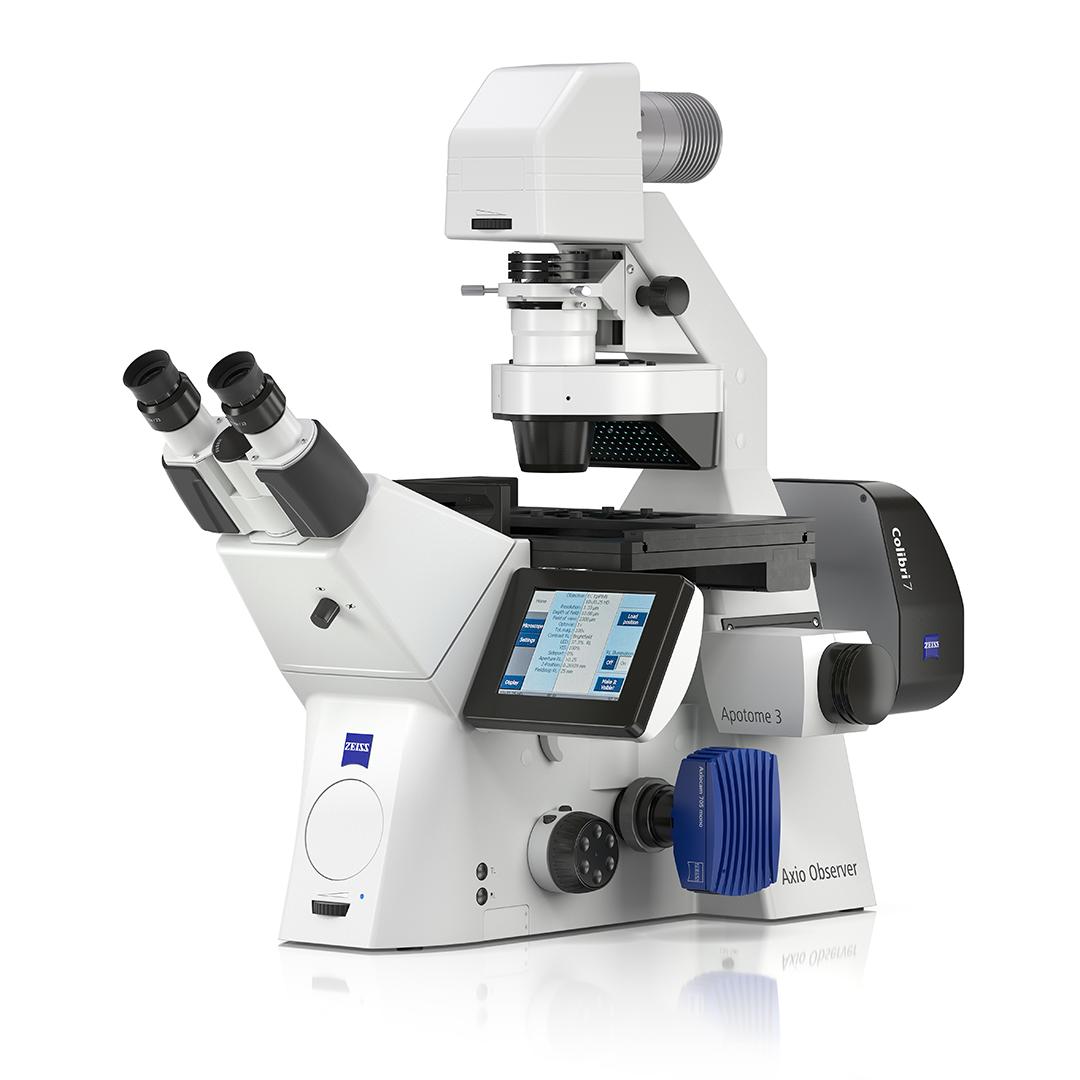
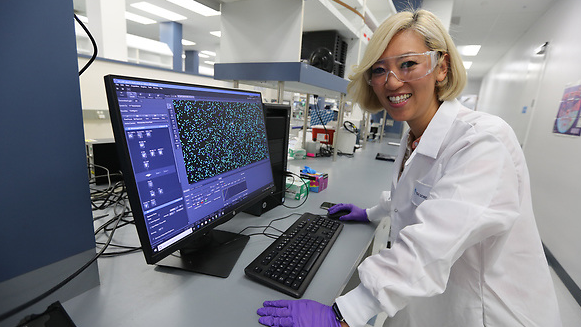
At Optima pharma, microscopy is used extensively for quality control during the production of ATMPs. The ZEISS Axio Observer microscope is integrated into the over five-meter long ProCell machine, placed below the tabletop and positioned outside the isolator to protect the electronics from damage caused by harsh decontamination processes, such as exposure to hydrogen peroxide. This setup enables precise imaging and assessment of cell cultures. Instead of moving the sample, the entire unit is moved in this case. Autofocusing enables the team to capture high-quality images of cell morphology and monitor cell viability effectively. Additionally, custom-developed software for cell counting automates the process, allowing for accurate assessments of live and dead cells, as well as cell division, during the process.
By integrating the microscope into our workflow, we have significantly increased efficiency, dramatically reduced time and personnel requirements, and our manufacturing process now remains fully secure and shielded from the external environment.
Insights on the role of microscopy in pharmaceutical automation
Third-party Content Blocked
The video player is blocked due to your cookie preferences. To change the settings and play the video, please click the button below and consent to use of "Functional" tracking technologies.
Vilma Methner and Christian Stix from Optima pharma present “ProCell for Patient,” a fully automated machine for manufacturing cell-based therapeutics, integrating all process steps and a ZEISS microscope to standardize ATMP production and reduce time and staffing.
Advancing microscopy for biopharmaceutical development
Looking ahead, both Christian Stix and Vilma Metner, envision further advancements in microscopy that could enhance the capabilities of the ProCell machine. Features that allow the microscope to differentiate between various cell types and assess treated versus untreated cells would be very helpful. This capability would not only improve the standardization of the manufacturing process but also provide a competitive edge in the biopharmaceutical market. The potential for innovation in microscopy could lead to more efficient workflows and better patient outcomes in the field of ATMPs.
We have learned together with ZEISS, and, in the future, we can explore new paths with them and contribute to the fight against cancer.
The integration of advanced microscopy at Optima pharma is transforming the landscape of biopharmaceutical development, addressing critical challenges, and paving the way for future innovations that could significantly impact patient care.
About the "ProCell for Patient" project
Advancing the automation of cell therapy to better treat cancer patients – this is the goal of the “ProCell for Patient” project. A multidisciplinary team from the Bosch Health Campus in Stuttgart, Heidelberg University Hospital, and Optima pharma has developed a decentralized, automated CAR‑T cell production facility that replaces time‑ and cost‑intensive manual steps. The aim is to cut the hours required from highly qualified staff for CAR‑T manufacturing by at least 50%.
Supported by the state of Baden‑Württemberg under the Forum Gesundheitsstandort, the project is setting new standards in personalized medicine.
In brief
Automation, realized through Optima pharma’s ProCell machine, standardizes and streamlines CAR-T cell manufacturing. Optima pharma, together with the Bosch Health Campus in Stuttgart and Heidelberg University Hospital, developed the automated ProCell machine to standardize and automate CAR-T cell manufacturing, reducing time, costs, and cleanroom dependency while ensuring safety and regulatory compliance.
A ZEISS Axio Observer microscope is integrated into the ProCell system outside the isolator, enabling automated high-quality imaging, and AI-based cell counting to monitor cell morphology, viability, and division – significantly improving workflow efficiency and reducing personnel requirements.
Optima experts see value in microscopy that can distinguish different cell types and living and dead cells, which would further standardize manufacturing, sharpen quality control, and strengthen competitiveness – supporting better outcomes for cancer patients.