Film & Digital Times: Aatma optical design with Xiang Liu and Benjamin Völker
This interview was first published in Film & Digital Times 133-134
FDTimes discussed the ZEISS Aatma project with Xiang Lu, Optical Designer, and Benjamin Völker, Staff Expert Optical Design.
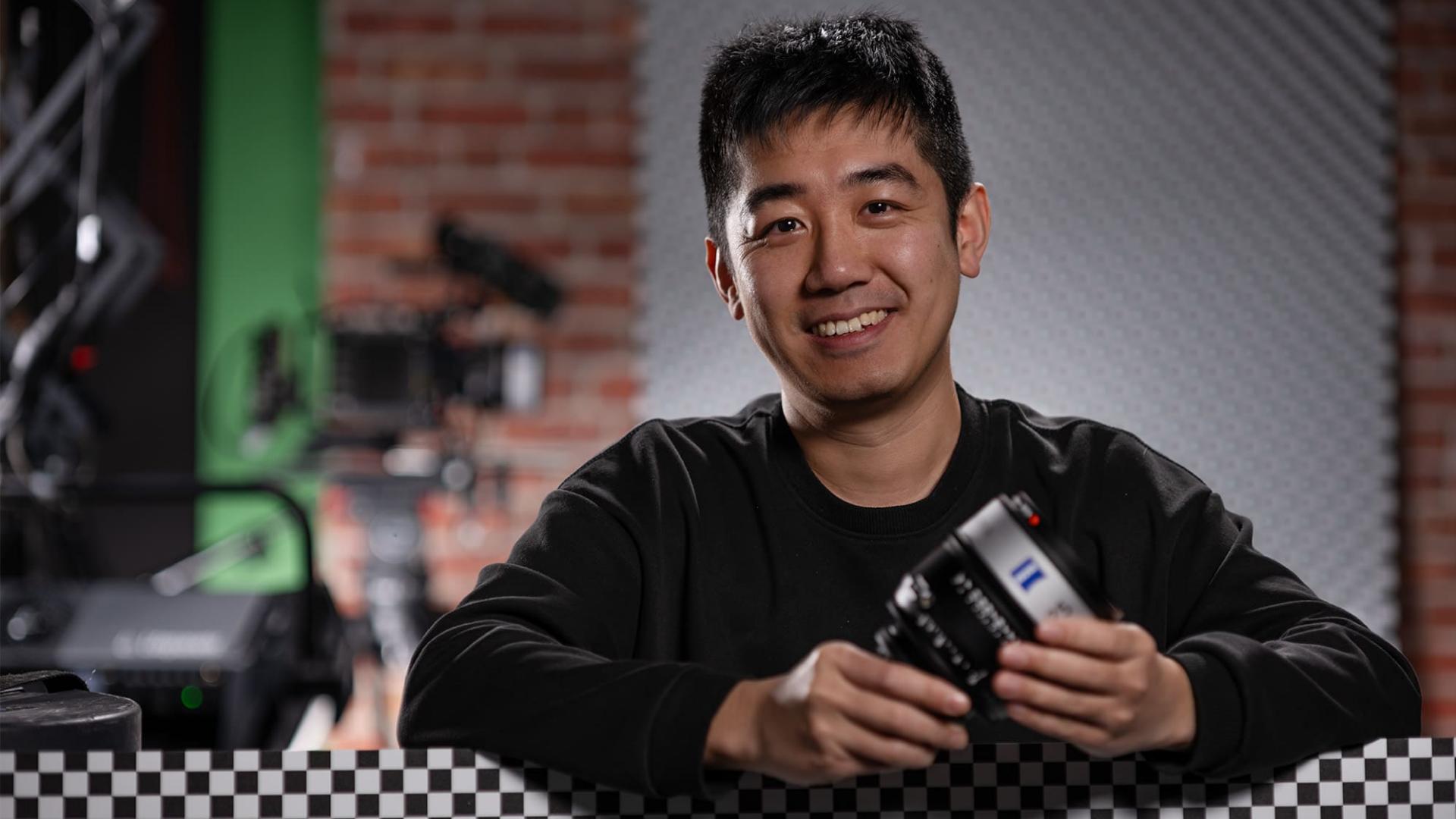

Xiang Lu, Optical Designer. Aatma 85mm at T1.5.
Jon Fauer: Good movies often have a backstory. How did you start at ZEISS?
Xiang Lu: I’m the Optical Designer of ZEISS Aatma lenses. My connection with ZEISS began about 14 years ago, in the third year of my undergraduate studies in Beijing. I was a member of the photography club. Trying to become more proficient, I grew tired of cheap zoom lenses and looked for good primes. I went to a flea market and found a 1960s vintage Carl Zeiss Jena Tessar 50mm f2.8 lens that delivered amazing images for $50. Wondering where Jena was, I quickly found out that ZEISS was founded there in 1846. And then, I learned that the University of Jena offered an international Master’s Program in photonics and optics. I enrolled and moved from China to Germany. My mentor had been a distinguished optical designer at ZEISS for 35 years. After graduating with a PhD, I joined the company and moved to ZEISS headquarters in Oberkochen about 3 years ago. As an optical designer, working on cine lenses is not only my profession, it’s also a passion.
How did the Aatma project begin for you?
Xiang: We had a lot of discussions about the character of vintage lenses and why so many people desire them for cinematography. A typically straightforward approach would be to rehouse old lenses. However, we took a different path for the Aatma series. Certainly, the concept came from old glass. But instead of simply replicating the optical design of those old lenses, we were inspired by the way they rendered skin textures and bokeh. We studied simulations and aberration analyses of many vintage lenses and then figured out the physics that made them so attractive for cinematographers.
At the same time, we also wanted to retain the reliable characteristics of modern lenses: consistency within the series, faithful color correction, good ergonomics and breathing control. We found a way to combine the unique character of vintage lenses with the advantages of modern cine lenses.
Aatmas have been described as over-corrected. Please explain.
Xiang: Optical designers more often than not aim to correct all aberrations to exactly zero. Over-correction, on the other hand, pushes the correction even further. This type of aberration correction is rarely seen in modern lenses, but with a balanced recipe, it can deliver unique characteristics like softer skin rendition, bubble bokeh, extended depth of field, smoother transitions during focus pulling, or even resolution roll-off.
What is the most interesting “character” of Aatma?
Xiang: An important character of Aatma is that it has a greater depth of field, even at T1. 5. Even if you are shooting wide open with 50mm or 85mm Aatma, your complete face will be in focus. With other fast lenses, if you want to have the entire face in focus, you have to stop down.
How do you achieve that greater depth of field?
Xiang: With a combination of aberrations. We have done it with some really hardcore physics. The circle of confusion and depth of field charts may be different from what you have referred to. It’s related to focus roll-off rendering. Focus doesn’t become sharp abruptly. It is a certain process as you pull focus and there is a larger depth range where the object is in focus because of this very special combination of aberrations.
How would you describe the subjective look of vintage versus modern lenses, as well as the technical differences?
Xiang: For example, if you take a fast, T1.4 modern lens, you probably have a very sharp image when you are in focus, with nice bokeh and very shallow depth of field. Focus is super sharp. Skin tones are rendered in a way that you can see every detail, and you can count every hair that is in focus.
But if we look at a fast T1.4 vintage lens, skin tones are rendered in a different way. You cannot see a specific focus plane where the skin is completely sharp; instead, you notice that the face appears smoother, in a more comfortable way. There’s no unnatural “pop” of the very fine skin details. I think skin texture rendition is the most significant difference between modern and vintage glass.
As for bokeh, most modern lenses have a shallow depth of field, and the out-of-focus areas are quite blurred. If you have perfect lenses with the same T-stop from different manufacturers, basically the bokeh look similar. But vintage lenses are different. Some have very specific characteristics that make them unique. The bokeh seem to provide a unique signature.
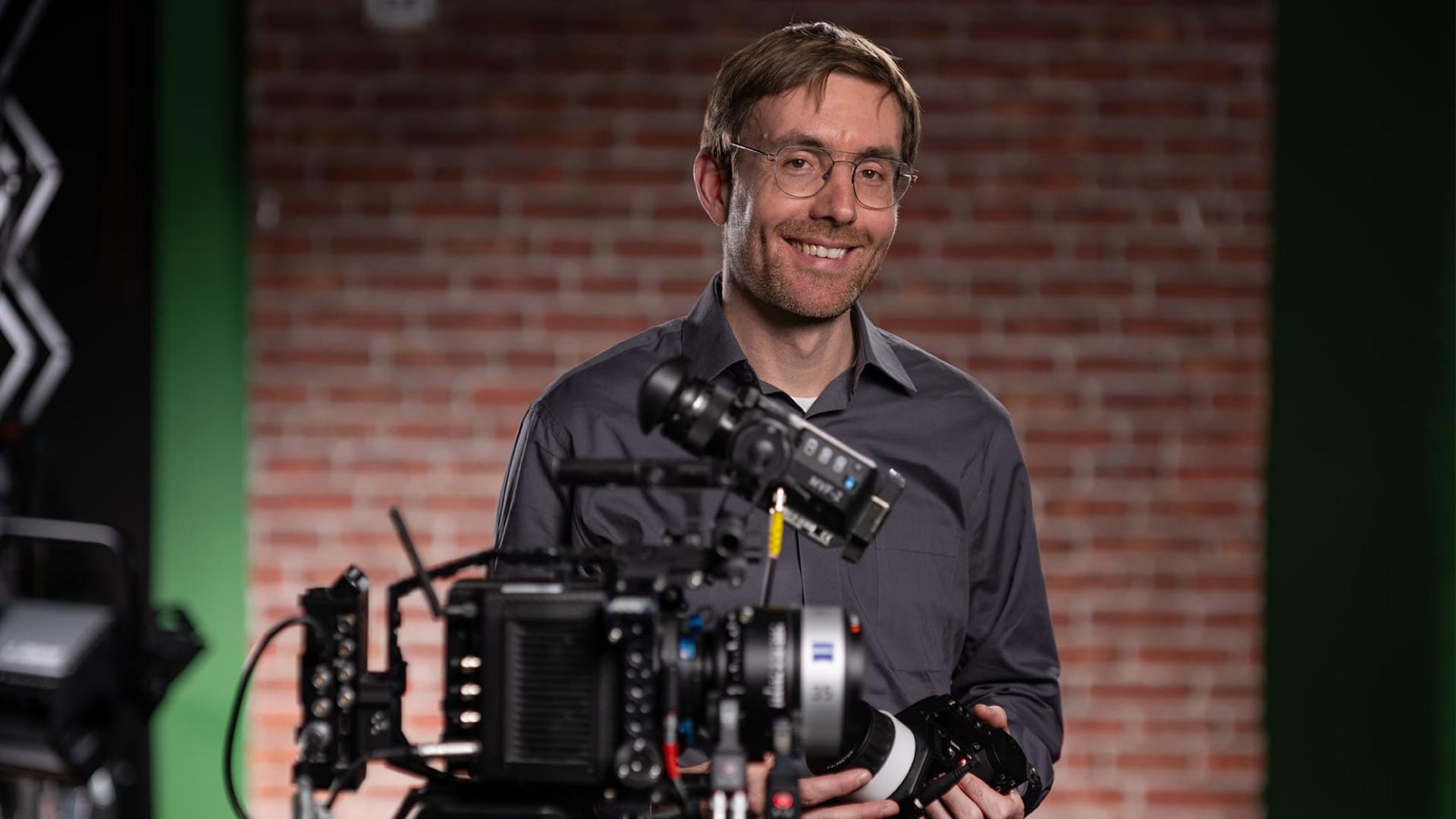

Benjamin Völker, Staff Expert Optical Design. Aatma 85mm at T1.5.
Please tell us more about bokeh.
Benjamin: My main task was to focus on the bokeh of the Aatma lenses. I developed a new method of simulating these bokeh—we put a lot more effort in this than in any earlier project. Bokeh sounds rather simple, but there are numerous variables. It’s different in the center of a lens compared to the edges. Bokeh changes when you stop the lens down and when you focus at different distances. It also depends on your lighting, the environment, the set, colors and so on.
If we look at lens development in the analog era of the past 50 years, the market was striving towards more and more perfection. And yet, lenses that we now call vintage, classic or artistic have aberrations. These were not intentional; they were inherent to whatever was possible at the time. In the transition from analog to digital, the market has gone a bit in the other direction: towards the need for more artistic, rather than perfect, lenses.
Is that true in still photography as well as cinema?
Benjamin: Some still photographers are looking at the artistic qualities of the lens. But for the majority, I think the trend continues towards more and more perfection, with the image appearing as close to reality as possible. Pixel peeping seems prevalent in still photography—for example, zooming in 800% and checking how the edges look. However, if you are watching a motion picture, it doesn’t make sense to zoom in that much. Certainly, it depends on where you screen it, but cinema has a different set of requirements than still photography.
It’s interesting that vintage lenses, striving for perfection when they were built, are now considered to be artistic lenses. In the Aatma design process, we considered the qualities of those old lenses and noticed how certain characteristics and “character” changed over the years. This was the first time we really took a deep dive into that topic and tried to understand it. That is the soul of the Aatma project. It is understanding what kind of character you had back then and translating that into a modern lens with all its benefits, but with the visual character and look of an old lens. That is completely different from taking an old lens and just rehousing it.
When you began this project, how did you describe the look you were seeking? How did you wind up where you are now?
Benjamin: We listened to cinematographers and users. Our efforts were led by words that translated to technical definitions and ultimately to motion picture images.
What were some of these words that became a wish list?
Xiang: Above all, it was about softer, smoother skin tones. Your question about still photography and cinematography lenses is relevant. When you take a still photo, it’s one picture at a time. You don’t have to think about the things that cinematographers are concerned with: lens breathing and how the image changes when you follow focus.
In cinematography, focus pulling is an important part of the process. It’s an integral part of the look, an important component of the composition. It facilitates your storytelling. How an actor or an object goes into focus really matters, whether it’s pulling focus or the character is walking towards camera. We spent a lot of effort analyzing these things. For modern, fast lenses, you have a very shallow depth of field, especially when you’re using a longer focal length. There’s very little transition between in and out of focus.
We looked at some of the fast vintage lenses that cinematographers enjoyed and found they have a very unique way of handling the process of focus pulling. You don’t have the feeling that the object surprisingly or abruptly comes into focus. The way that the object goes in and out of focus is subtle and unique. There are many vintage ZEISS lenses in our inventory and archives here in Oberkochen. We shot a lot of footage with these lenses and analyzed the images from a dynamic point of view—and not from a static still photo perspective.


The Aatmas’ front rings pay homage to classic ZEISS lens designs.
How do you compare the Aatmas to the familiar ZEISS Supreme and Nano lenses?
Xiang: Supremes and Nano are modern lenses: sharp and neutral. They’re consistent within the ZEISS family look. The Aatma lenses have similar ergonomics and control of breathing, chromatic aberration, flare and ghosting. At the same time, they have a unique character that you normally find in some vintage lenses. Actually, you could say their character could be even more intense, for example, than vintage Contax ZEISS lenses.
Benjamin: Aatmas compared to Supremes are less contrasty. The bokeh of Supremes are modern, very smooth and homogenous. Aatmas are a bit busier, with a delicate bubble bokeh where you have a recognizable rim around the out-of-focus highlights. If you defocus a modern lens and it’s wide open, the background is smooth and appears to melt.
With Aatma, the background is a bit busier, and the various sources of light are defined more clearly—they appear a bit stronger and more colorful.
Xiang: It’s caused by the aberrations. We found a specific combination of different aberrations to deliver this kind of effect. Actually, chromatic aberration is something that we wanted to avoid in the bokeh. A number of vintage lenses have an abundance of color aberrations, resulting in bokeh that look like dirty soap bubbles, not crystal clear, that seem to jump out at you. Some other vintage lenses have overlapping rainbows that don’t help you with storytelling because it’s an obvious artifact. It’s not motivated by the background behind your subject.
We wanted to help cinematographers tell their stories by letting the background become part of the scene rather than being completely blurred out—where you don’t really see what’s going on. For the Aatma lenses with their special, busier bokeh, you see a bit of what is going on, but it will not distract you from the foreground action or main object. We worked hard to find the sweet spot that balances these concepts.
How would you compare Aatmas to Radiance?
Benjamin: Radiance lenses provide a second flavor of the Supreme series, achieved by changing the coatings, the color rendering and introducing different types of lens flares. Aatma is different. We did not focus on lens flare. Flare is still rather neutral compared to the Radiance. Instead, we paid attention to the look of the lens, to the soul of the image.
Aatma is not another flavor, not the same optical design with different coatings. Aatma is something completely different. It’s a new optical design with different characteristics.
How do Aatmas compare to vintage Contax ZEISS lenses?
Xiang: Aatmas take inspiration from vintage Contax ZEISS lenses, but we made the character and characteristics that we liked more intense. Vintage Contax lenses were not specifically designed for the look that happens to be liked by cinematographers today. Therefore, on this Aatma project, we had the opportunity to create a new optical design, learning from vintage lenses, but fine-tuning the look to be more unique and more intense.


The nine Aatma focal lengths from 18mm to 135mm.
It’s ironic: many vintage lenses that are appreciated for cinema today were originally designed for still photography.
Benjamin: Yes. We tried to make the entire set of Aatma lenses very interesting for cinematographers and consistent throughout the entire series of focal lengths—from 18mm to 135mm. Vintage lenses can be quite inconsistent even within one set. This was a very fast project—a complete family in a very short amount of time.
Tell us more about flares with Aatma lenses.
Benjamin: Flares are kind of neutral and not the main element of the look. I would describe them as controlled flares, with an intensity similar to Supremes, not emphasized but more on the artistic side.
Would you say that Aatmas are detuned lenses?
Benjamin: Good question. To me, “detuning” suggests that you take an existing lens and adjust things. If you don’t have the original optical design, it can be a trial-and-error process. That is not something we have done or would do.
Xiang: Our computer programs and simulations give us an understanding of optical aberration theories. That’s part of the heritage at ZEISS. For Aatma lenses, the combination of parameters to create their certain look benefitted from these very powerful computers and the simulation algorithms developed by Benjamin to verify our ideas without having to build a succession of prototypes in advance or to test by trial and error. That is how the development process was so smooth and fast.