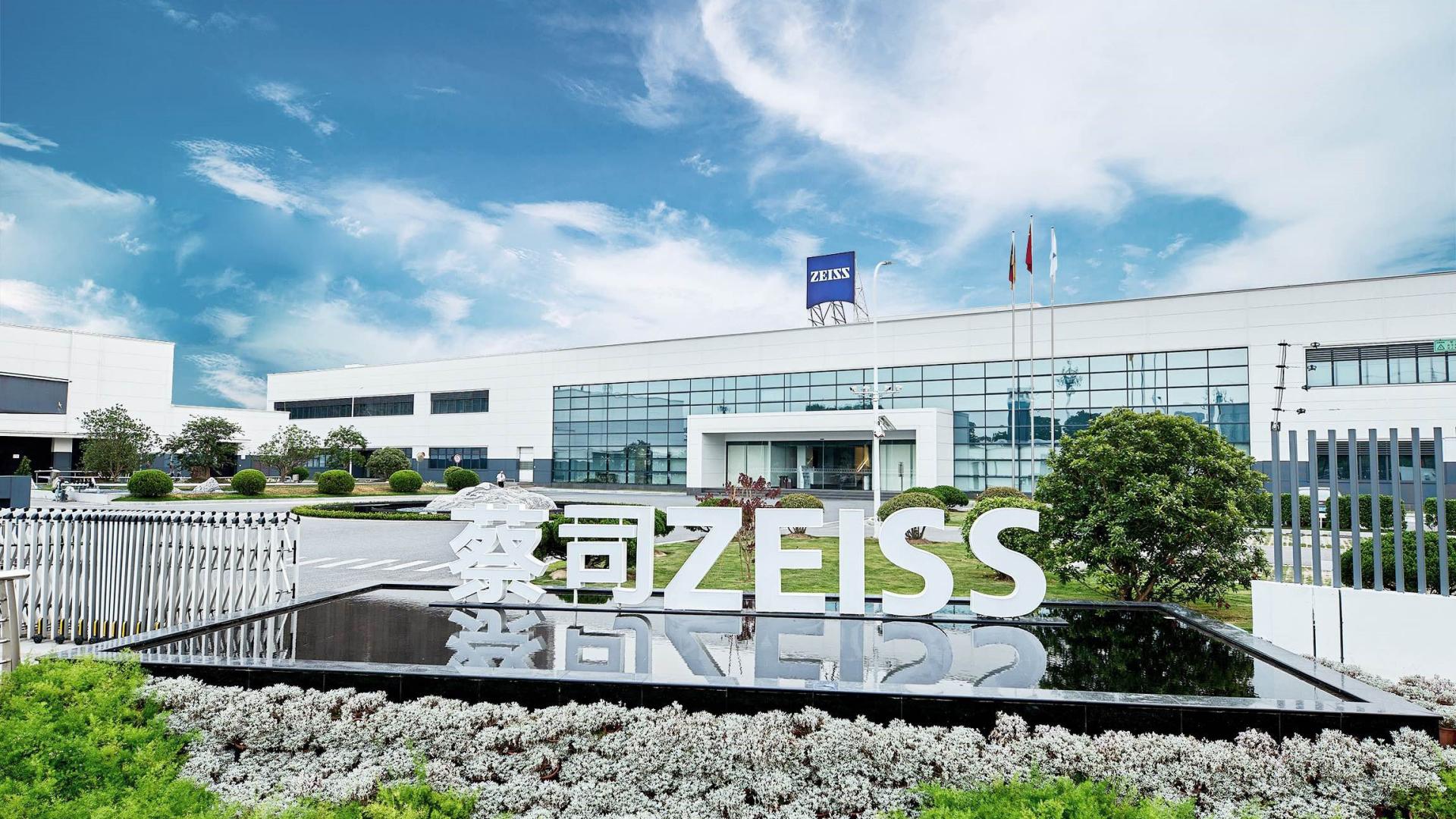
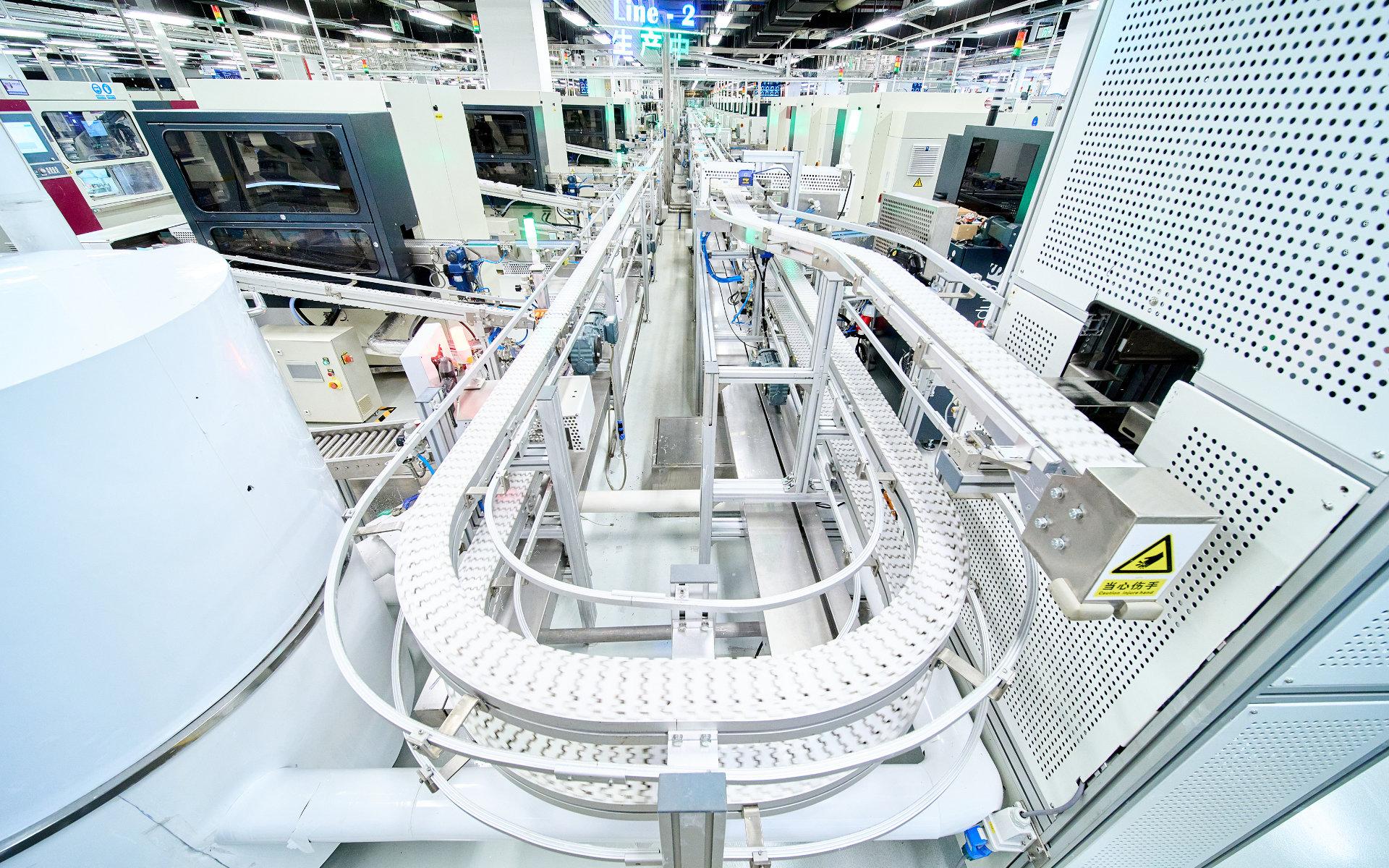
The Art of Customized Mass Manufacturing – ZEISS Vision Care Guangzhou Global Production Site Awarded by World Economic Forum
20 March 2026
When the concept of Industry 4.0 was first taking shape, Benjamin Viering was still Chief Engineer at the Karlsruhe Institute of Technology (KIT), Germany, working alongside his professor at the very moment this vision for the future of manufacturing was being defined. Today, 15 years later, as COO and CTO of ZEISS Vision Care, he is responsible for a global manufacturing network that embodies some of these principles of Industry 4.0 at scale: mastering highly complex, individualized mass production while ensuring consistent quality, speed and reliability worldwide.
In January, one of ZEISS Vision Care global manufacturing site, the Guangzhou site in China, has been welcomed to the Global Lighthouse Network by the World Economic Forum. In this interview Benjamin Viering shares his insights into a manufacturing approach that translates visionary concepts into a scalable and transferable operating model – one that strengthens all ZEISS Vision Care production sites and creates value for customers around the world.
What does the Global Lighthouse recognition mean for ZEISS Vision Care and its partners?
The recognition as a site in the Global Lighthouse Network is a remarkable milestone for ZEISS Vision Care – I am very proud of it. It confirms our leadership in digital, intelligent and sustainable operations and, importantly, the robustness of our global manufacturing model.
This award was granted in the Customer Centricity category, which is particularly meaningful to us. It demonstrates that we not only develop innovative lens designs, but also continuously optimize our end to end production and supply chain processes to deliver the highest levels of quality, speed and reliability consistently, across all markets – always putting our customers, and the consumer in the focus of our operations. This fits perfectly our mission, to protect and improve the vision and lifetime visual health for the world’s consumers – with brilliant, personalized products.
For our partners, eye care professionals worldwide, this recognition reinforces trust in ZEISS as a reliable, future ready partner.
By deploying a broad range of suitable Industry 4.0 applications, ZEISS Vision Care has established a closed digital ecosystem that enables them to manage complexity at scale.
How does digital transformation support eye care professionals globally?
Digital transformation is a core element of our operations strategy across all production sites. By deploying a broad range of suitable Industry 4.0 applications, we have established a closed digital ecosystem that enables us to manage complexity at scale.
Technologies such as Digital Twins, Industrial Internet of Things (IIoT), AI based systems and invisible Data Matrix Codes allow us to prioritize urgent orders, increase transparency and accelerate delivery times. For eye care professionals, this translates into faster access to highly personalized, precision engineered lenses – supported by consistently high quality and sustainability standards, regardless of location.
How does this approach strengthen the global ZEISS Vision Care network?
ZEISS Vision Care operates a flexible, resilient global manufacturing network designed to meet market demand. Best practices developed within this network are systematically transferred and replicated, ensuring consistent performance across all sites.
Beyond production efficiency, this approach digitizes the entire value chain – from customer insights and personalized design to manufacturing, delivery and service. It enables us to master mass customization and fast delivery while maintaining operational stability worldwide.
This award was granted in the Customer Centricity category, which is particularly meaningful to us. This fits perfectly our mission, to protect and improve the vision and lifetime visual health for the world’s consumers – with brilliant, personalized products.
In January 2026 ZEISS Vision Care global manufacturing site in Guangzhou, China, became part of the Global Lighthouse Network by the World Economic Forum.
What role does sustainability play in this global model?
Sustainability is deeply embedded in our DNA as a foundation owned company with 180 years of heritage. For me, digitalization is one key enabler of sustainable manufacturing across our network.
By improving resource efficiency, reducing waste and enabling precise traceability, our technologies contribute directly to lower environmental impact. These principles apply across all sites and support our long term commitment to responsible, future proof manufacturing. To give just some examples: The Guangzhou manufacturing site also has been recognized as a National Green Factory and a Carbon Neutral Factory. Since fiscal year 2022/23, the Guangzhou site has reduced water consumption per lens by 40%, contributing substantially to ZEISS Group sustainability targets.
Is there still room for innovation in eyeglass lens production?
Absolutely. The vision care industry continues to evolve – in materials, designs, coatings, visual behavior and beyond. Each innovation requires corresponding advances in manufacturing. Our global manufacturing model is designed to continuously adapt to these changes, so innovations in product development can be translated efficiently and reliably into production at scale.
Thank you for the interview.
Background information
These technologies demonstrate the commitment to customer-centricity and the ability to succeed in a complex, rapidly changing industry – the factors that have led to the recognition of the ZEISS Vision Care Guangzhou site as a Lighthouse in the Global Lighthouse Network of the World Economic Forum:
Each personalized lens is assigned a unique invisible Data Matrix Code on the production line. This creates a consistently maintained precise knowledge of the specific production stage each lens is in at any given moment.
The Digital Twin allows ZEISS Vision Care to simulate and adjust all parameters for customized lenses in a virtual environment before actual production begins. This creates "absolute precision" and enhances the visual experience for the end consumer.
Each lens order requires exclusive quality validation to meet the premium quality standards. ZEISS Vision Care’s millisecond-level real-time IIoT system delivers end-to-end process monitoring. Micro-level defects can be detected while the AI predicts quality risks, and the AI agent enables root cause analysis and closed-loop quality management. Furthermore, IIoT enables seamless end-to-end connectivity in the manufacturing process, allowing ZEISS Vision Care to respond quickly to market demands.