Non-Contact Measurement of 3D Surfaces at Specified, Evenly Spaced Points
Measure and evaluate 3D surface positions and normals with an automated app, using a contrast line grid printed on the object.
Precise and data-efficient measurement of specified 3D surface points
Μany applications require measurement and inspection of 3D surfaces at specified, evenly spaced points—sometimes just a few dozen, sometimes up to a thousand. For deformation analysis, these points must be identified as corresponding across multiple stages of deformation.
Full surface digitization is very accurate and thus produces a large number of coordinates and data, which are not needed for these specific use cases. A more effective method is to mark the inspection points as intersections of a contrast line grid, capture them from multiple angles, and measure them using image recognition.
A practical example comes from the measurement of pressure sensor vests used on crash test dummies. These vests already feature a contrast line grid, which makes it possible to measure the positions of each point before and after the crash, in order to locate the forces exerted on the dummy. Other industries can follow this example.


Our solution: Grid Recognition
Automate your inspection of specific points on 3D surfaces with the Grid Recognition app which is available for ZEISS INSPECT Optical 3D and ZEISS CORRELATE.


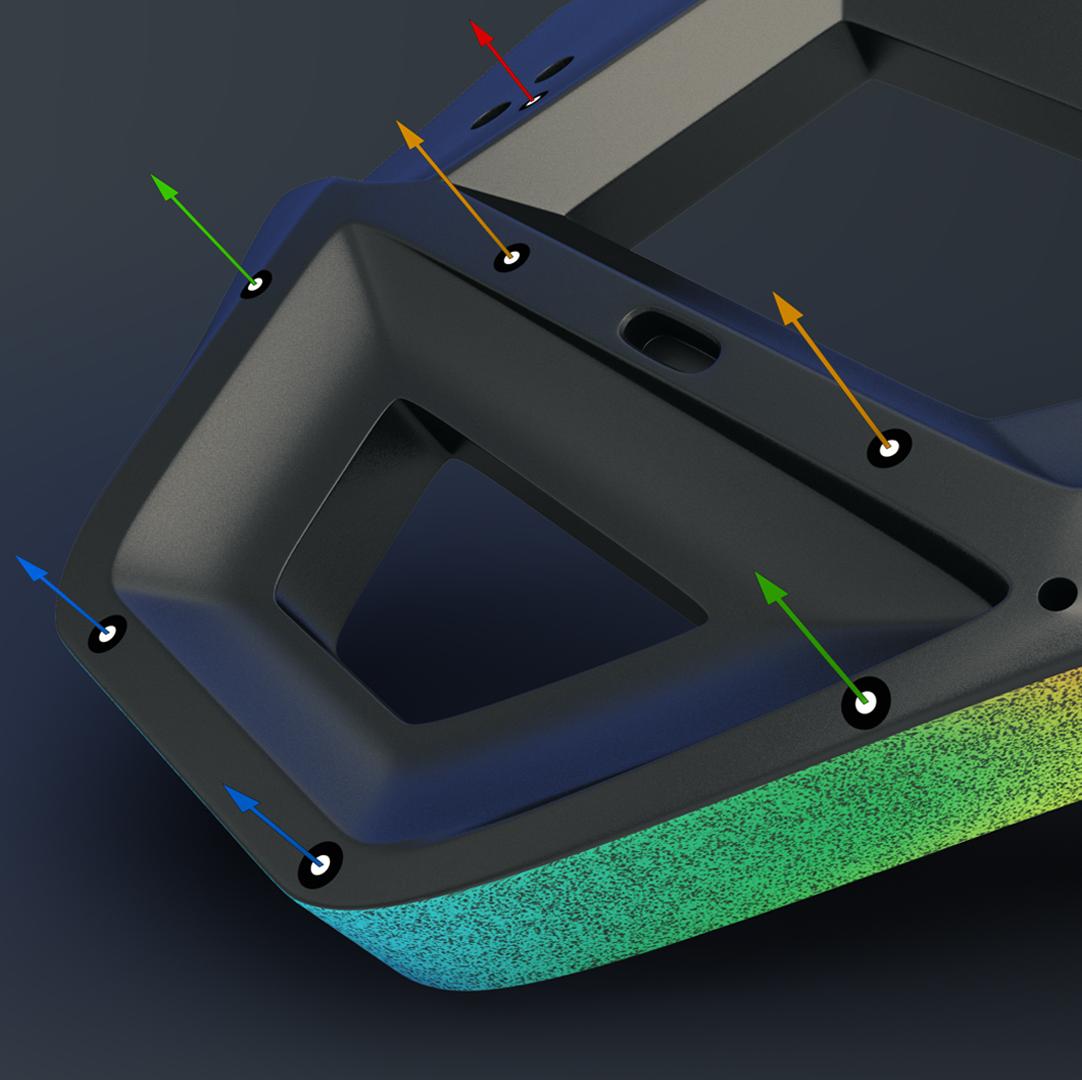
Measure positions and normals on 3D surfaces using a contrast line grid
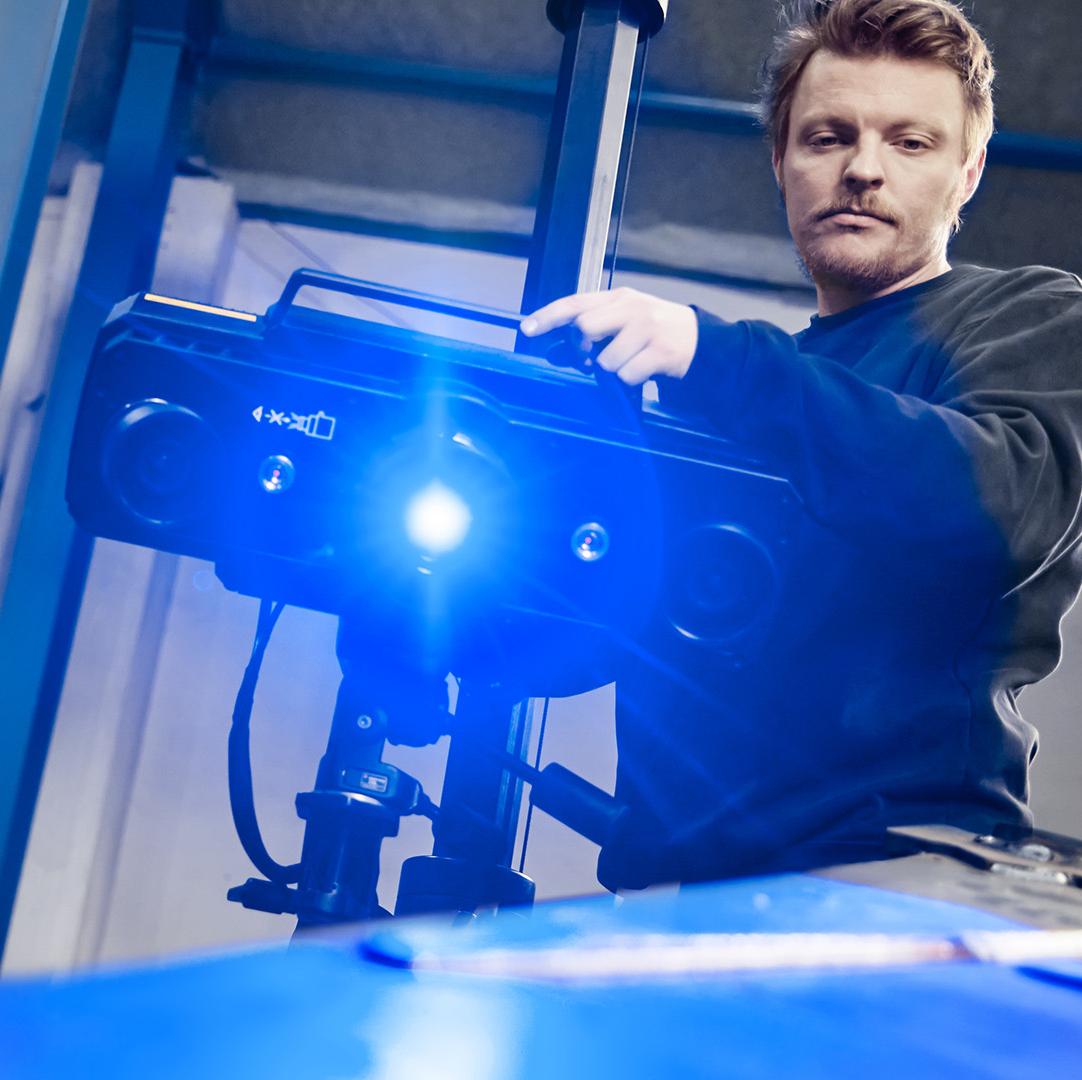
Get precise results based on images from different viewing anglesGrid Recognition provides automated, image-based recognition of a contrast line grid on any 3D surface. To capture the grid from multiple angles, an ATOS sensor (positioned either manually or robotically in a ScanBox) or a handheld TRITOP camera can be used.
The default parameters are optimized for measurements on pressure sensor vests used in crash testing. However, all parameters can be easily adjusted for other applications using custom grids, such as those etched onto sheet metal or applied with tape to clay models.
The app includes two Python scripts to convert the selected grid (either fully or downsampled) into individual point elements or export it to an ASCII file.
Your benefits
High precision and efficiency


Quick results
Grid Recognition measures all visible grid points within minutes, including image acquisition, while the automated recognition itself takes only a few seconds.


Improved accuracy and repeatability
Automated recognition removes human subjectivity and error, ensuring consistent and reliable results. Using it in project templates ensures a consistent and repeatable inspection workflow.


All-in-one software
Grid Recognition is seamlessly integrated into ZEISS INSPECT Optical 3D and ZEISS CORRELATE – our metrology software platforms equipped with powerful features for a range of use cases. Inspectors gain a comprehensive tool with results combined and presented in a single, unified report.
Intuitive workflow
With just a few intuitive steps, the app guides you to reliable results.
Fast results, minimal steps
-


To define key inspection points on the 3D surface, imprint it with a topologically rectangular line grid of high contrast - ideally white on black, or vice versa. To denote the grid origin, add a circular marker in one corner, by convention at the top left.
Do you need to analyze the deformation of pressure sensor vests in crash testing? The typically imprinted contrast line grid defines 475 points you can measure before and after the impact.
-
Rather than manually measuring hundreds of points, the object is captured from multiple angles by ATOS reference point measurements or TRITOP photogrammetry measurements.
For example, when measuring the pressure sensor vest of a crash test dummy, 12 measurements are sufficient, distributed across 4 longitudinal and 3 latitudinal positions around the front of the dummy.
You can select individual grid points by mouse click and access their data through Python scripts - more on that later.
After importing measurement data, the software can automatically recognize the grid origin and iteratively all visible adjacent grid points, while providing real-time updates.
-
The dialog allows you to adjust the contrast and proportions of the grid origin. The default settings work straightaway for the pressure sensor vest used in crash testing. For other applications, the parameters can be easily adapted, and we are happy to assist in creating custom grid designs.
-
The app includes 2 Python scripts designed to enhance your workflow. You can use these scripts as-is or customize them for your specific needs.
The first script allows you to convert grid points to individual point elements. You select the grid to convert, either fully or downsampled, as well as the name prefix of the automatically numbered point elements to be created.
-
The second script allows you to export grid points to an ASCII file, e.g. to import into another software. You select the grid to export, either fully or downsampled, as well as the name prefix of the automatically numbered point names. These, followed by the respective 3D position coordinates, will be written as consecutive lines in the file, in a folder you also select.

Get started now with Grid Recognition
Looking to digitize and automate your non-contact measurement of specific points on 3D surfaces? Grid Recognition is available as an app for ZEISS INSPECT Optical 3D and ZEISS CORRELATE.Suitable for a variety applications
While originally developed for crash testing, Grid Recognition can be configured and applied in a wide range of use cases. The app supports 3D measurements using contrast line grids on any surface.Product Development
The Grid Recognition app supports the 3D measurement of clay models used in design. Applied contrast grids enable accurate measurement of surface displacements and form deviations across design iterations.
Sheet metal forming
The app facilitates the inspection of sheet metal forming processes by using a contrast grid etched directly onto metal surfaces such as steel or aluminum.