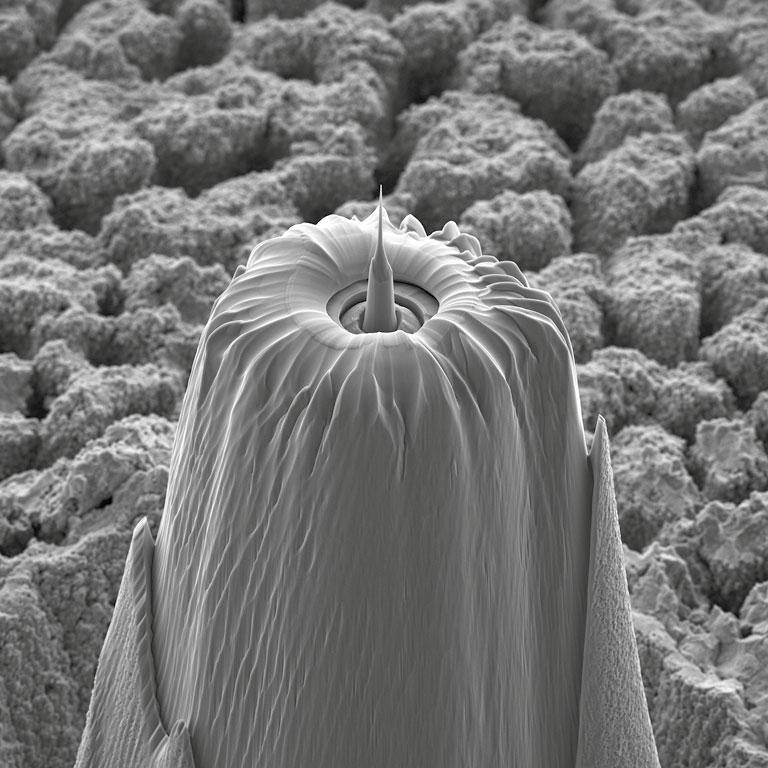
SEM image of nanofluidic channels fabricated by focused ion beam milling for materials research.

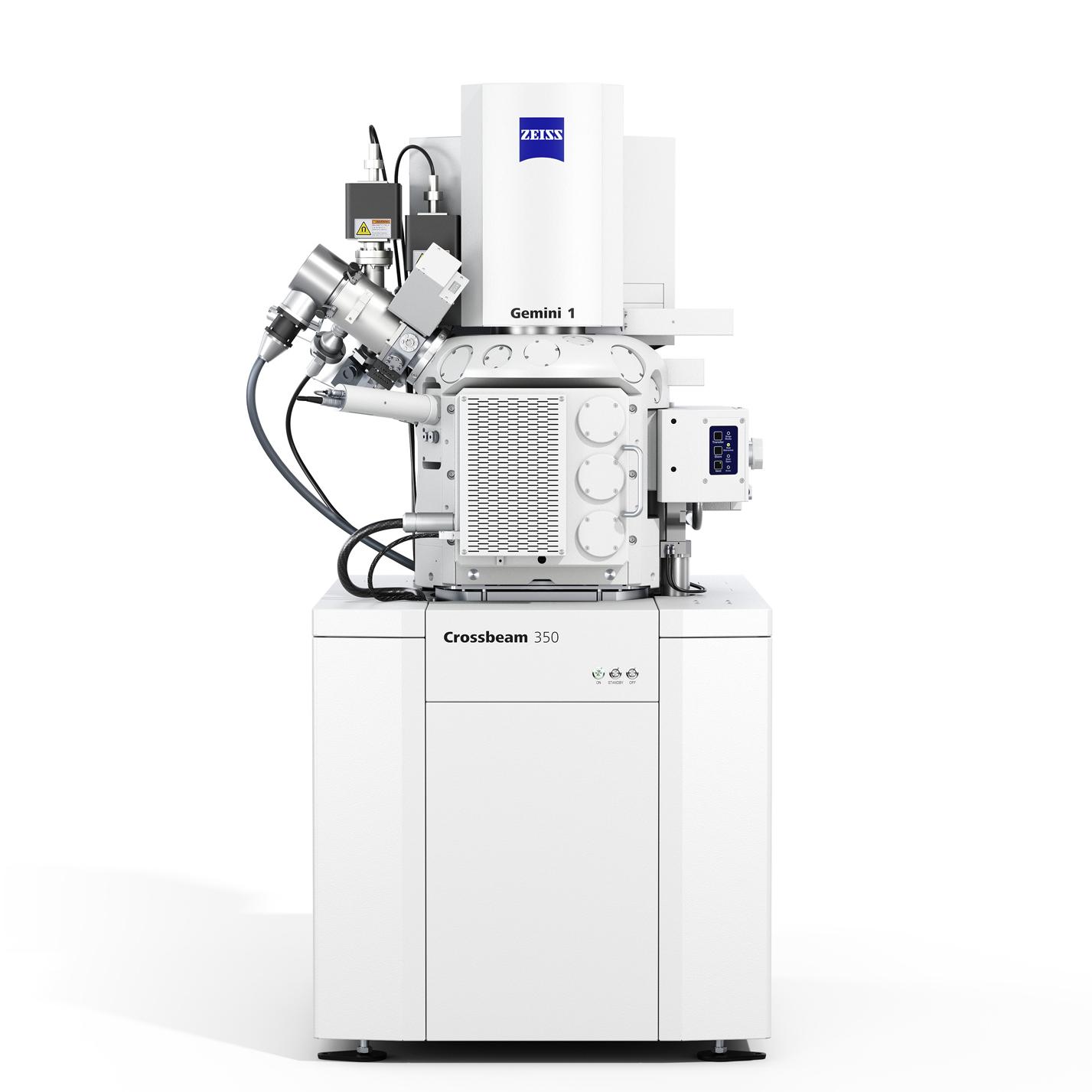
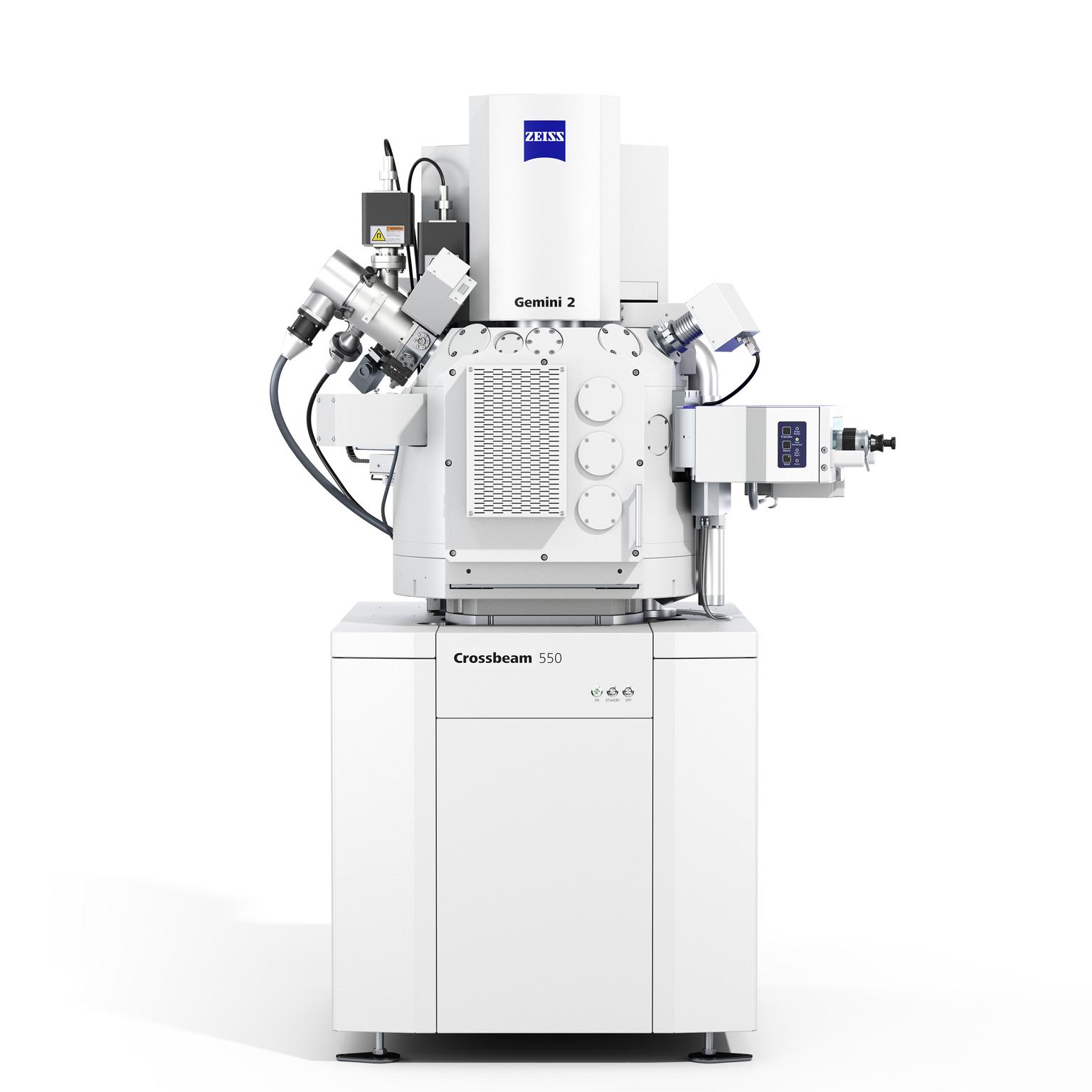
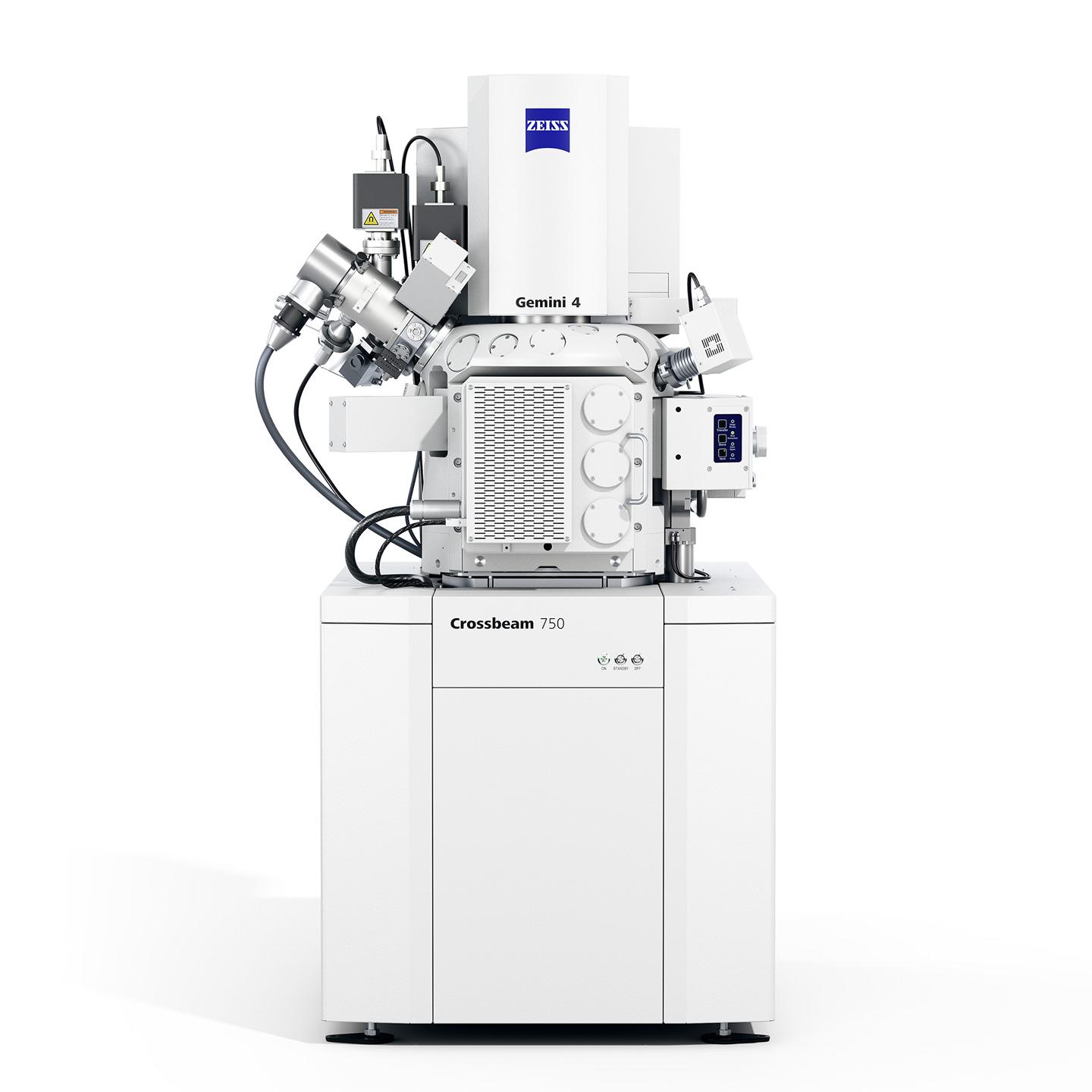
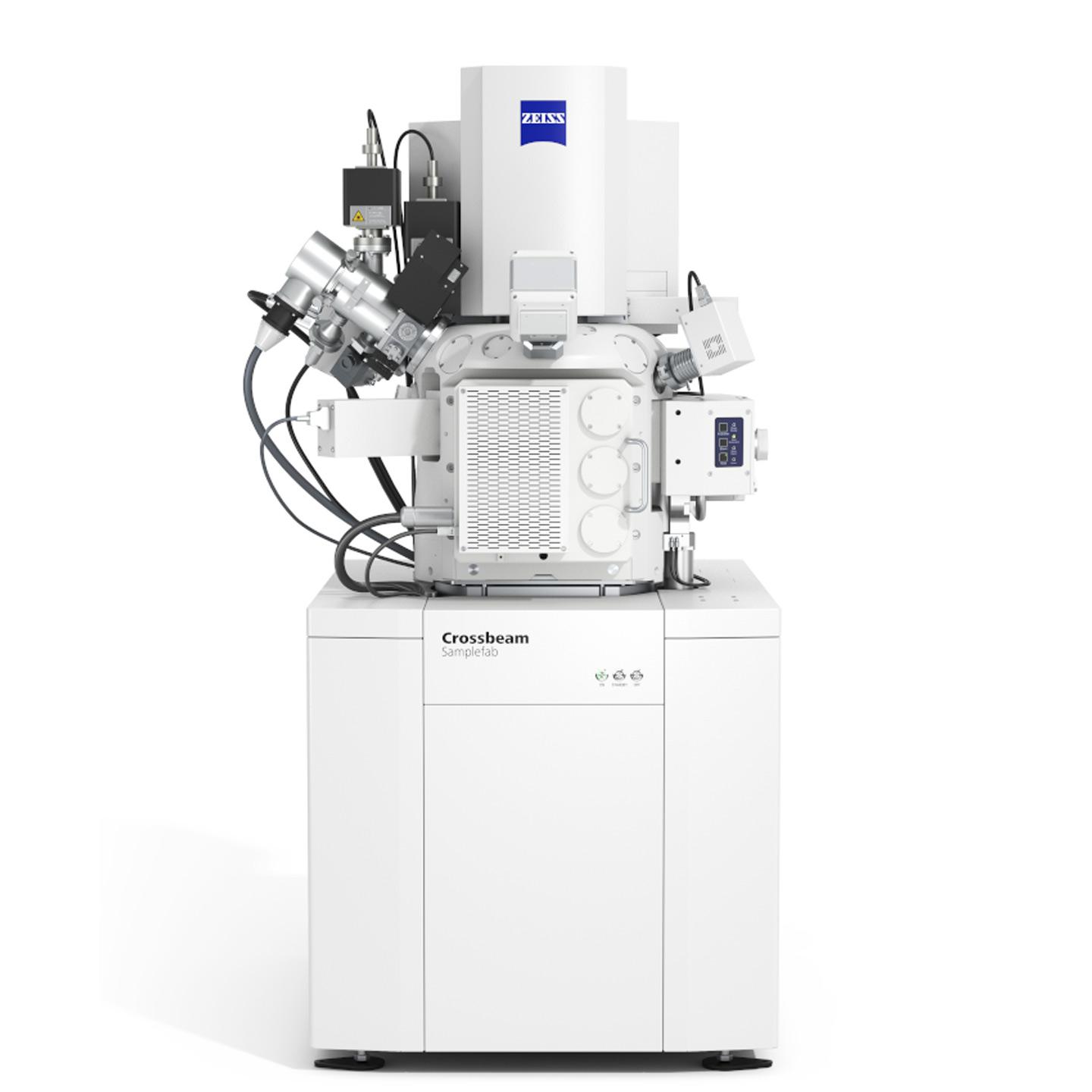
ZEISS Crossbeam FIB-SEM for materials research and 3D characterization

2D and 3D characterization from the micro- to the nanoscale

Focused ion beam scanning electron microscopes (FIB-SEM) combine high-resolution imaging with precise material processing using a focused ion beam. ZEISS Crossbeam enables imaging, 3D analytics, and milling on a single platform.

Access buried structures, perform sectioning, and investigate volumes with nanometer precision.

SEM image showing nanoscale materials structures analyzed using Crossbeam FIB-SEM microscope.

Lithium ion battery, NMC cathode material, 3D reconstruction, volume size 136µm * 52µm * 50µm, left: image stack of SE2 signal, right EDS map (blue is the active cathode NMC particles and yellow is the binder), acquired by Crossbeam and Atlas 5.

Multi-scale characterization enabled by precise and reproducible workflows

Comprehensive sample characterization is at the center of materials research. Scientists need to understand the structure and properties to optimize processing and performance. 3D materials analytics usually begins with identifying the region of interest to be investigated, followed by controlled material removal. Benefit from using the ZEISS Crossbeam, which combines the imaging and analytical capabilities of a field-emission scanning electron microscope (FE-SEM) with the ZEISS Ion-sculptor FIB column.Gain efficiency for your research tasks. Take advantage of Crossbeam’s versatility and perform workflows, e.g.:

  • Cross-sectioning
  • 3D tomography
  • 3D analytics
  • Nanofabrication
  • Preparation of TEM lamellae or APT samples
  • Cryogenic investigations
SEM image of a cross-section prepared with focused ion beam milling for materials analysis.
Sample: courtesy of D. Willer, MPA Stuttgart, DE

Multi-layered Metal. A FIB prepared cross section of a silver/nickel/copper layered system used for battery contacts, imaged in quad mode simultaneously with all detectors at 1 kV, clockwise from upper left to lower right: Inlens SE, SE, Inlens EsB, mix of Inlens SE & SE.

Sample: courtesy of D. Willer, MPA Stuttgart, DE

Multi-layered Metal. A FIB prepared cross section of a silver/nickel/copper layered system used for battery contacts, imaged in quad mode simultaneously with all detectors at 1 kV, clockwise from upper left to lower right: Inlens SE, SE, Inlens EsB, mix of Inlens SE & SE.

Cross-sectioning with nanometer precision

Investigate materials in 3D and look beyond the surface of your samples. The FIB’s high-current capabilities enable rapid bulk removal. Low-energy finishing supports damage-minimized preparation. Live SEM imaging during milling provides a “see while you mill” view during sample preparation and allows continuous inspection and refinement of the cut.

The result: cutting-edge bulk investigation is possible after milling trenches or preparing high-quality cross-sections with high reproducibility.

3D FIB-SEM tomography dataset used for micro- and nanostructure analysis in materials research.
Solid Oxide Electrolysis Cell. A FIB-SEM 3D tomography combined with EDS analysis of an aged solid oxide electrolysis cell, lower edge length of the volume of interest 38 µm. Sample: courtesy of M. Cantoni, EPFL, Lausanne, CH.
Sample: courtesy of M. Cantoni, EPFL, Lausanne, CH.

3D FIB-SEM tomography for micro- and nanostructure analysis and nanofabrication

Cross-sectioning with controlled ion-beam milling enables three-dimensional investigation of nano- and microstructure.

Crossbeam provides manual and automated milling with consistent slice thickness over long runs. The mechanical and thermal stability of the Ion-sculptor FIB reduces drift during extended tomography experiments, while automated functions such as autofocus and auto-stigmation of the ZEISS Gemini electron-optical SEM column maintain image quality throughout image stack acquisition.

When combined with ZEISS Atlas 5, the solution enables 3D tomographies of sample volumes with high isotropic voxel resolution below 10 nm. Automated 3D EDS and 3D EBSD analysis can be performed if your Crossbeam is equipped with analytical equipment. Structural, chemical, and crystallographic information can be derived from the same volume dataset.

FIB-SEM workflows for sample preparation and materials analysis

Key capabilities

  • SEM image showing focused ion beam milling used to prepare a TEM lamella for materials characterization.
    SEM image showing focused ion beam milling used to prepare a TEM lamella for materials characterization.

    Result of an automated lamella preparation performed with ZEISS Crossbeam. Each of the three posts of the TEM grid has a lamella prepared from the bulk attached after automated lift-out in a single run. Note that each lamella has been processed with different dimensions.

    Result of an automated lamella preparation performed with ZEISS Crossbeam. Each of the three posts of the TEM grid has a lamella prepared from the bulk attached after automated lift-out in a single run. Note that each lamella has been processed with different dimensions.

    TEM lamella preparation workflow – complete automation and high flexibility

    Increase efficiency, quality and reproducibility in your lab. TEM lamella preparation enables nanoscale characterization of material properties.

    Adapt FIB parameters to different materials, build a recipe library, prepare lamellae in varying sizes, and obtain high-quality samples. Crossbeam provides guided workflows from trenching to lift-out and to thinning, with live SEM monitoring during milling for controlled endpointing. Low-kV FIB finishing helps reduce amorphization in sensitive specimens. Perform each step manually in case you examine a "once in a lifetime sample" or decide on automated execution when you need to perform identical tasks repeatedly. Make your choice adjusted to the needs of your experiment.

    For higher-throughput environments, Crossbeam Samplefab enables automated multi-site workflows from bulk to TEM grid.

  • 1 mm wide cross section in a steel sample with 200 µm clearance on each side cut by fs-laser in less than 30 sec. This pattern can be used to investigate the micro-structure of the sample material in cross section or as pre-preparation for a subsequent FIB-SEM tomography run.
    1 mm wide cross section in a steel sample with 200 µm clearance on each side cut by fs-laser in less than 30 sec. This pattern can be used to investigate the micro-structure of the sample material in cross section or as pre-preparation for a subsequent FIB-SEM tomography run.

    1 mm wide cross section in a steel sample with 200 µm clearance on each side cut by fs-laser in less than 30 sec. This pattern can be used to investigate the micro-structure of the sample material in cross section or as pre-preparation for a subsequent FIB-SEM tomography run.

    1 mm wide cross section in a steel sample with 200 µm clearance on each side cut by fs-laser in less than 30 sec. This pattern can be used to investigate the micro-structure of the sample material in cross section or as pre-preparation for a subsequent FIB-SEM tomography run.

    Rapid access to deeply buried structures with ZEISS LaserFIB

    When large volumes must be removed quickly, ZEISS LaserFIB offers a femtosecond laser integrated into Crossbeam for millimeter-scale ablation in a few minutes.
    This enables:

    • Rapid access to buried regions of interest
    • Preparation of mm-scale cross-sections
    • Surfaces suitable for EBSD and EDS analysis
    • Protection of your FIB-SEM with a dedicated laser chamber for debris handling

    After laser processing, the FIB can perform final polishing with nanometer precision if needed.

  • Zoomed in analytics of the mm wide cross-section on the left. Utilizing laser ablation only, cross-sectional surfaces can be processed smooth enough to allow for EBSD and EDS analysis. SE image (top left), grain structure (EBSD) (top right), Fe-composition (EDS) (bottom left), Mn- composition (EDS) (bottom right)

    Zoomed in analytics of the mm wide cross-section on the left. Utilizing laser ablation only, cross-sectional surfaces can be processed smooth enough to allow for EBSD and EDS analysis. SE image (top left), grain structure (EBSD) (top right), Fe-composition (EDS) (bottom left), Mn- composition (EDS) (bottom right)

    Zoomed in analytics of the mm wide cross-section on the left. Utilizing laser ablation only, cross-sectional surfaces can be processed smooth enough to allow for EBSD and EDS analysis. SE image (top left), grain structure (EBSD) (top right), Fe-composition (EDS) (bottom left), Mn- composition (EDS) (bottom right)

    Zoomed in analytics of the mm wide cross-section on the left. Utilizing laser ablation only, cross-sectional surfaces can be processed smooth enough to allow for EBSD and EDS analysis. SE image (top left), grain structure (EBSD) (top right), Fe-composition (EDS) (bottom left), Mn- composition (EDS) (bottom right)

    Zoomed in analytics of the mm wide cross-section on the left. Utilizing laser ablation only, cross-sectional surfaces can be processed smooth enough to allow for EBSD and EDS analysis. SE image (top left), grain structure (EBSD) (top right), Fe-composition (EDS) (bottom left), Mn- composition (EDS) (bottom right)

    Advanced chemical and crystallographic analyses

    Derive structural, chemical, or crystallographic information from your specimens by combining imaging and analytics within the same workflow. 3D EDS detector and 3D EBSD camera enable the acquisition of analytical data, even during tomography runs. Differentiate isotopes with excellent surface sensitivity by adding ToF-SIMS. Benefit from detection of ions down to the ppm level, enabling analysis of light elements such as lithium. Achieve <10 nm depth resolution and use isotope analysis and depth profiling to investigate your samples.

    Benefit from:

    • Detection of ions down to the ppm level
    • Analysis of light elements such as lithium
    • Isotope analysis and depth profiling
    • < 10 nm depth resolution

Materials research applications

  • This image illustrates the achievable laser targeting accuracy. The targets were machined by FIB. The laser spot burns aimed to hit the center of the targets. Sample: silicon.
  • High resolution imaging on a thin film sample, multilayer heterostack. Acquired with Crossbeam 750, left Inlens Esb, right Inlens SE.
  • Gold layer on nickel. TEM lamella prepared with Crossbeam.​
  • Atom Probe Tomography (APT). Sample in silicon prepared with Crossbeam laser. A specific site was marked by an ion beam induced deposition and prepared. First, a pillar is isolated from the bulk by laser machining. Next, the sample is shaped by FIB milling.
  • Cryogenic temperature makes the Nickel metal centers clearly visible in this metal-organic frame work sample
  • High resolution imaging on a thin film sample, multilayer heterostack. Acquired with Crossbeam 750, left Inlens Esb, right Inlens SE.
  • SEM images of nanoscale materials structures analyzed using FIB-SEM workflows.

    This image illustrates the achievable laser targeting accuracy by Crossbeam Laser. The targets were machined by FIB. The laser spot burns aimed to hit the center of the target. Sample: silicon.

    SEM images of nanoscale materials structures analyzed using FIB-SEM workflows.

    This image illustrates the achievable laser targeting accuracy by Crossbeam Laser. The targets were machined by FIB. The laser spot burns aimed to hit the center of the target. Sample: silicon.

    This image illustrates the achievable laser targeting accuracy by Crossbeam Laser. The targets were machined by FIB. The laser spot burns aimed to hit the center of the target. Sample: silicon.

  • SEM image of a multilayer thin-film heterostructure captured with ZEISS Crossbeam 750 for high-resolution materials characterization.
    SEM image of a multilayer thin-film heterostructure captured with ZEISS Crossbeam 750 for high-resolution materials characterization.

    High resolution imaging on a thin film sample, multilayer heterostack. Acquired with Crossbeam 750, left Inlens Esb, right Inlens SE.

    High resolution imaging on a thin film sample, multilayer heterostack. Acquired with Crossbeam 750, left Inlens Esb, right Inlens SE.

  • SEM image of a TEM lamella showing a gold layer on nickel prepared using ZEISS Crossbeam FIB-SEM.
    SEM image of a TEM lamella showing a gold layer on nickel prepared using ZEISS Crossbeam FIB-SEM.

    Gold layer on nickel. TEM lamella prepared with Crossbeam.

    Gold layer on nickel. TEM lamella prepared with Crossbeam.

  • SEM image of a silicon needle prepared for atom probe tomography using ZEISS Crossbeam laser and FIB milling.
    SEM image of a silicon needle prepared for atom probe tomography using ZEISS Crossbeam laser and FIB milling.

    Atom Probe Tomography (APT). Sample in silicon prepared with Crossbeam laser. A specific site was marked by an ion beam induced deposition and prepared. First, a pillar is isolated from the bulk by laser machining. Next, the sample is shaped by FIB milling.

    Atom Probe Tomography (APT). Sample in silicon prepared with Crossbeam laser. A specific site was marked by an ion beam induced deposition and prepared. First, a pillar is isolated from the bulk by laser machining. Next, the sample is shaped by FIB milling.

  • Nickel metal centers are clearly visible in this metal-organic frame work sample, processed and imaged at cryogenic temperatures with a Crossbeam.

    Nickel metal centers are clearly visible in this metal-organic frame work sample, processed and imaged at cryogenic temperatures with a Crossbeam.

    Nickel metal centers are clearly visible in this metal-organic frame work sample, processed and imaged at cryogenic temperatures with a Crossbeam.

    Nickel metal centers are clearly visible in this metal-organic frame work sample, processed and imaged at cryogenic temperatures with a Crossbeam.

    Nickel metal centers are clearly visible in this metal-organic frame work sample, processed and imaged at cryogenic temperatures with a Crossbeam.

Application fields across materials research

Perform materials research across multiple fields of applications:

  • Nanomaterials such as low D materials, thin films, or materials for quantum or semiconductor research
  • Metals, alloys, ceramics, and composites
  • Energy materials, including batteries, solar cells, and fuel cells
  • Geological specimens, including hard rock and porous media

From nanopatterning to tomography, you can adapt the system to evolving research questions while maintaining precision and reproducibility.

See while you mill

  • Discover the difference between functionality known as "live SEM imaging during milling" and the functionality called "HDR mill + SEM".

    The later shows no interferences any more, you will achieve excellent clarity. Sample: NMC cathode.

FAQ

  • ZEISS uses low-kV imaging, controlled ion-beam milling, and low-energy finishing to minimize preparation artifacts. These approaches reduce beam damage and help preserve sensitive phases and interfaces. Standardized workflows support consistent results across users and labs.

  • X-ray microscopy is ideal when non-destructive 3D insight is needed to localize buried features within a material sample before FIB milling. It allows researchers to identify and target a specific region of interest (ROI) or volume of interest (VOI) prior to FIB cross-sectioning, serial sectioning for tomography, or TEM lamella preparation. This improves targeting accuracy and reduces unnecessary ion-beam material removal.

  • Correlative workflows connect multiple microscope modalities such as SEM, FIB-SEM, and X-ray data to link surface features with internal structure across length scales. This reduces interpretation gaps and enables reliable investigation of structure – property relationships.


Share this page