Whether it is voice control on a smartphone, smart systems in connected homes, or automation on the shop floor, artificial intelligence (AI) has become a defining part of our digital world. Yet its true power is created where most people never see it: in semiconductors. The ZEISS segment Semiconductor Manufacturing Technology (SMT) provides the technological foundation for this progress – while also using AI itself to drive innovation further.
When we speak to a voice assistant, use a connected device in everyday life, or digitally control production processes, AI feels almost effortless. It is fast, responsive, and largely invisible. But behind that apparent ease lies extraordinary technological complexity. Every calculation, every trained model, and every application depends on microchips that pack billions of transistors into an area only slightly larger than a fingertip. As our world becomes more digital, the demand for computing power, energy efficiency, and speed continues to grow. Microchips deliver that performance. That is why the advancement of artificial intelligence is also a key driver of future growth in the semiconductor industry. The central question is clear: How can increasingly powerful microchips be produced to perform ever more complex calculations in real time?
The future of AI will be decided at nanometer scale
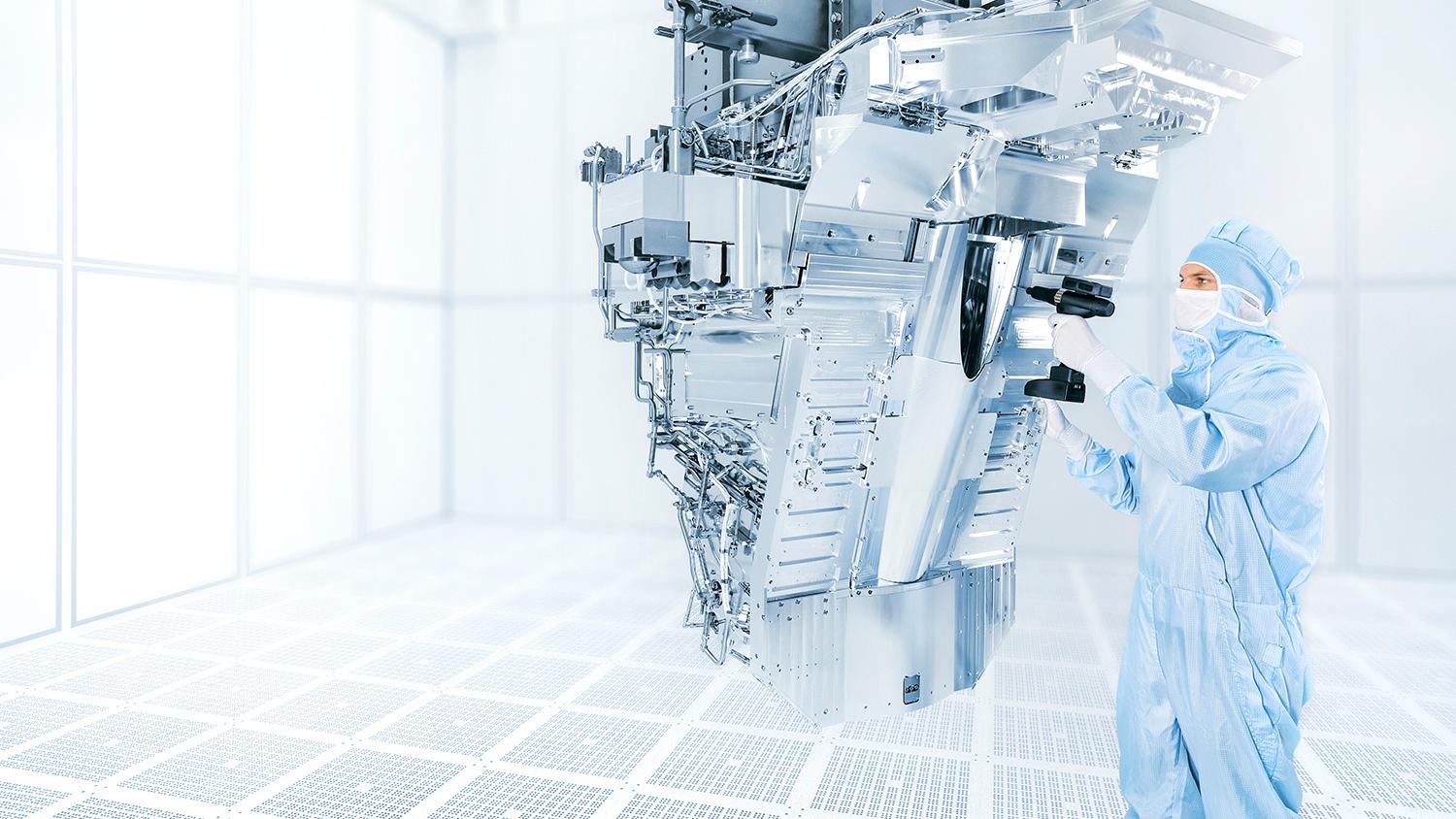
ZEISS SMT has been helping answer that question for more than 50 years: Optical lithography has long been the key technology behind microchip manufacturing. With DUV technology (deep ultraviolet light) ZEISS SMT helped combine the growing demand for high-performance chips with cost-efficient production, laying an essential foundation for the digital age. But AI is only as powerful as the chips it runs on. As AI applications become more advanced, the demands on semiconductor manufacturing increase dramatically. More transistors have to fit into ever smaller spaces – with absolute precision, repeatability, and quality. Here, the wavelength of light becomes critical: the shorter the wavelength, the finer the structures that can be patterned onto a wafer, the thin silicon disc that serves as the basis for microchips. With DUV technology, the potential for further shortening the wavelength had largely been exhausted. That changed with EUV technology (extreme ultraviolet light). Together with its strategic partner ASML, ZEISS SMT helped usher in a new era of chipmaking by reducing the wavelength used in lithography from 193 to 13.5 nanometers. This made it possible to image structures on a wafer that are around 5,000 times thinner than a human hair. That level of precision created the conditions for the AI applications we know today. The impact is significant: around 80 percent of all microchips produced worldwide are manufactured using ZEISS technologies. In other words, the future of AI and the future of the semiconductor industry are inseparably linked.
Artificial intelligence as a strategic tool
However, the relationship between ZEISS SMT and artificial intelligence is not a one-way street. ZEISS SMT not only provides the technological foundation for AI, but also uses its potential to develop and manufacture innovations more efficiently. To achieve this, ZEISS SMT takes a holistic approach. AI is not seen as a standalone technology, but is systematically integrated wherever it can make day-to-day work easier and create more space for creative and strategic tasks. Its use cases range from AI support in everyday work and optimized business processes to highly specialized applications in manufacturing. To ensure the highest security standards, ZEISS SMT relies on an on-premises solution, with data processed in the company’s own data centers. Protecting knowledge and expertise is the top priority: confidential information remains secure while the full benefits of modern AI technologies can be realized.
This enables colleagues at ZEISS SMT to use AI-powered tools to work faster, more accurately, and more efficiently – whether for research, documentation, or the analysis of complex data.
For us, AI is not an end in itself, but a tool that must create tangible value for the company. It should enable our employees to focus on what truly matters: collaboration, innovation, and quality. What matters most is that we apply the technology in a way that aligns with our values and our security standards – not the other way around.
Intelligent systems for complex challenges
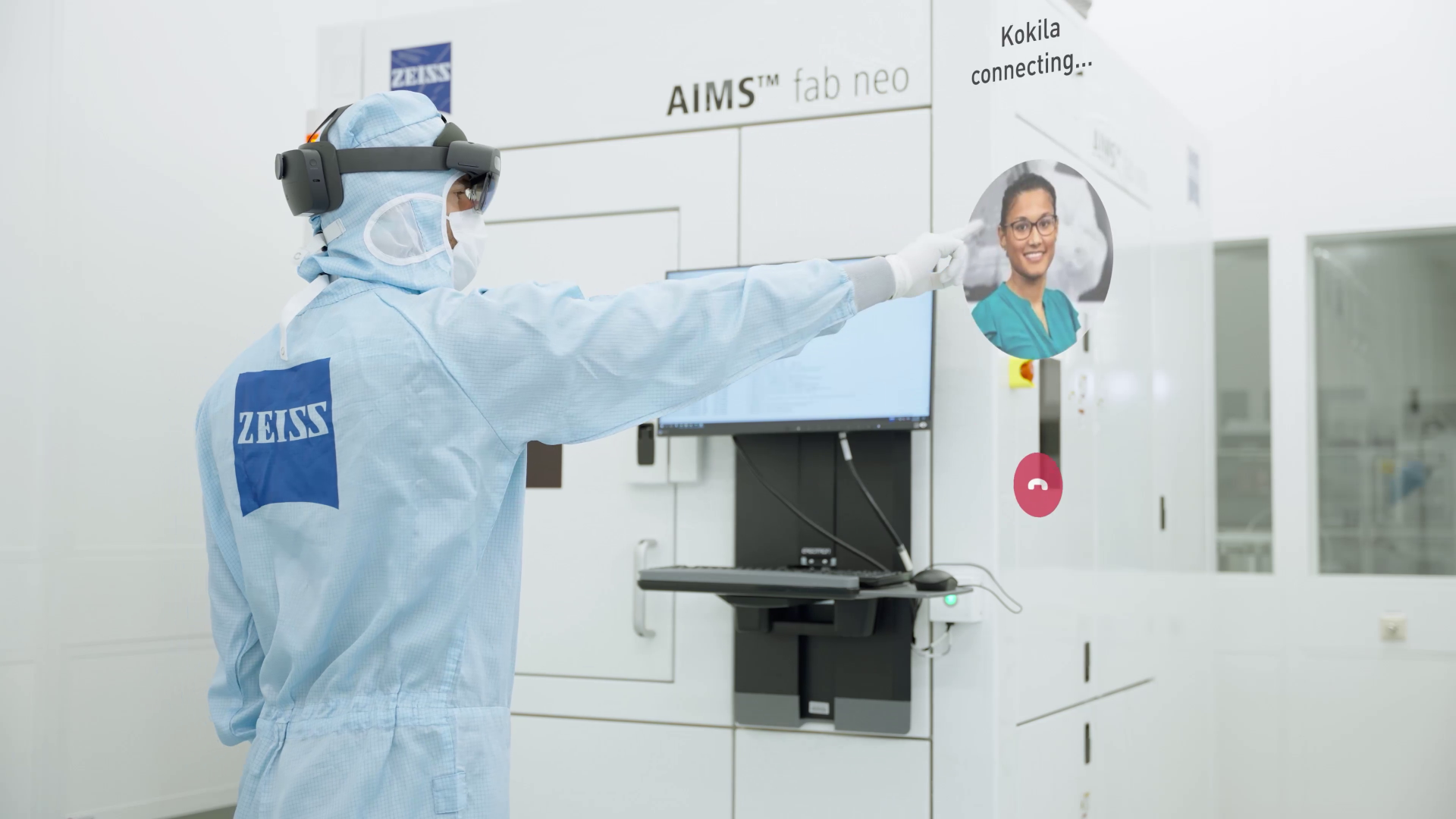
AI is also becoming an increasingly important part of the entire value chain. From software development to procurement, AI-supported systems help accelerate processes and create space for better-informed decisions. One particularly compelling example is the Machine Agent – an intelligent assistance system that is transforming collaboration between people and machines.
The Machine Agent connects a wide range of knowledge sources across the company and makes them accessible quickly and efficiently. In practice, that means when a disruption occurs, the system can analyze the situation, identify possible causes, and guide users step by step through the resolution process until the machine is running again. But its value goes far beyond troubleshooting. Machine operators can quickly access the right work instructions, technologists can build on proven solution paths, maintenance teams receive structured guidance, and development teams can analyze complex error patterns across system boundaries.
The system is continuously improving. With every interaction, documentation input, and user feedback loop, it becomes more precise. What once required time-consuming research across different systems can now happen in seconds. The result is faster problem-solving, shorter downtime, and employees who can apply their expertise more effectively where it matters most.
Shaping the future responsibly
For all the momentum around AI, one principle remains essential: responsible use. ZEISS SMT deploys AI where it can create real and secure added value. The opportunities are clear – from optimizing processes and accelerating workflows to generating new insights. But those opportunities must always be balanced with a clear understanding of potential risks. That is why ZEISS SMT follows a people-centered approach. Compliance with ethical principles and standards, along with human-in-the-loop approaches, is a top priority. AI should be used where it can operate reliably, transparently, and responsibly. Because technology delivers its greatest value when it supports and empowers people.
Author
Bengt Wunderlich
Head of Digital Transformation Management