Age-Related Eye Risks: Cataracts and New Screening Opportunities from ZEISS
Cataracts are one of the most common causes of vision loss and blindness worldwide. ZEISS VISUREF 1000 now enables new screening opportunities for early cataract detection.

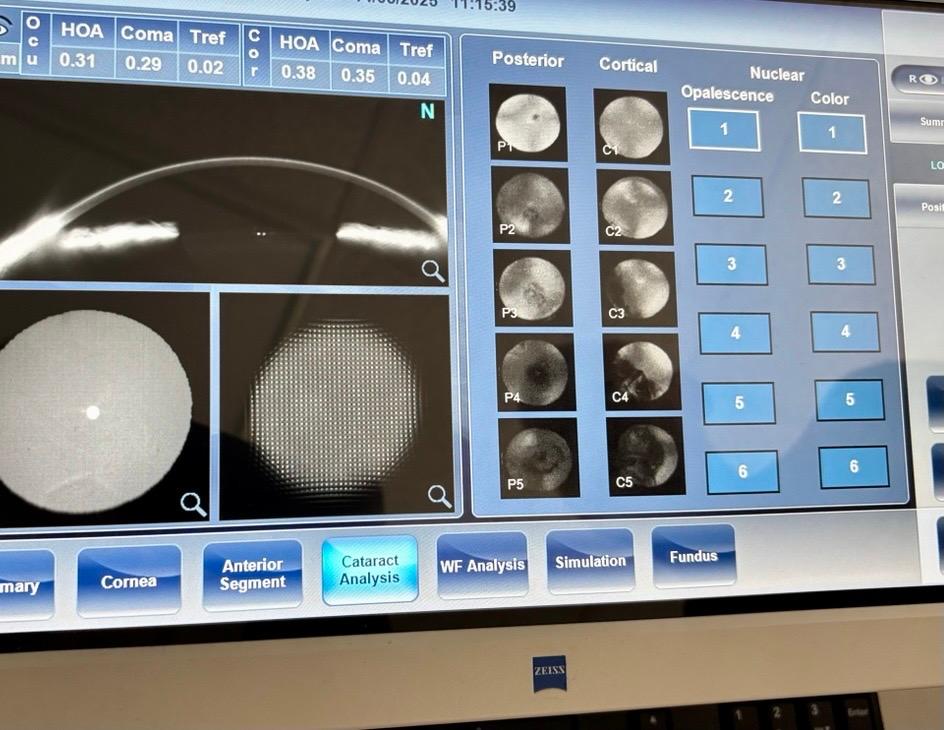
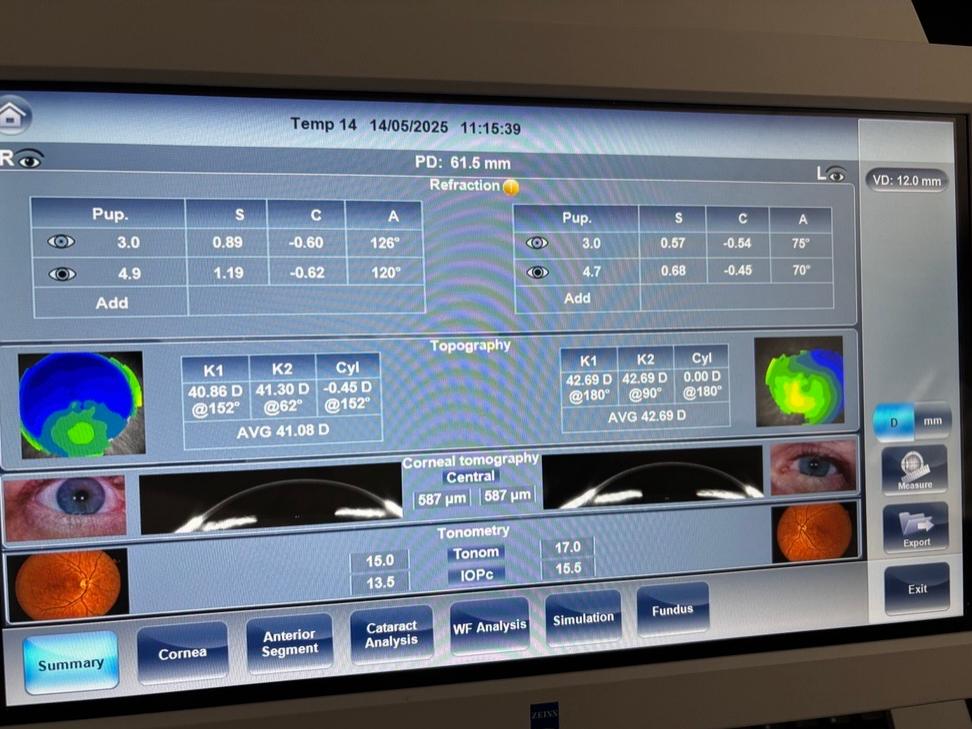
ZEISS VISUREF 1000 offers an automated cataract screening workflow using a sequence of wavefront camera, pachymetry, and topography measurements.
An increased desire for a healthy life
Many eye care professionals may encounter health-conscious customers who actively want to maintain their eye health.1 Accordingly, they also attentively follow new health trends, such as "Longevity." The fundamental belief of this movement is that the aging process can be slowed, halted or even reversed through specific treatments and behaviors.2 For now, scientific research only shows limited proof of its effectiveness.3 It remains to be seen how relevant the longevity approach will remain in medicine and eye care.
But one thing is certain – aging, health, and prevention are of great interest to consumers. So, what happens when eyes age? And why is this important for consumers? This article provides eye care professionals with background knowledge and discusses the latest findings and possibilities for recognizing eye diseases – specifically cataracts. It also looks at how eye care professionals can work hand in hand with each other to improve their patients’/customers’ experience.


Vitamin-rich nutrition is good for the body and eyes – but it cannot prevent or stop cataracts, as they are a common age-related condition of the eye.
The aging eye: Detecting presbyopia and cataracts
What impact does aging have on visual performance? Contrast sensitivity decreases, rod-associated dark adaptation is delayed, and visual processing increasingly slows down. This can lead to an increased risk of accidents and falls.
Signs of aging is a common occurrence, and eye care professionals are very familiar with conditions such as presbyopia. In fact, in combination with myopia (and all other forms of ametropias), correcting presbyopia with optimally configured progressive lenses have become a supreme discipline for eye care professionals. In addition to presbyopia, over 90% of people over 80 years have cataracts.4 In spite of these high numbers, according to a recent cataract study in Germany, respondents neither know the symptoms (71%) nor the prevention recommendations (84%).5
ZEISS now offers a new service for screening cataracts with ZEISS VISUREF 1000. It’s a new way to detect cataracts during consultations, and it can form the first step of successful cataract treatment. Within the framework of cataract screening, data can be generated directly in the optical store, which can then also be presented to ophthalmologists for assessment and diagnosis.
-


Affected by cataracts? Eye doctors will examine the eye lens and its potentially progressed opacity with a slit lamp.
The characteristically transparent nature of the eye lens is subject to changes over time: as the eye lens ages, a natural process of progressing opacity occurs. Physiologically, the structure of the so-called crystallin changes over the years – especially from the fifth decade of life. These are proteins without blood supply and with relatively low cell metabolism, which are transparent. Over time, the ageing lens proteins are not replaced or broken down. Rather, transparency of the crystalline lens depends on the crystallin retaining its natural structure throughout human life – which they do in the rarest of cases.
How early and severely these opacity-building deposits in the eye lens affect vision is partly the result of the interplay of genetic predisposition, environmental factors such as UV radiation, lifestyle factors such as high blood sugar, obesity, and tobacco use. Cataracts can be classified according to their location in the lens: for example, in the nucleus or the lens cortex.

Cataract screening with ZEISS VISUREF 1000


-

ZEISS VISUREF 1000 is a multifunctional refraction instrument that allows a screening for cataract detection.
ZEISS VISUREF 1000 expands screening possibilities and is designed to enable efficient and high-quality eye examinations. The integrated technologies include: autorefractor, aberrometer, topographer, Scheimpflug camera, non-contact tonometer, and non-mydriatic fundus camera. Its functions enable the detection and detailed analysis of pathologies such as dry eyes, keratoconus, cataract, and glaucoma. Features include:
- Wavefront Technology: It allows eye care professionals to offer customized lenses with ZEISS i.Scription technology. ZEISS i.Scription can reduce glare effects and improves visual brilliance, especially in low light. This can lead to higher visual comfort for spectacle wearers and opens up upselling opportunities for eye care professionals.
- Integrated Fundus Camera and Non-Contact Tonometer: These technologies significantly expand screening possibilities. High-resolution images of the retina and measurement of intraocular pressure can be created with just a few clicks, enabling early detection of diseases such as diabetic retinopathy and glaucoma.
- Automated Dry Eye Check: With increasing screen use, symptoms such as eye burning and fatigue are widespread. ZEISS VISUREF 1000 enables automated, non-invasive measurement of tear film break-up time (NIBUT – non-invasive break-up time) and offers the possibility to compare images of the anterior eye segment to assess tear film stability.

From screening to diagnosis – Fully utilizing ZEISS VISUREF 1000
With ZEISS VISUREF 1000, eye care professionals can specifically recognize signs of cataracts and direct their customers to be further examined by an ophthalmologist. Additionally, following cataract surgery, eye care professionals such as optometrists play an important role in providing after care for cataract patients by monitoring their visual acuity and, if necessary, adjusting their corrective lenses.
The new ZEISS EyeCare Network – a platform for eye check-ups for the early prevention of eye diseases, is the perfect example of the synergy between optometry and ophthalmology.
In the context of cataract detection, the ZEISS EyeCare Network supports eye care professionals and qualified opticians to perform medical eye check-ups in their stores. They use certified devices, like ZEISS VISUREF 1000, which quickly gathers the necessary data. This data is then securely sent to licensed ophthalmologists through the ZEISS EyeCare Network platform for formal medical evaluation.
The ZEISS EyeCare Network helps ZEISS customers position themselves as trusted partners in lifelong vision care and eye health, and even more importantly, gives every consumer the benefit of early detection. More information: ZEISS EyeCare Network
How to treat cataracts with ZEISS: Cataract awareness
It is common practice in modern cataract surgery to remove the opaque lens and replace it with an artificial intraocular lens (IOL). ZEISS has one of the broadest IOL portfolios available on the market, ranging from monofocal, extended depth-of-focus (EDoF), trifocal, aspheric and toric intraocular lenses. Furthermore, by connecting devices, data, and applications, the ZEISS Cataract Workflow enables a seamless integration from the office to operating room and back.
Affected individuals will likely notice the signs of a potential cataract themselves when they experience the symptoms described above. For eye care professionals, this means being present in an early phase of cataract formation and contributing to early cataract detection with the latest technology and services. Health-conscious consumers get the bonus of regularly investing in their eye health with the latest cataract screening technology from ZEISS, at optical stores they trust. With innovations such as ZEISS VISUREF 1000 and country-specific offers such as the ZEISS EyeCare Network, ZEISS is creating new opportunities for eye care professionals to provide consumers with one destination for their optimal eye care.


ZEISS Vision Care




-
1
56% of the surveyed cohorts belong to high-involvement segments regarding caring about eye health and health in general. Source: Vision Care Brand Fundamentals Tracker, March 2024, vision correction users in 18 countries surveyed, n=19,800
-
2
As stated in articles related to longevity from Ärzte Zeitung and Ärzte Blatt
-
3
Carvalho Junqueira/Carli Pinto (2023): Healthy longevity: a systematic review of nutrological and lifestyle aspects
-
4
Prokofyeva et al. (2012): Cataract prevalence and prevention in Europe: a literature review
-
5
Survey „So sieht Deutschland“ (2025)
-
6
Survey „Brillenstudie 2024/25“ by Institut für Demoskopie Allensbach
-
7
The Lens Opacities Classification System Version III (LOCS III) is a subjective method to classify age-related cataract, the type and severity of lens opacities at the nucleus, cortical and posterior shell of the eye