

Visionary minds.
Enhanced by AI
How ZEISS improves quality of life and drives progress
At ZEISS, we both use and shape artificial intelligence (AI) while also enabling its continuous advancement.
We develop AI that drives social progress – safely, responsibly, and with real benefits for people. At the same time, modern AI requires enormous computing power from high-performance microprocessors, which would not exist without ZEISS technologies.


Artificial intelligence (AI) is no longer just a vision. It is an integral part of almost all industries and areas of daily life. Developments in generative AI have once again significantly increased the speed of technological innovation.


At ZEISS, we make targeted use of this potential to realize our customers' ambitions, improve people's quality of life, and help visionaries in science, industry, medicine, and society achieve real breakthroughs. Our aim is not just to use AI, but to actively help shape it – as a leading global partner for technological innovation.


For us, AI is not an abstract technology. It is a tool that helps to generate insights, optimize business processes, improve decisions, and promote technological progress. We believe it is vital that our customers benefit from this technology and that AI is used responsibly.

How ZEISS enables AI
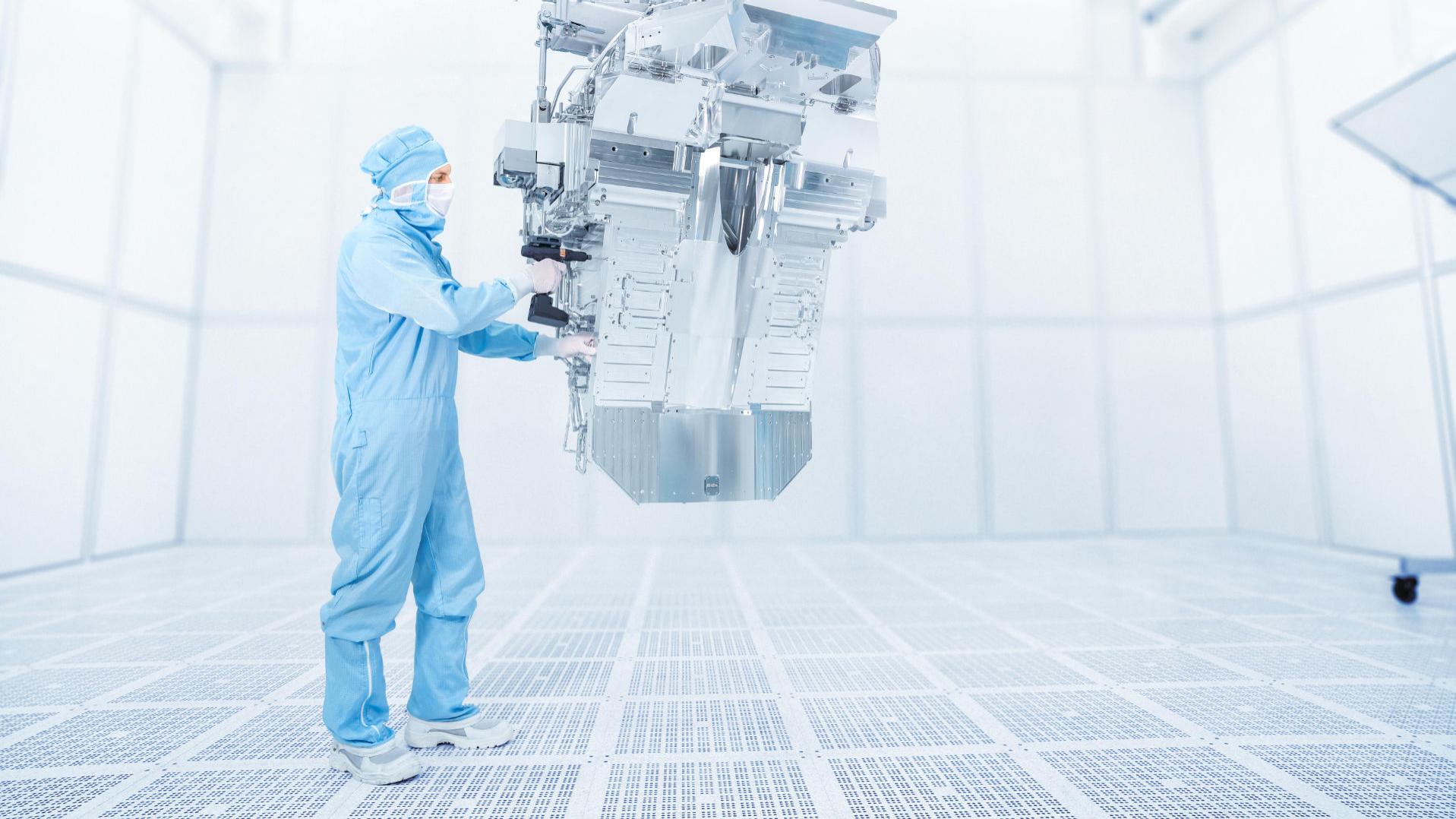
AI requires enormous computing power – and demand is continuously increasing. Even more powerful microchips are required. This is precisely where we at ZEISS make a key contribution: The optics from ZEISS Semiconductor Manufacturing Technology (SMT) form the basis for microchips that are ever smaller, more powerful, and more energy efficient. This is how we create the technological foundation for the next generation of AI applications in everyday life, research, medicine, industry, and beyond – the heart of digitalization beats at ZEISS.
Where ZEISS uses AI


Semiconductor manufacturing
AI analyzes structures in the nanometer range and enables more precise production processes for the microchip industry.
At ZEISS SMT, our cutting-edge technologies empower semiconductor manufacturers worldwide to produce even smaller and more powerful microchips, which are fundamental to AI. Furthermore, we use AI ourselves to precisely determine the optimal timing for component replacement in manufacturing equipment.


Medical technology
AI is shaping the future of healthcare.
The potential of artificial intelligence to revolutionize healthcare truly stands apart: AI is helping to improve diagnostic accuracy, speed up drug discovery, and enhance personalized patient care.
From classic machine learning algorithms to deep learning models – for more than 20 years, ZEISS AI solutions have been supporting data-driven patient care.


Industrial metrology
Automated, AI-supported evaluation and data analysis improve quality assurance for complex components.
The AI solutions from ZEISS RQS help to automate and accelerate industrial inspection processes by automatically analyzing and classifying image data from CT, X-ray or microscopy systems for defects, porosity, grain sizes, or particles – enabling faster, more precise, and more reliable quality assurance.


Industry & science
AI solutions integrated into microscopy increase efficiency and accelerate the generation of insights in industry and science – along the entire workflow, from image acquisition to data analysis.
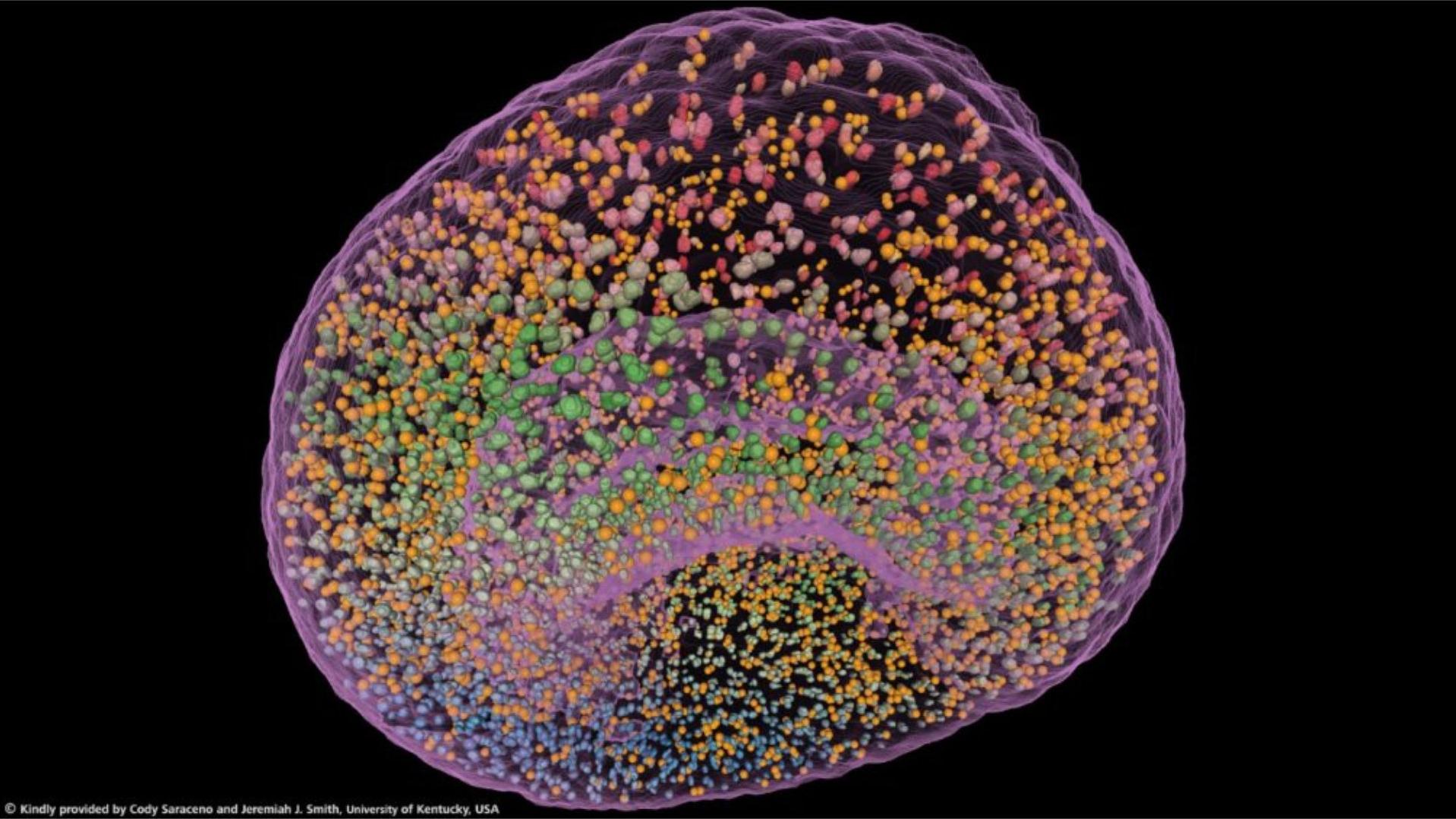
AI algorithms improve image quality and identify and classify structures and objects in microscopic images. This means, for example, that cell cultures can be analyzed more quickly. AI helps minimize errors in the analysis of large amounts of data and enables more accurate, efficient, and reproducible work.
Artificial intelligence in figures
Technological innovations from ZEISS drive progress.




Experiencing artificial intelligence at ZEISS
Stories by and for people. How we and our partners are using AI to improve people's lives and drive progress worldwide.Driving technological progress with AI
ZEISS in conversation with experts.In focus: Artificial intelligence at ZEISS
-
At ZEISS, AI is used in numerous areas to optimize processes, drive technological innovation, and enable new solutions and applications. Artificial intelligence includes methods such as machine learning, deep learning, and generative models. AI also supports research, microscopy, semiconductor manufacturing, medical technology, and industrial quality processes at ZEISS.
-
In the field of AI, ZEISS focuses on innovation fields such as image processing, data analysis, automated quality assurance, medical and research technologies, and the development of new methods for machine learning. Research priorities include high-precision, high-performance AI technologies, the resource-efficient use of AI, multimodal and interactive AI, and the close integration of AI with optical and photonic technologies.
-
Machine learning and deep learning are key components of ZEISS' AI solutions. They enable the precise analysis of large quantities of data, improve image and signal processing, support decision-making processes, and increase efficiency in manufacturing, diagnostics, research, and measurement technology. These technologies help ZEISS to develop innovative and reliable AI applications.
-
ZEISS integrates artificial intelligence wherever it creates measurable added value in terms of precision, speed, reliability, and decision-making support. AI is used in different business areas – from microscopy and medical technology to industrial metrology and semiconductor manufacturing. On this page, the product highlights from the individual business units show how AI is already being used in specific applications today. You can explore the detailed use cases and innovations in the sections above.





-
1
Kenny PI, Kozhaya K, Truong P, Weikert MP, Wang L, Hill WE, Koch DD. Efficacy of segmented axial length and AI approaches to IOL power calculation in short eyes. J Cataract Refract Surg. 2023 Mar 17.