
Exploring Microstructural Properties of Polymers & Biomaterials
For applications in engineering and bioinspired design 

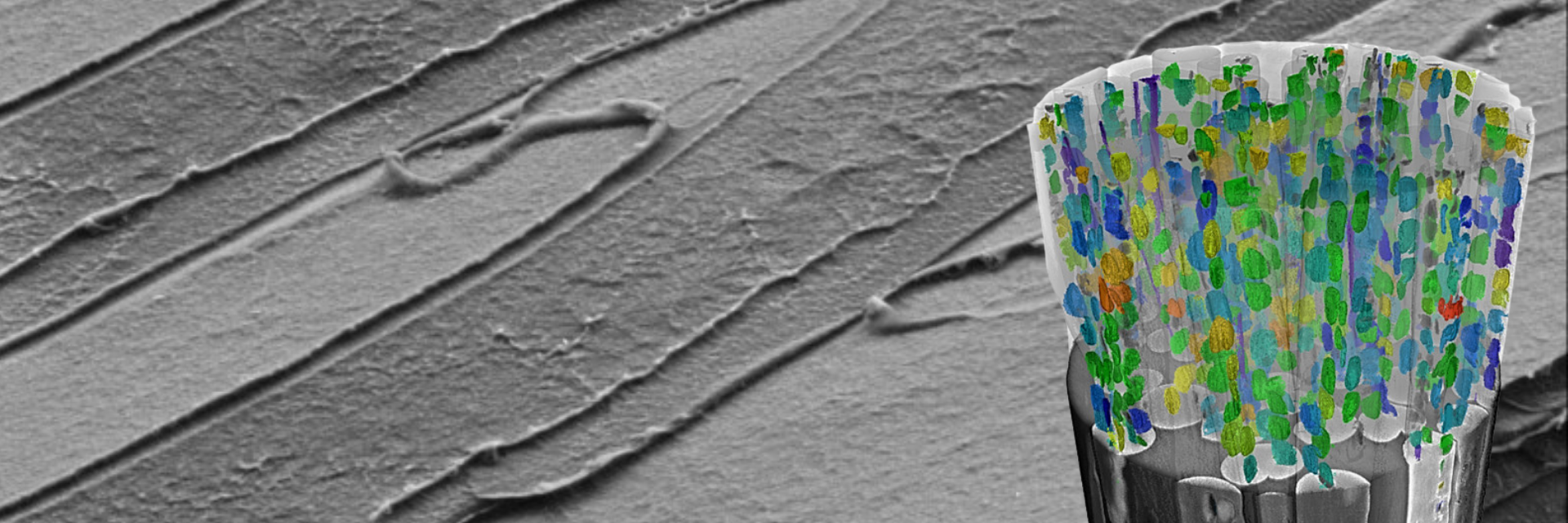
Image: surface topography of wear on a polymer surface, measured by laser scanning confocal microscopy
Polymer Science & Engineering
Polymers and soft materials are integral to innovations in sectors ranging from healthcare to electronics. Advanced microscopy techniques provide unprecedented insights into these materials' microstructures which, together with the composition, control the various properties that deliver unique functionality. Microscopy can also help to better understand the durability, degradation, and sustainability of new polymer products.


Image: cross-linked gelatin nanofibrous scaffold for tissue engineering, imaged by low voltage FESEM. Image courtesy of Biological and Macromolecular Materials Group at Fraunhofer IMWS, Halle (Saale), Germany.
Biocompatible Materials
The design of biocompatible materials must take into account numerous factors, including the composition and microstructure/morphology of the material. Microscopy plays a key role to develop and produce materials with the appropriate micro- and nano-scale features to be used for implants, tissue scaffolds, drug delivery, topical creams, wearable electronics, and more.


Patch scale from the butterfly Atlides polybe, imaged using nanoscale X-ray microscopy. Such natural crystal structures are studied for their thermal and optical properties. Sample courtesy of Silklab, Tufts University.
Bioinspiration & Biomimicry
The natural world has benefitted tremendously from billions of iterations of evolution, producing remarkably complex structures precisely adapted to deliver certain functionality. By studying such systems, engineers can derive strategies for mimicking the success found throughout the world’s plants and animals, helping design innovations and products that would otherwise be difficult to imagine.
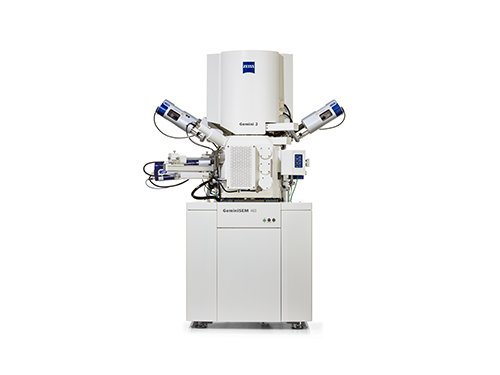
Recommended Products for Engineering Materials







ZEISS Research Essentials


What types of microscopy techniques are available for research of polymers & biomaterials?
ZEISS offers a variety of microscopy techniques tailored for materials polymers & biomaterials including:-
ZEISS offers a variety of microscopy techniques ideal for polymer science, soft materials, and biomaterials:
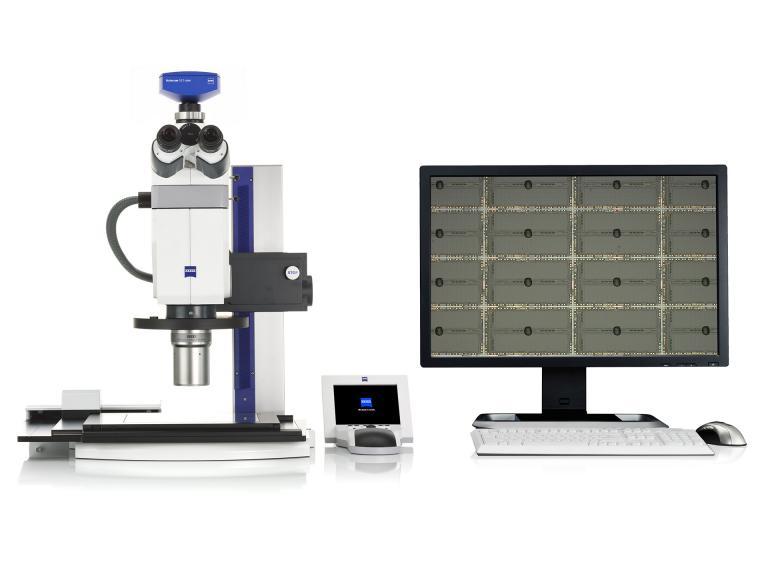
- Optical Microscopy: Addresses all typical optical inspection and analysis tasks using upright, inverted, zoom, digital, and laser scanning confocal systems. Assess crystallinity. Use fluorescence imaging for chemical analysis.
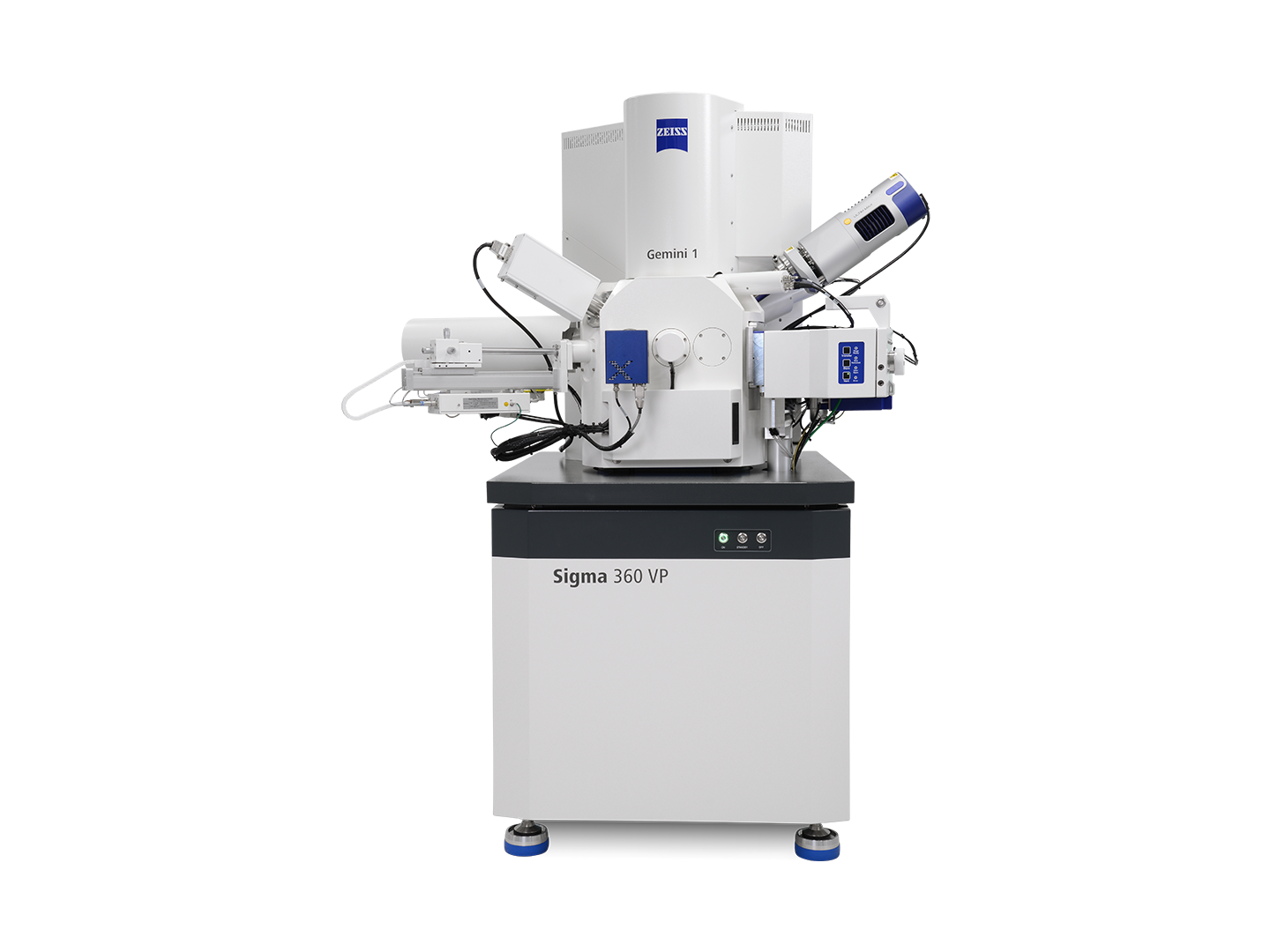
- Electron Microscopy: Provides ultra-high resolution for nanoscale visualization of material surfaces. ZEISS FE-SEM’s are ideal for very low voltage imaging of delicate or nonconductive materials. Integrate with Raman chemical analysis with Sigma RISE solution.
- FIB-SEM Microscopy: Extends SEM analysis to the sub-surface with the addition of a gallium focused ion beam for targeted milling. Enables site-specific cross sections, serial sectioning 3D tomography with imaging and analytics, and preparation of samples for other methods like nanoscale XRM or TEM.
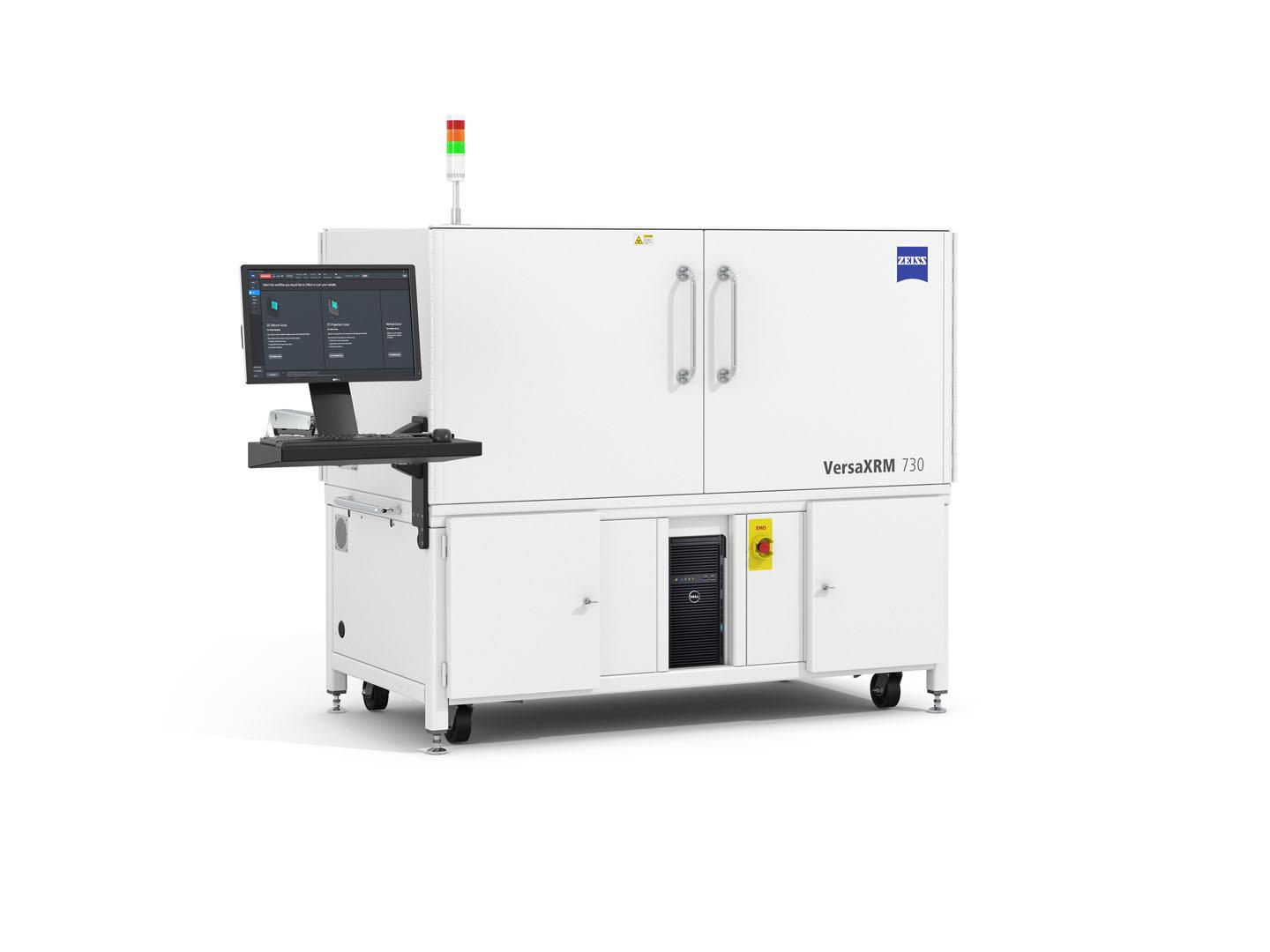
- 3D X-ray Microscopy: Delivers nondestructive 3D imaging by high resolution X-ray tomography, both at the micro and nano-scales. Ideal for understanding fragile or highly porous structures. Includes options for in situ thermal-mechanical sample manipulation.
-
The ZEISS microscopy portfolio is designed to address three key types of characterization challenges often faced by researchers studying polymers or biomaterials:
- Chemical Imaging: ZEISS microscopes integrate with numerous modalities for chemical/elemental mapping, including energy dispersive spectroscopy (EDS), and confocal Raman imaging, integrated with SEM. Furthermore, ZEISS microscopes enable communication and data correlation between each other and any other imaging modality by the ZEN Connect correlative imaging workspace environment.
- 3D Characterization: The complex and often highly porous/irregular structures found in polymers and biomaterials (scaffolds, composites, fibers, structured surfaces) usually exist in three dimensions, therefore it can be critical to work with imaging techniques that reflect and capture that complexity. ZEISS offers microscale and nanoscale 3D X-ray microscopy ideal for non-invasive observation for all material types.
- Observing Delicate Structures: Polymers and soft materials can be quite sensitive to undesirable disturbance or modification during the characterization process. ZEISS microscopes, including gentle low-kV field emission SEM and non-invasive X-ray tomography, excel at providing clear high-resolution images without compromising the natural state of the sample.
-
Very often, the answer is Yes! 3D X-ray microscopy, when operated in the correct way, can provide excellent high quality images even for very low density structures, at both the micro and nano-scales. ZEISS offers methods to maximize data quality when working with these types of samples, including “phase contrast” imaging modes which leverage phase shifts in the X-ray wave, as well as advanced tomography reconstruction methods that minimize noise in the data and help enhance native contrast.
-
Yes. ZEISS EVO scanning electron microscopes offer an extended pressure mode with hot/cold stage options that can be used to enable imaging of hydrated wet samples. In addition, options for cold or cryogenic stages can be used to immobilize semi-solid samples like emulsions and creams, such as found in the cosmetics industry, in their native hydrated state for SEM or FIB-SEM analysis.